6 Best Wax Blocks For Smooth Carriage Movement Tested
We tested 6 top wax blocks to ensure smooth carriage movement. Discover our expert picks for reducing friction and improving performance in this guide.
Nothing ruins a rhythmic knitting session faster than a carriage that feels like it’s grinding through gravel. Proper lubrication is the secret bridge between a frustrating, jammed machine and a smooth, professional-grade output. By choosing the right wax for your specific needle bed, you can significantly reduce the friction that leads to dropped stitches and uneven tension. This guide breaks down the best wax blocks available to keep your machine gliding effortlessly through every row.
Silver Reed Knitting Machine Wax: Best Overall


Silver Reed wax is widely considered the gold standard for modern knitting machines. It strikes a perfect balance between a slick, low-friction coating and a formula that doesn’t leave a heavy, waxy residue on your yarn.
If you are working with delicate fibers like mohair or high-twist wool, you need a wax that won’t gum up the needle latches. This formula is consistent, reliable, and melts into the needle bed exactly where you need it to go.
The bottom line is that this is the safest bet for most knitters. It performs beautifully across a wide range of yarn weights, from fine lace-weight threads to bulkier, multi-ply yarns.
Brother Knitting Machine Paraffin Wax Blocks

Brother machines are known for their precision engineering, and their proprietary wax blocks are designed to match that standard. These blocks are slightly harder than others, which prevents the carriage from picking up too much material during long, high-speed sessions.
If you have an older machine that has been sitting in storage, using a high-quality paraffin block can help "wake up" the needle action. It provides just enough slip to ensure that the needles move freely in their channels without attracting excessive dust or lint.
Be aware that these blocks are specifically formulated for the tolerances of Brother beds. Using them on machines with different needle bed spacing might not yield the same smooth results, so stick to the manufacturer’s recommendation for your specific model.
Passap Knitting Machine Specialized Wax Bars
Passap machines operate differently than standard punch-card or electronic machines, often requiring a more specialized approach to lubrication. Their wax bars are formulated to handle the unique "duomatic" action where needles are pushed and pulled with significant force.
Because these machines are often used for complex, double-bed projects, the friction levels are naturally higher. You need a wax that can withstand the heat generated by the rapid movement of the carriage across two beds simultaneously.
These bars are less about "greasing" the bed and more about maintaining a consistent, thin film. If you are tackling intricate tuck or jacquard patterns, this specialized wax is essential to prevent the needles from sticking mid-row.
Singer Knitting Machine Replacement Wax Blocks
Singer machines have a storied history, and finding the right maintenance products can sometimes feel like a treasure hunt. These replacement blocks are designed to fit the original tension mast holders perfectly, which is a major convenience for those who prefer to keep their setup original.
The consistency of this wax is excellent for knitters who work with synthetic fibers like acrylic or nylon. These fibers can sometimes create static electricity, which attracts dust; the Singer wax helps neutralize that static, keeping your needle bed cleaner for longer.
If you own a vintage Singer, don’t be tempted to use candle wax or household paraffin. Those alternatives are often too soft or contain impurities that can clog the needle channels over time.
KnitKing Universal Machine Knitting Wax Bars
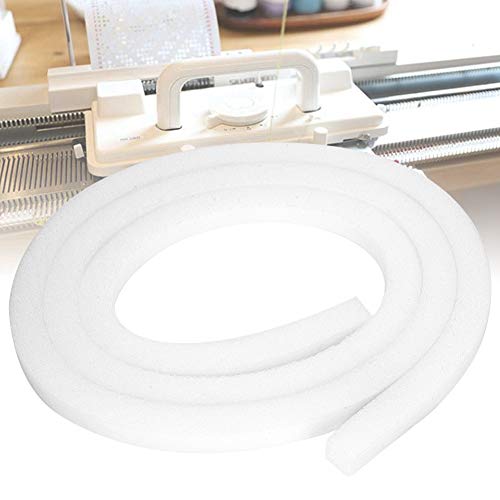
KnitKing wax is a fantastic "workhorse" product that serves as a reliable universal option. It is particularly effective if you own a collection of different machines and want to simplify your maintenance kit.
The texture is forgiving, making it easy to apply even if you are newer to machine knitting. It provides a smooth, glass-like finish on the needle bed, which is vital when you are working with "sticky" yarns like unwashed wool or alpaca that tend to drag.
While it is marketed as universal, always perform a small test on the edge of your needle bed first. If the carriage feels too "loose" or starts to skip, you may need to wipe the bed down with a lint-free cloth before reapplying a lighter coat.
Studio Knitting Machine Maintenance Wax Blocks
Studio wax blocks are favored by knitters who do a high volume of production work. When you are knitting for hours at a time, you need a product that doesn’t require constant reapplication to keep the carriage moving.
These blocks are particularly good at resisting the buildup of "fluff" that occurs when knitting with loosely spun yarns. By keeping the needle channels clear, you spend less time cleaning and more time knitting.
If you find that your carriage is getting stuck on the turn-around, a quick swipe with a Studio block usually solves the problem immediately. It is a reliable, no-nonsense choice for the serious maker.
Why Machine Waxing Improves Carriage Movement
At its core, machine knitting is a series of thousands of tiny mechanical actions happening in rapid succession. Every time the carriage passes over the needle bed, the needles are forced to move up and down to form stitches, creating friction against the metal channels.
Without wax, this friction increases, leading to "carriage drag." This not only makes your knitting session physically exhausting, but it also puts unnecessary stress on the machine’s plastic components and your yarn, which can lead to snapped threads.
Wax acts as a dry lubricant, creating a microscopic barrier between the metal needle and the metal bed. This allows the needles to slide with minimal resistance, ensuring that every stitch is formed with consistent tension and speed.
How to Properly Apply Wax to Your Needle Bed
The most common mistake knitters make is over-waxing. You do not need a thick, visible layer of white residue; in fact, too much wax will attract lint and dust, which eventually turns into a gummy paste that clogs your needles.
- Clean first: Always start with a clean, lint-free needle bed.
- Light touch: Run the wax block gently across the needles once or twice.
- Distribute: Move the carriage back and forth across the bed without yarn to spread the wax evenly.
- Wipe down: If you see clumps, use a soft cloth to remove the excess.
Think of it like seasoning a cast-iron skillet; you want a thin, protective layer, not a thick coating. If your yarn starts to look "dusty" or white, you have applied way too much.
Signs Your Knitting Machine Needs Re-Waxing
Your machine will usually tell you when it’s hungry for more wax. The most obvious sign is a change in the sound of the carriage; a well-waxed machine hums, while a dry machine clicks, grinds, or squeaks.
You might also notice that the carriage requires more physical force to push. If you find yourself having to "muscle" the carriage through the row, stop immediately and check your lubrication levels before you damage the needles or the carriage cams.
Finally, keep an eye on your stitch quality. If you notice dropped stitches or uneven loops, it is often because the needles are lagging behind the carriage movement due to friction. A quick re-waxing is often the simplest fix for these issues.
Troubleshooting Carriage Drag and Stiffness
If you have waxed your bed and the carriage is still stiff, the problem might not be the wax—it might be the machine’s internal mechanics. Check for bent needles first, as even one slightly misaligned needle can act as a brake on the entire carriage.
Also, consider the environment. If your knitting room is cold, wax can harden and lose its effectiveness, while high humidity can make certain yarns "grab" the needles more aggressively.
- Check for debris trapped in the needle grooves.
- Ensure your tension mast is correctly threaded.
- Verify that your needles are not rusted or damaged.
- Clean the carriage underside to remove old, hardened grease.
Maintaining your knitting machine with the right wax is a simple habit that pays off in years of trouble-free service. By choosing a high-quality product and applying it sparingly, you ensure that your equipment remains as precise as the day it was made. Keep your machine clean, keep it lubricated, and enjoy the rhythm of a carriage that glides like silk. Happy knitting!