7 Best Yarn Winders For Hand Dyed Hanks To Use
Transform your hand-dyed hanks into neat cakes with ease. We review the 7 best yarn winders, focusing on durability, smooth operation, and value for knitters.
There is nothing quite as satisfying as bringing home a beautiful, hand-dyed hank of yarn, but the transition from twisted loop to usable cake is a critical step. If you aren’t careful, that luxurious wool can quickly become a tangled, frustrating mess before you even cast on. The right yarn winder acts as the bridge between raw potential and a smooth, stress-free knitting session. Choosing the correct tool for your stash ensures your yarn maintains its integrity and prevents unnecessary stretching or snapping.
Stanwood Needlecraft Large Metal Yarn Winder


This is the gold standard for many serious knitters who work with large, bulky hanks. Its heavy-duty metal construction provides a stability that plastic models simply cannot match, especially when you are winding a full 400-yard skein of worsted weight wool.
The gear system is surprisingly quiet and smooth, which makes a big difference if you are winding yarn late at night while the rest of the house is asleep. Because it handles significant weight without wobbling, it is my top recommendation for those who regularly use heavy fibers like alpaca or bulky-weight blends.
The primary tradeoff here is the physical footprint and the initial cost. It is a substantial piece of equipment that takes up permanent real estate on your craft table, but for the longevity it offers, it is a worthwhile investment for the dedicated maker.
KnitPicks Yarn Ball Winder: Best Budget Pick
If you are just beginning your journey into hand-dyed yarns, you don’t necessarily need an industrial-grade machine. The KnitPicks winder is a reliable, entry-level option that gets the job done without breaking the bank.
It is lightweight and portable, making it easy to tuck away in a drawer when you aren’t using it. While it is made of plastic, it is surprisingly durable provided you don’t force it to wind massive, heavy skeins beyond its capacity.
The key to success with this model is patience; if you wind too quickly, the yarn can slip off the base. Keep a steady, moderate pace to ensure the cake forms evenly and doesn’t collapse into a "yarn barf" later on.
Lacis Jumbo Yarn Ball Winder for Large Hanks

When you are working with lace-weight mohair or voluminous bulky yarns, you need a winder that can accommodate a larger volume of fiber. The Lacis Jumbo is designed specifically for these high-capacity needs, preventing the common issue of the cake becoming too wide and falling off the spindle.

The extra-large cone size is the standout feature here, as it allows for a more stable base during the winding process. This stability is crucial when dealing with slippery fibers like silk or bamboo, which tend to slide off smaller, standard-sized winders.
Be aware that because it is a jumbo model, it requires a bit more clearance on your table edge. Ensure your table surface is flat and sturdy so the clamp can grip securely without marring your furniture.
Nancy’s Knit Knacks Heavy Duty Yarn Winder
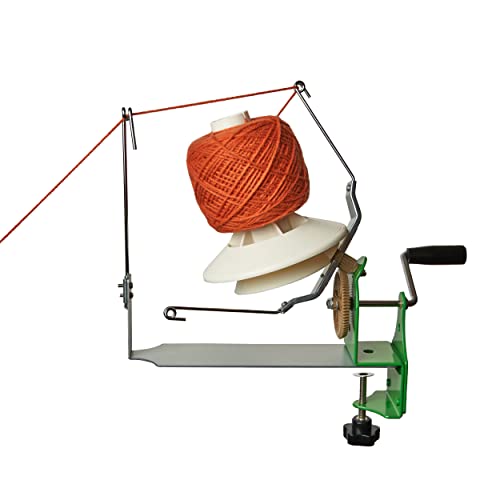
Nancy’s Knit Knacks has a long-standing reputation for quality, and their heavy-duty winder is built for knitters who treat their tools as lifelong companions. It features a rugged design that feels less like a gadget and more like a piece of machinery.
This winder is particularly excellent for those who wind yarn for others or run a small fiber business. The metal components are engineered to withstand hours of continuous use without the grinding or friction that often plagues cheaper plastic alternatives.
While the price point is higher, the consistency of the tension it provides is unmatched. If you are prone to hand fatigue, the smooth operation of this winder will be a welcome relief for your wrists and fingers.
ChiaoGoo Hand-Operated Yarn Ball Winder
ChiaoGoo is well-known for their excellent needles, and their yarn winder carries that same attention to ergonomic design. It is a compact, hand-operated unit that feels intuitive to use from the very first turn of the handle.
This model is a fantastic middle-ground option for the traveling knitter. It is small enough to pack for retreats or knitting circles, yet it possesses enough mechanical integrity to handle a standard 100-gram hank of fingering weight yarn with ease.
The handle rotation is smooth, which helps in maintaining a consistent tension throughout the entire winding process. Avoid over-tightening your yarn as you wind; let the machine do the work so the fiber doesn’t lose its natural elasticity.
U-nitt Metal Yarn Winder: Best for Durability
If you are tired of plastic gears stripping or winding mechanisms cracking, the U-nitt metal winder is the solution. It is built with a focus on longevity, utilizing metal gears that offer a tactile, satisfying mechanical feel.
Because of the metal construction, it is heavier than most competitors, which actually works in your favor. The added weight keeps the unit firmly planted on the table, reducing the need to constantly readjust the clamp while you are mid-hank.
This is a "buy it once" tool. If you are a prolific knitter who finishes several sweaters a year, the durability of the U-nitt will save you from the recurring cost of replacing cheaper plastic winders.
Fiber Artist Supply Co. Amish Style Winder
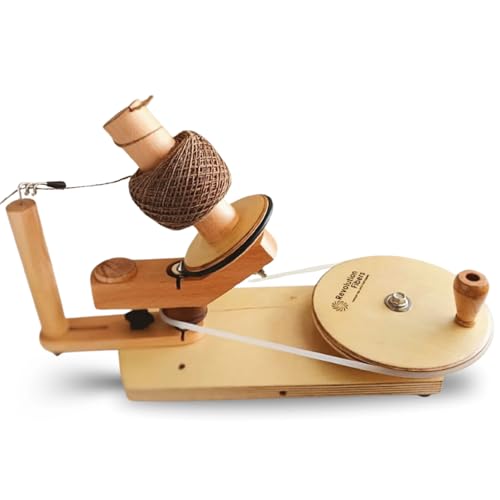
For those who prefer a more traditional, aesthetic approach, the Amish-style winder is a beautiful alternative to mechanical winders. It relies on a simple, elegant manual design that is incredibly gentle on delicate fibers.
There are no gears to strip or plastic parts to break, making this the most sustainable option in your knitting toolkit. It is particularly well-suited for fragile yarns like hand-spun singles, which can be easily damaged by the aggressive tensioning of some high-speed mechanical winders.
Using this requires a bit more hands-on effort and time, but it is a meditative process. It is perfect for the knitter who values the slow, intentional aspects of the craft and wants to ensure their yarn is treated with the utmost care.
How to Properly Use a Swift with Your Winder
A winder is only half the equation; you absolutely need a swift to hold your hank while you wind. Without a swift, you are forced to use the back of a chair or your own knees, which almost inevitably leads to tangles.
Set your swift up so that it spins freely but not so fast that it creates "flyaway" yarn. If the swift spins too quickly, the yarn will slacken and fall off the pegs, causing a mess that can take hours to untangle.
Always ensure the hank is centered correctly on the swift. If the hank is lopsided, it will cause uneven tension, which can stretch out your yarn and affect your final gauge. Take the time to adjust the swift diameter so the hank is taut but not pulled tight.
Essential Tips for Winding Hand Dyed Yarns
Hand-dyed yarns often come in "hanks" or "skeins" that are twisted for display. Before putting them on the swift, gently untwist the hank and locate the two ties that hold the yarn in place—do not cut these until the yarn is securely on the swift.
Always wind your yarn into a center-pull cake. This allows the yarn to feed from the inside out, which prevents the ball from rolling around on the floor while you are trying to work on your project.
If you are winding a very expensive or delicate fiber, consider winding it by hand into a ball rather than using a machine. While machines are efficient, nothing beats the gentle touch of your own hands when dealing with high-end silk or luxury cashmere blends.
Troubleshooting Common Yarn Winder Problems
The most common complaint is a "collapsing cake," which usually happens because the yarn was wound too loosely or the tension guide wasn’t engaged. Ensure the yarn is passing through the tension arm correctly to maintain a uniform pull.
If your winder starts making a clicking or grinding noise, stop immediately and check for yarn trapped in the gears. Even a tiny strand of fiber wrapped around the spindle can disrupt the mechanics and lead to long-term damage.
Finally, if the cake keeps slipping off the base, try adding a small piece of tissue paper or a thin layer of tape to the cone to increase friction. A little bit of troubleshooting goes a long way in extending the life of your equipment and keeping your yarn stash in pristine condition.
Investing in a quality yarn winder is one of the best ways to respect the time and money you invest in your fiber stash. By choosing the right tool for your specific needs, you ensure that every project begins with a smooth, stress-free experience. Remember that the goal is to maintain the life of your yarn, so always prioritize gentle tension over pure speed. Happy knitting, and may your yarn cakes always pull from the center without a hitch.