6 Best Row Counters For Long Repeat Patterns
Struggling with complex knitting repeats? Discover our top 6 row counters designed to track long, intricate patterns accurately and keep your projects on track.
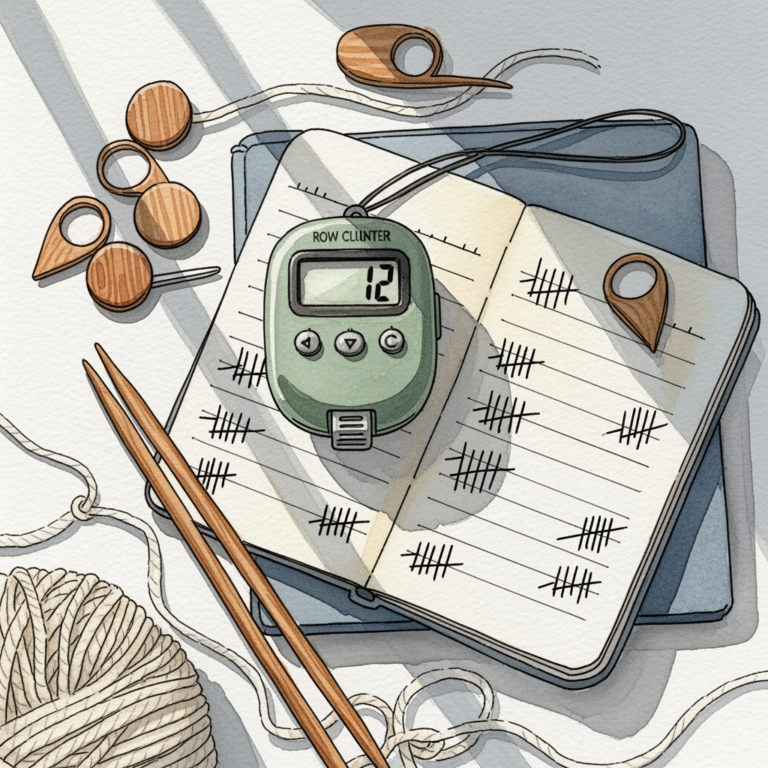
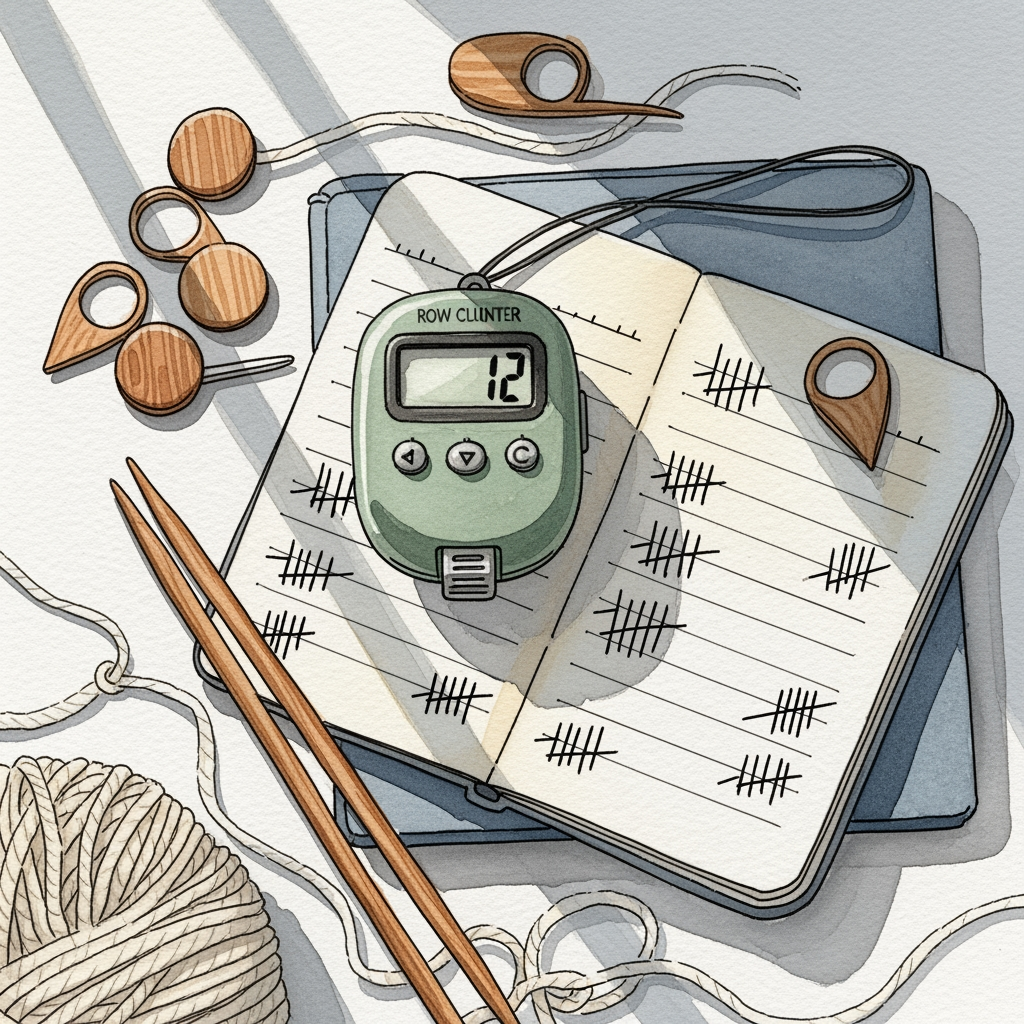
Tackling a complex lace shawl or a multi-colored brioche sweater often feels like a test of endurance where losing your place can unravel hours of careful work. When your pattern repeat spans thirty or forty rows, relying on your memory is a recipe for frustration and frogging. Choosing the right row counter is about more than just keeping score; it’s about finding a rhythm that integrates seamlessly into your knitting flow. These tools act as your safety net, allowing you to focus on your tension and stitch manipulation rather than tracking numbers.
Knitter’s Pride Mindful Collection Row Counter


The Mindful Collection row counter stands out for its elegant, minimalist design that feels at home in a curated knitting bag. Its tactile, push-button mechanism is incredibly satisfying, providing a subtle click that confirms your input without being disruptive to your concentration.
This tool is particularly well-suited for those who prefer an analog experience but demand high quality. Because it is lightweight, you can easily carry it on a lanyard or keep it sitting on your side table without it feeling like a cumbersome piece of equipment.
However, the lack of a locking mechanism means it can sometimes accidentally advance if it’s jostled inside a crowded project bag. If you are a mobile knitter who tosses your work into a tote, you might want to store this in a small dedicated pouch to ensure your count stays accurate.
Clover Kacha-Kacha Row Counter for Precision

The "Kacha-Kacha" is a legendary tool in the knitting community for a reason, primarily because of its incredibly crisp, audible feedback. When you press the button, the satisfying "kacha" sound leaves no doubt that you have successfully advanced the count.
This counter is designed to be worn around the neck, which keeps it within arm’s reach at all times. For knitters working on intricate cables or lace where you must count every single row, having the tool physically attached to your person prevents the common mistake of "forgetting to reach" for the counter after finishing a row.
The main tradeoff here is the size; it is a bit bulkier than digital alternatives. If you find yourself knitting in tight spaces, such as on an airplane or a crowded commute, the neck strap can occasionally get tangled in your yarn or needle cables.
Cocoknits Maker’s Keep Magnetic Row Counter
Cocoknits has revolutionized the way we manage our tools by integrating magnets directly into a wearable bracelet. This row counter is a game-changer for knitters who suffer from "tool amnesia," as it stays firmly on your wrist throughout the entire session.
The magnetic system allows you to attach your stitch markers directly to the wristband, keeping your essential notions organized in one place. It is an excellent choice for complex stranded colorwork where you are constantly switching between different colors and need to keep track of your progress simultaneously.
The only downside is that the magnetic surface can occasionally attract other metal objects, like your tapestry needles or small scissors, if you aren’t careful. If you prefer a clean, uncluttered workspace, you will need to practice a bit of discipline to keep only the essentials on your wrist.
KnitIQ Digital Finger Tally Row Counter

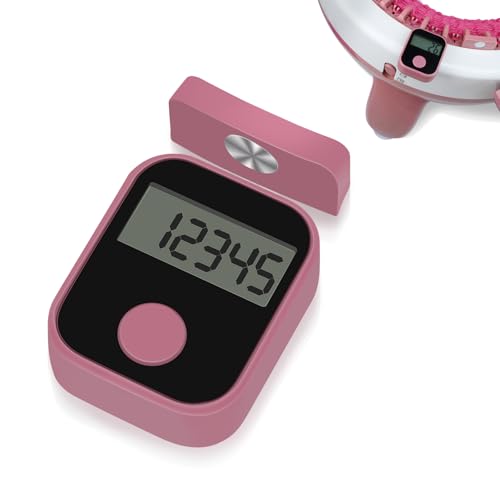
If you find that reaching for a counter breaks your knitting momentum, the finger-mounted digital counter is your best solution. It slips onto your index finger like a ring, allowing you to click the button with your thumb without ever taking your hands off your needles.
This is the gold standard for high-speed knitters or those working with slippery yarns like silk or bamboo. Because you don’t have to put your needles down to record a row, you maintain your tension and rhythm, which is vital for consistency across a long garment.
Be aware that these are digital devices with small batteries. While the batteries last a long time, it is always a good idea to keep a spare on hand, as there is nothing more frustrating than having the screen go blank in the middle of a complex lace chart.
Row Counter App: The Best Mobile Solution
For the modern knitter, a smartphone app offers functionality that physical counters simply cannot match. Apps like "KnitCounter" or "StitchMinder" allow you to save multiple projects, track repeats, and even attach photos of your charts directly to the project file.
The biggest advantage is the ability to create "nested" counters, where you can track both the current row and the total number of repeats completed. This is essential for long-term projects like sweaters or blankets where you might be working on different sections over the course of several months.
The tradeoff, of course, is screen time. If you use your phone to knit, you might find yourself distracted by notifications or social media. If you struggle with focus, you may prefer a dedicated physical tool to keep your knitting time a "tech-free" sanctuary.
Susan Bates Mechanical Clicker Row Counter

The Susan Bates mechanical clicker is the classic, no-nonsense tool that has been around for decades. It attaches directly to your needle, which is a brilliant way to ensure the counter is always exactly where your work is happening.
This is a fantastic option for beginners who are just starting to learn how to track their progress. It is simple, rugged, and requires no batteries, making it a reliable workhorse that will last for years of heavy use.
The limitation is that it only fits specific needle sizes, and it can add a bit of weight to the end of your needle. If you are knitting with very delicate, thin needles, the weight of the counter can cause the needle to feel unbalanced or even drag on your yarn.
Why Long Repeat Patterns Require Reliable Tools
When you are working on a pattern with a 50-row repeat, a single mistake in the count can throw off the entire aesthetic of the piece. In lace knitting, for example, missing a row means your yarn-overs and decreases won’t align, leading to a "broken" pattern that is notoriously difficult to fix without tinking back.
Reliable tools provide a mental off-ramp, allowing you to offload the cognitive burden of counting to a device. This is especially important when you are knitting while watching TV or chatting with friends, as it is incredibly easy to lose track of where you are in a sequence.
The reality is that human error is inevitable, but a good row counter turns a potential disaster into a minor inconvenience. Investing in a tool that you actually enjoy using increases the likelihood that you will use it consistently, which is the only way to ensure total accuracy.
Essential Features for Managing Complex Charts
When looking for a row counter for complex patterns, look for features that allow for "multi-level" tracking. You need to know not just what row you are on, but how many repeats of the chart you have finished, as these two numbers are rarely the same.
Visibility is another key factor; if you are working in low light, a backlit digital counter or a high-contrast analog counter is essential. You don’t want to be squinting at a tiny screen while trying to maintain your gauge on a complicated cable project.
Finally, consider the "reset" mechanism. You want something that is easy to reset when you finish a project but difficult to reset by accident. A counter that requires a deliberate, two-step action to clear is much safer than one with a single, exposed button.
How to Sync Row Counters with Pattern Repeats
The best way to sync your counter is to establish a "post-row ritual" where you advance the counter immediately upon completing the last stitch of a row. Never wait until the next row to record the previous one, as even a short break can lead to confusion.
If your pattern has a complex structure, use two counters: one for the row number and one for the total number of repeats. This prevents the "did I finish that repeat or not?" panic that often sets in when you pick up a project after a few days away.
If you are using a paper chart, keep your row counter physically attached to or resting on the chart itself. Creating a physical connection between your tool and your instructions reinforces the habit and makes it much harder to skip a count.
Troubleshooting Common Row Counter Accuracy Issues
The most common cause of "drift"—where your count and your knitting don’t match—is failing to advance the counter due to a distraction. If you find yourself frequently doubting your count, the best practice is to learn how to "read your knitting" by looking at the V-shapes of your stitches.
If your counter keeps resetting or advancing accidentally, it is likely a mechanical issue or a storage problem. Try using a small rubber band to keep the dial in place or store the device in a hard-shell notions case instead of a loose bag.
Finally, remember that if you do lose your place, it is not the end of the world. Take a deep breath, count your stitches, and compare them to the stitch count indicated in your pattern for that specific row. Your row counter is a tool, not a master; trust your eyes as much as you trust the numbers.
Finding the perfect row counter is a personal journey that depends as much on your personality as it does on your knitting style. Whether you prefer the satisfying click of a mechanical device or the digital precision of an app, the goal remains the same: keeping your project on track. Don’t be afraid to experiment with a few different methods until you find the one that feels like a natural extension of your hands. Ultimately, the best tool is the one you actually use, ensuring your complex patterns stay beautiful and error-free.