6 Best Magnetic Pattern Boards For Charts To Try
Boost your organization with these 6 top-rated magnetic pattern boards. Discover durable, versatile options perfect for tracking charts and project planning.
Tracking complex colorwork or intricate lace charts can quickly turn a meditative knitting session into a frustrating game of losing your place. Magnetic boards act as a reliable anchor, keeping your pattern visible and your progress clearly marked row by row. Investing in the right tool saves you from the inevitable "oops" moments that lead to dropped stitches or misaligned cable crosses. Here are six standout boards that offer different solutions for managing your patterns effectively.
KnitPro Mindful Collection Magnetic Chart Board
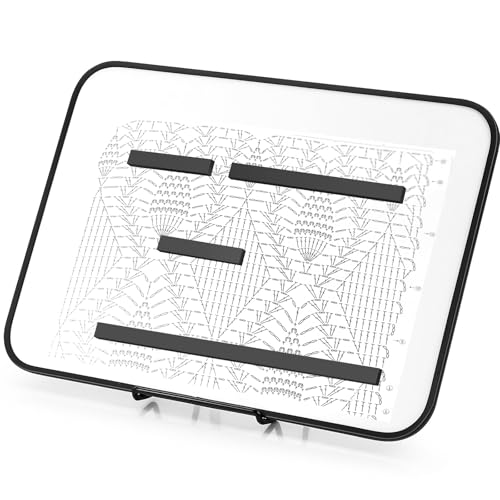

The Mindful Collection board is designed for the knitter who appreciates a serene, organized workspace. It features a sleek, teal-colored aesthetic that complements the rest of the collection, but the real benefit is the sturdy, foldable design.
It comes with a set of strong magnets and a long magnetic strip that acts as a row marker. This is particularly helpful when you are working on a dense chart where your eyes might easily skip a line.
The board folds into a stand, allowing you to prop your pattern up at a comfortable viewing angle. If you find yourself hunching over your work, this adjustment can save your neck and shoulders during long sessions.
Cocoknits Maker’s Board: The Modular Choice
The Cocoknits Maker’s Board is less of a simple board and more of a comprehensive project management system. It uses a steel base that allows you to attach various magnetic accessories, making it perfect for knitters who like to keep their notions, stitch markers, and charts in one place.
Because it is modular, you can customize the layout to suit your specific project. If you are working on a multi-part garment, you can arrange your chart on one side and your gauge notes on the other.
Keep in mind that the accessories are sold separately, which adds to the initial investment. However, for the knitter who thrives on extreme organization, the ability to snap a magnetic ruler or a pattern holder directly onto the board is a game-changer.
Della Q Magnetic Pattern Keeper: Best Portable

If you are a "knitting-on-the-go" enthusiast, the Della Q pattern keeper is likely your best friend. It is designed to look and feel like a high-quality portfolio, protecting your printed charts from coffee spills or bag-crushing while you commute.
The interior is lined with a magnetic surface that holds your paper securely without the need for clips that might tear the edges. It’s thin, lightweight, and slides easily into a project bag alongside your circular needles.
The tradeoff here is size; it won’t accommodate massive, full-page lace maps without some folding. If your pattern is printed on a standard letter-sized sheet, it fits perfectly, but larger formats might require a bit of creative placement.
Knitter’s Pride Chart Keeper: Best Value Pick

The Knitter’s Pride option is the quintessential "workhorse" tool for the budget-conscious knitter. It is straightforward, durable, and does exactly what it promises without unnecessary bells or whistles.
It features a simple folding mechanism and includes a magnetic strip for tracking rows. It is an excellent choice for beginners who aren’t yet sure if they need a premium system but know that paper charts are getting lost in their yarn stash.
While it lacks the modularity of more expensive boards, its simplicity is its greatest strength. It is lightweight, easy to store, and provides a clear, flat surface that keeps your chart from curling up while you work.
Magma Pattern Holder by Twig & Horn: Premium
The Magma Pattern Holder is arguably the most aesthetically pleasing option on the market, featuring a handsome wool-felt cover. It feels like a piece of fine stationery, making the act of knitting feel like a sophisticated craft.
Beyond the looks, the magnets are exceptionally strong, ensuring your chart stays put even if you accidentally bump the board. The internal pocket is also a great place to stash your finishing needles or a small pair of snips.
This is a luxury item, and you are paying for the quality of materials and the refined design. If you spend your knitting time in a dedicated craft room and want your tools to reflect your personal style, this is the premium choice.
ArtBin Magnetic Chart Board: The Large Format

Sometimes, a project requires a massive chart—think complex intarsia or a large-scale lace shawl that spans an entire page. The ArtBin board is a larger, more industrial-style option that provides ample real estate for oversized patterns.
Because of its larger footprint, it is not the best choice for small project bags. It is better suited for home use, where you can keep it stationed on a side table or a dedicated knitting station.
The surface is very reliable, and because it is a bit larger, you have more room to attach extra magnets for notes or reminders. If you find yourself constantly taping multiple pages of a chart together, this board will save you a lot of headache.
Why Magnetic Boards Improve Your Chart Reading

Reading a chart requires a high degree of focus, especially when dealing with symbols that represent increases, decreases, and yarn-overs. When you rely on your eyes alone, it is incredibly easy to lose your place after a brief interruption.
A magnetic board forces you to slow down and acknowledge each row as you complete it. By physically moving the magnetic strip, you create a tactile connection to your progress that helps prevent "row-skipping" errors.
This is especially vital when working with complex lace, where one missed yarn-over can throw off the entire stitch count for the rest of the project. A board acts as a safety net, ensuring your pattern remains a guide rather than a source of stress.
Key Features to Consider Before You Purchase
When choosing a board, consider your primary knitting environment. If you knit primarily on the sofa, a board with a built-in stand is essential for neck comfort.
Think about the size of the charts you typically use. Standard 8.5×11 inch charts fit most boards, but if you enjoy knitting large afghans or complex colorwork sweaters, you might need a larger format.
- Portability: Does it fit in your project bag?
- Magnet Strength: Are the magnets strong enough to hold heavy cardstock?
- Surface Material: Is it easy to clean if yarn dust or fiber bits accumulate?
- Stability: Does the stand collapse easily, or is it rigid?
Tips for Organizing Your Complex Lace Projects
Lace knitting often involves "live" charts where you are tracking multiple repeats across a row. Use highlighters on your paper chart to mark the start and end of a repeat before placing it on your board.

You can also use extra magnets to mark the beginning and end of your pattern repeats directly on the board surface. This allows you to see the "rhythm" of the lace at a glance, making it easier to spot an error before you reach the end of the row.
Always keep a pencil and eraser attached to your board with a small magnet. Being able to mark off completed repeats as you go provides a sense of accomplishment and makes it easier to pick up the project after a long break.
How to Maintain Your Magnetic Board Surfaces
Most magnetic boards are made of steel or a metal-coated composite that can attract dust and lint from your yarn. Use a soft, dry microfiber cloth to wipe the surface down between projects to ensure your magnets maintain a strong grip.
Avoid using harsh cleaning chemicals, as these can strip the finish or damage the magnetic coating. If you have a felt-covered board, a lint roller is your best tool for keeping the exterior looking fresh and clean.
If your magnets lose their "stick," check for debris caught between the magnet and the board. A quick wipe usually restores full contact, ensuring your pattern stays firmly in place for years of knitting.
Finding the right magnetic board is about matching your tool to your specific knitting habits and project scale. Whether you prioritize portability, modularity, or raw surface area, there is a solution that will make your chart-reading experience infinitely smoother. Remember that the best tool is the one that actually gets used, so choose the board that feels most intuitive to your personal workflow. Happy knitting, and may your rows always align perfectly.