6 Best Yarn Snips For Airline Compliance To Pack
Travel with ease! Discover 6 TSA-compliant yarn snips that ensure your knitting projects breeze through security without sacrificing precision or performance.
Traveling with your knitting projects shouldn’t mean leaving your essential tools behind or risking a confrontation at the security checkpoint. While TSA regulations can feel restrictive, choosing the right yarn snips ensures you can keep working on your lace or cables at thirty thousand feet. This guide focuses on tools that balance cutting performance with airport security compliance. Let’s look at how to keep your stitches moving without sacrificing your favorite snips.
Clover Thread Cutter Pendant: Best For Travel
The Clover Thread Cutter Pendant is a masterclass in clever design for the frequent flyer. Because it uses a hidden, circular blade rather than traditional scissor points, it is virtually never flagged by security scanners.
It sits comfortably around your neck, meaning you’ll never have to dig through your project bag to find your snips mid-row. It is perfect for snipping yarn ends on fingering-weight wool or acrylic blends, though it struggles with heavier, multi-ply worsted yarns.


The main trade-off here is precision. You won’t get a clean, surgical cut for grafting stitches, but for general yarn management, it is the safest bet for a hassle-free boarding experience.
Fiskars 5-Inch Micro-Tip Scissors: TSA Friendly
Fiskars is a household name for a reason, and their 5-inch Micro-Tip scissors often slide through security because they fall well within the "under 4 inches from the pivot point" guideline. These are my go-to for projects requiring a bit more finesse, like trimming loose ends on a complex stranded colorwork sweater.
The micro-tip allows you to get right into tight spaces, which is essential if you need to snip a stray thread without nicking your main project. The handle is ergonomic enough for long sessions, though they lack the portability of folding options.
If you choose these, keep them in a clear, visible pouch in your carry-on. Being transparent about your tools often puts security agents at ease during the screening process.
Gingher 4-Inch Stork Embroidery Scissors: Classic

There is a certain joy in using a tool that feels like a piece of history, and the Gingher Stork is the gold standard for many knitters. They are sharp, durable, and possess a classic aesthetic that makes them a delight to use on long flights.
However, because they look like traditional "sharp" scissors, they are the most likely to be scrutinized by an agent. Always ensure the blades are closed and tucked into a protective sheath before arriving at the airport.
These are best for the knitter who values precision above all else. If you are working on delicate silk or mohair lace, the fine point of the Stork is unmatched, but handle them with care to avoid dulling the tips.
Singer Folding Scissors: Compact And Reliable

Singer’s folding scissors are a practical solution for those who prioritize space in their project bag. When folded, the sharp points are completely encased in the handle, making them incredibly safe to toss into a side pocket.
They are surprisingly sturdy for their size, handling everything from cotton yarn to bulky wool blends with ease. The folding mechanism does loosen over time, so expect to replace them every few years if you are a heavy traveler.
These are an excellent "backup" pair to keep in your travel kit. They aren’t the most ergonomic for hours of snipping, but they will never poke a hole in your project bag lining.
Dritz 3-Inch Folding Scissors: Pocket-Sized Pick
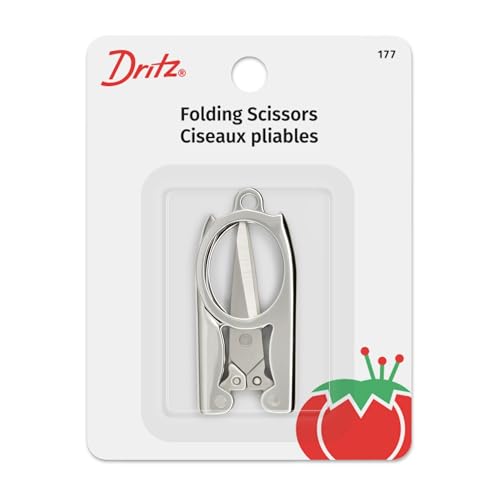
Dritz folding scissors are smaller and lighter than most, making them an ideal choice for a minimalist travel kit. At just three inches, they are well below the threshold for concern, and their compact footprint takes up almost no room in a small notions tin.
They are perfect for the knitter who keeps a "go-bag" for socks or small accessories. While they aren’t meant for heavy-duty cutting, they are more than capable of handling standard yarn weights.
Be aware that the small handles can be difficult to grip if you have arthritis or hand fatigue. If you are already struggling with tension in your hands from knitting, you might prefer a larger handle, even if it’s slightly less portable.
Cocoknits Yarn Snips: Safe Blade Design Choice

Cocoknits has revolutionized notions with their focus on safety and functionality. Their yarn snips feature a unique, shielded blade design that makes it nearly impossible to accidentally cut yourself or your project.
These snips are specifically designed to look non-threatening to security personnel. They look more like a craft tool than a weapon, which often results in a faster transit through the security line.
Because they are spring-loaded, they are incredibly easy to use with one hand. This is a game-changer when you are holding a project and need to snip a tail without putting your needles down.
Understanding TSA Rules For Knitting Scissors
The official TSA guideline states that scissors must have blades shorter than 4 inches from the pivot point to be allowed in carry-on luggage. Note that this is the length of the blade, not the total length of the scissors.
Despite this, the final decision always rests with the individual security officer at the checkpoint. If they deem a tool "dangerous," they have the authority to confiscate it, regardless of the written rules.
Always carry your scissors in a way that makes them easy to inspect. A clear plastic notions bag is much better than a dark, opaque zippered pouch, as it shows you have nothing to hide.
Why Blade Length Matters For Airport Security
Blade length is the primary metric for security because it dictates the potential for harm in a crowded cabin. Staying under the 4-inch limit is a non-negotiable starting point for any tool you intend to fly with.
However, the shape of the blade also matters. Blunt-nosed scissors are almost always preferred over needle-sharp embroidery points. If you can find a pair with rounded tips, you’ll have a much easier time getting through security.
Remember that "compliance" is about reducing friction. The less time a security agent spends inspecting your bag, the faster you get to your gate and back to your knitting.
Essential Tips For Packing Tools In Carry-Ons

Place your scissors in an external pocket of your carry-on bag rather than buried at the bottom. This allows you to quickly pull them out for inspection if asked, rather than dumping your entire project onto the security belt.
Consider using a dedicated notions tin to keep your snips, tapestry needles, and stitch markers together. Not only does this keep your bag organized, but it also shows the security team that you are a crafter with a specific, organized set of tools.
If you are particularly nervous about losing a favorite pair, leave them at home and pack a cheaper, replaceable pair for travel. No tool is worth the stress of losing it to a security bin.
How To Keep Your Snips Sharp And Rust-Free
Knitting tools, especially high-quality steel scissors, are prone to rust if exposed to the humidity changes common in air travel. Always wipe your snips down with a dry cloth after use to remove any oils or yarn fibers that might trap moisture.
If you’re traveling to a humid climate, keep a small silica gel packet in your notions bag to absorb excess moisture. This simple step can add years to the life of your blades.
Finally, never use your yarn snips to cut anything other than yarn. Cutting paper, wire, or plastic will dull the blades instantly, making them frustrating to use when you finally sit down to work on your project.
Navigating airport security with your knitting tools is entirely manageable with a little preparation and the right gear. By choosing snips that are compact, clearly defined as craft tools, and within the required length limits, you can focus on your stitches rather than your luggage. Keep your tools organized, stay mindful of the rules, and enjoy the peace of mind that comes with being a well-prepared traveling knitter. Happy travels and happy knitting!