6 Best Metal Sewing Needles For Attaching To Hats
Choose the right metal needles for hat crafting. This guide reviews the top six durable options for precise, secure attachment to various hat materials.
Finishing a handmade hat is the final, satisfying step that transforms a length of yarn into a wearable heirloom. Choosing the right needle for weaving in your ends is just as vital as selecting your knitting needles or yarn weight. A high-quality metal needle ensures your hard work stays secure without splitting the delicate fibers of your finished project. This guide explores the best tools to help you achieve a professional, long-lasting finish on every hat you knit.
Clover Chibi Bent Tip Tapestry Needles: Best Overall


The Clover Chibi set is a staple in almost every experienced knitter’s notions bag. These needles feature a unique bent tip that makes picking up stitches behind the brim of a hat incredibly intuitive.
Because they are made of polished steel, they glide through dense wool fibers without snagging. The set comes in a convenient, portable carrying case, which is a lifesaver when you are finishing a project on the go.
The combination of the ergonomic bend and the smooth finish makes them the most versatile option for daily use. If you only buy one set of needles for your knitting kit, let it be these.
Bohin France Size 18/22 Steel Needles: Best Durability

Bohin needles are legendary for their strength and resistance to bending. When you are working with heavy, rustic wools that require a bit of force to pull through, these needles won’t warp or snap under pressure.
Their nickel-plated finish is exceptionally smooth, allowing the needle to slide through tight ribbing with minimal resistance. This durability is essential when you are working with high-twist yarns that can be stubborn during the weaving process.
While they are straight rather than bent, their structural integrity is unmatched. They are the workhorses you want when you are finishing a heavy-duty winter beanie.
Dritz Extra-Large Eye Needles: Best for Thick Yarns

If you love knitting with super bulky yarns, you know the frustration of trying to thread a needle that simply isn’t wide enough. Dritz Extra-Large Eye needles solve this problem by offering a generous opening that accommodates even the thickest roving-style yarns.
Despite the large eye, the shaft remains slender enough to weave through stitches without distorting the fabric. This balance is difficult to find, as many large-eye needles are also too thick to pass through delicate stitch patterns.
These are an essential tool for those who frequently work with jumbo-weight fibers. They prevent the dreaded "yarn fraying" that happens when you try to force a thick strand through an undersized eye.
Singer Assorted Hand Needles: Best Budget Pick

Singer provides a reliable, no-nonsense solution for knitters who need a variety of sizes on a budget. This assorted pack ensures you have the right gauge for everything from fine lace-weight hats to heavy chunky knits.
While they may not have the high-end polish of boutique brands, they are perfectly functional for the occasional knitter. They are sturdy enough to handle standard acrylics and wool blends without issue.
Keep a pack of these in your project bag as a backup. You will appreciate having them on hand when you lose your primary needle in the couch cushions.
Tulip Tapestry Needles with Case: Best for Precision
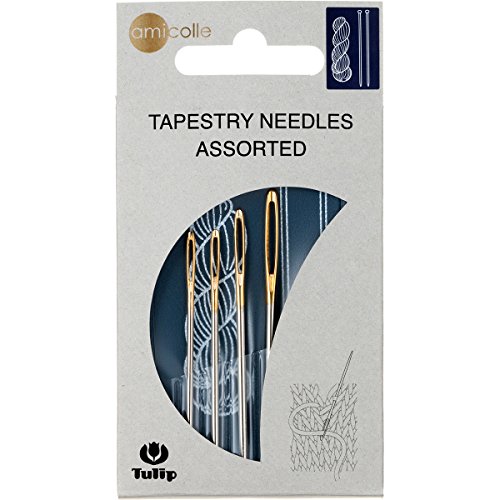
Tulip needles are widely considered the gold standard for those who value craftsmanship and precision. The tips are slightly rounded, which allows them to glide between the plies of your yarn rather than piercing them.
This precision is crucial when you are weaving ends into intricate colorwork or cables. By sliding between the fibers, you ensure your ends are hidden securely without creating bulky "knots" on the back of the work.
The needles arrive in a beautiful, high-quality tube that keeps them organized and protected. They are an investment in your craft that you will appreciate every time you finish a hat.
John James Gold Plated Needles: Best for Smoothness
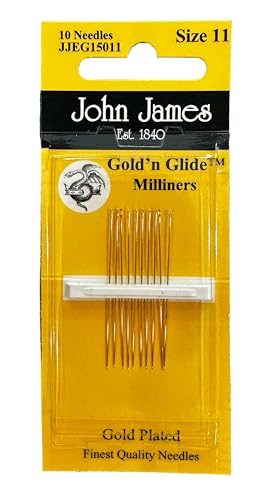
Gold-plated needles offer a level of smoothness that is hard to replicate with standard nickel or steel. This reduced friction makes them glide through even the most "grippy" fibers, such as mohair or high-twist alpaca.
The gold coating is not just for aesthetics; it provides a slick surface that resists oxidation. If you live in a humid climate, these needles are less likely to develop the surface roughness that can damage delicate wool.
They are a luxurious touch for a knitter who treats the finishing process as a meditative part of the project. You will notice the difference in how easily they navigate dense, textured ribbing.
Why Bent Tip Needles Are Essential for Hat Finishing
Bent tip needles change the geometry of how you weave in ends. Instead of having to maneuver your entire hand behind the fabric, the bend allows you to "scoop" the needle through the stitches from the front or side.
This is particularly helpful when working on a hat with a folded brim, where space is limited. The angle allows you to follow the path of the stitch with greater accuracy, ensuring the yarn is buried deep within the fabric.
Once you get used to the leverage provided by the bent tip, you will find it difficult to go back to straight needles. It turns a tedious task into a quick, fluid motion.
How to Choose the Right Eye Size for Chunky Yarns
The golden rule of needle selection is that the eye should be large enough to hold the yarn without stripping it, but not so large that it stretches your stitches. If the eye is too wide, it will pull on the surrounding fabric as you pass it through, leaving visible gaps.
For chunky yarns, look for a needle that has a tapered eye. This allows the yarn to sit flat, reducing the overall thickness of the "tail" you are weaving in.
Always test your yarn in the eye before you begin. If you have to twist or flatten the yarn excessively to get it through, you are likely to damage the fiber before you even start weaving.
Techniques for Weaving Ends Into Thick Hat Ribbing
Weaving ends into ribbing requires a different approach than weaving into stockinette. Because ribbing is stretchy, your ends must follow the path of the stitch vertically to maintain that elasticity.
- Follow the "V" shape: Always weave your end through the back of the stitches, mimicking the path the yarn took when it was knitted.
- Duplicate stitch: Use the duplicate stitch method to weave the yarn behind existing loops; this locks the end in place without adding bulk.
- Split the ply: For a truly invisible finish, carefully split the ply of the yarn with your needle to anchor the end inside the strand itself.
Avoid pulling your ends too tight, as this will cause the ribbing to pucker. Always leave a little bit of slack so the fabric can still move and stretch as intended.
Proper Storage to Prevent Needle Rust and Damage
Metal needles, especially those made of steel, are susceptible to rust if stored in damp environments. Always ensure your needles are completely dry before placing them back in their case.
Using a needle case with a small packet of silica gel can help absorb moisture and prolong the life of your tools. Avoid storing needles loose in a project bag where they might pick up moisture or get bent by heavier items.
Treat your needles like the precision tools they are. A well-cared-for set of needles will last for decades, becoming a trusted companion for every hat you knit.
Selecting the right needle is a small detail that yields a massive difference in the quality of your finished hats. Whether you prioritize the ergonomic benefit of a bent tip or the luxurious glide of a gold-plated finish, the right tool makes the final step of your project a joy rather than a chore. Take the time to experiment with these options to see which matches your unique knitting style and yarn preferences. Your future hats will thank you for the extra care you put into their finishing.