7 Best Beginner Kits For Learning Bead Knitting
Discover the top 7 beginner bead knitting kits. This guide reviews essential tools and patterns to help you master this elegant craft with ease and confidence.
Bead knitting is a transformative technique that adds weight, sparkle, and architectural interest to your fabric without requiring complex stitch patterns. Many beginners find the prospect of pre-stringing hundreds of beads daunting, but the right kit can demystify the process entirely. By selecting a bundle that balances yarn texture with appropriate bead size, you avoid the most common pitfalls of the craft. This guide will help you navigate the best entry points into this glittering world of fiber arts.
BeadSmith Beginner Beaded Knitting Starter Kit
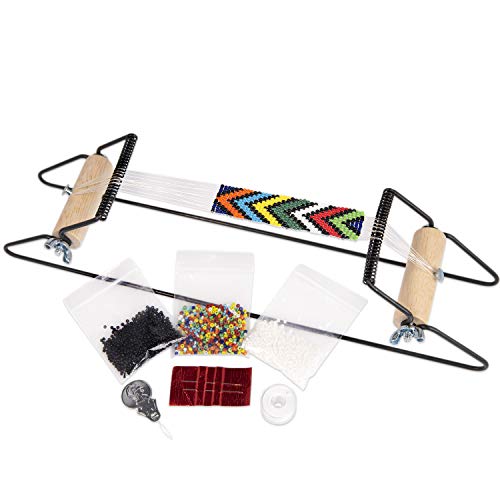

This kit is the gold standard for those who want to focus purely on the mechanics of bead placement without worrying about yarn compatibility. It includes a variety of bead sizes and a specialized needle threader that is essential for getting beads onto your working yarn.
The real strength here lies in the versatility of the included tools. You aren’t just buying beads; you are buying the infrastructure needed to hold them. If you’ve ever tried to thread a bead onto a fuzzy mohair yarn, you know that a standard sewing needle simply won’t cut it.
The main tradeoff is that the kit provides tools rather than a complete project. You will need to supply your own yarn, which allows you to pick a smooth, high-twist fiber that highlights the beads. Bottom line: Buy this if you want to master the technique first and experiment with your own stash later.
Sirdar Jewelspun Bead Knitting Project Bundle

Sirdar’s approach focuses on the "all-in-one" experience, pairing their popular self-striping yarn with beads that are pre-selected to complement the colorway. This removes the "choice paralysis" that often hits beginners when they stand in front of a wall of glass beads at the craft store.
Because the yarn is a soft, variegated acrylic, it lacks the "grab" of wool. This makes sliding beads up the strand much easier for a beginner. However, you must be careful with your tension; if you pull too tightly, the beads can sit unevenly against the variegated color shifts.
The project bundle is designed for a simple cowl, which is the perfect canvas for learning. Bottom line: This is the best choice for the knitter who wants a guaranteed aesthetic outcome without the headache of sourcing matching materials.
Knit Picks Beaded Lace Scarf Workshop Kit
Lace knitting is intimidating enough on its own, but adding beads requires a level of precision that this kit addresses beautifully. The pattern provided is specifically written to teach you how to incorporate beads into a lace repeat, rather than just adding them as a decorative afterthought.
The inclusion of high-quality, consistent glass beads is the standout feature here. Cheap, uneven beads can ruin a lace project by distorting your stitch gauge. By using uniform beads, your lace will block out evenly and look professional right off the needles.
Be aware that lace weight yarn requires a very fine crochet hook for the "hook method" of bead placement. Bottom line: If you have a basic grasp of lace stitches and want to level up, this is the most educational kit on the market.
Jimmy Beans Wool Beaded Wristlet Starter Set
Wristlets are the ultimate "low-risk, high-reward" project for bead knitting. This kit provides a small amount of high-quality wool, which is essential because wool has a natural elasticity that helps hold the beads in place.
Synthetic yarns can sometimes be too slick, causing beads to migrate or slide down the stitch unintentionally. The wool in this set provides enough friction to keep your beads exactly where you place them. This makes the learning curve significantly shallower.
The kit also includes a set of double-pointed needles that are sized perfectly for the yarn weight. Bottom line: Choose this if you are a tactile knitter who wants to learn the rhythm of bead placement on a quick, satisfying project.
Rowan Fine Lace Beaded Shawl Learning Kit
Rowan is known for luxury, and this kit reflects that by pairing their signature alpaca-blend lace yarn with high-end beads. Alpaca fiber has a slight halo, which creates a beautiful, diffused look around the beads rather than a harsh, metallic contrast.
The challenge with this kit is the fiber itself. Alpaca is a "living" fiber that can grow and drape significantly after blocking. You must be comfortable with the fact that your shawl will look very different before and after its final wash.
This kit is not for the faint of heart, but it offers a masterclass in fiber selection. Bottom line: Pick this if you are an intermediate knitter looking to create a heirloom-quality piece that balances elegance with technique.
Scheepjes Bead-Along Accessory Project Set
Scheepjes has mastered the "bead-along" format, providing a structured, step-by-step experience that feels like a community class. The project set is comprehensive, including not just the yarn and beads, but also a detailed guide on how to manage your "bead stringing" workflow.
The biggest hurdle for beginners is the sheer volume of beads required for a large project. This kit breaks the stringing process into manageable segments, preventing the dreaded "tangle of yarn and beads" that often happens when you try to string an entire skein at once.
The yarn is a high-quality cotton blend, which offers excellent stitch definition. Bottom line: This is the best kit for those who learn best through guided, modular steps.
DMC Pearl Cotton Beaded Ornament Starter Kit

If you want to practice your technique without committing to a full-sized garment, this ornament kit is a fantastic entry point. DMC Pearl Cotton is a non-elastic, mercerized thread, which makes it extremely easy to see exactly where your stitches are.
Because the thread doesn’t stretch, your bead placement will be incredibly precise. This is an excellent way to train your eyes to see the relationship between a stitch and a bead. You don’t have to worry about gauge issues or yardage calculations.
The trade-off is that you won’t learn how to handle the weight of beads on a larger piece of fabric. Bottom line: Use this as a "sampler" project to build muscle memory before moving on to larger, more expensive projects.
Essential Tools for Successful Bead Knitting
Beyond the kit, you need a few core tools to ensure success. The most important is a very fine steel crochet hook (0.5mm to 0.75mm). This allows you to pull the yarn through the bead and place it on the stitch, which is often easier than pre-stringing.

You should also invest in a bead mat. These felt-covered trays keep your beads from rolling across the floor, which is a common disaster for beginners. A good bead mat saves hours of frustration and keeps your workspace tidy.
Finally, keep a tapestry needle with a large eye nearby for finishing ends. When working with beads, your ends can be bulkier than usual, so you need a needle that can accommodate the extra thickness of the yarn combined with the occasional bead trapped in the weave.

How to Choose Beads for Your Knitting Projects
Not all beads are created equal, and the "cheap" ones often have sharp edges that can slice through delicate fibers. Always look for glass seed beads that are labeled as "smooth" or "polished."
- Size Matters: Use 6/0 or 8/0 beads for worsted or DK weight yarn. Use 11/0 or 15/0 beads for fingering or lace weight yarn.
- Weight: Remember that beads add significant weight to your fabric. A heavy beaded shawl may stretch out of shape if the yarn isn’t strong enough.
- Finish: Transparent beads allow the yarn color to show through, while opaque beads provide a bold, graphic pop.
Always test a few beads on a swatch before you commit to stringing an entire project. If the bead is too heavy for the yarn, the stitch will sag and look distorted.
Troubleshooting Common Bead Placement Issues
If your beads are constantly sliding to the wrong side of the fabric, your tension is likely too loose. Try using a slightly smaller needle to tighten up your stitches, which creates a more secure "seat" for the bead to rest in.
If the beads are "clumping," you might be using too many beads per row. Bead knitting looks best when there is enough "negative space" of yarn between the beads to allow the fabric to drape naturally.
Finally, if you find that you are constantly losing beads or they are falling off, check your yarn choice. Slippery superwash wools are notorious for this; consider using a rustic wool or a cotton blend for your first few projects to provide the necessary grip.
Bead knitting is a rewarding way to elevate your projects from simple garments to wearable works of art. By starting with one of these curated kits, you can bypass the common frustrations of material sourcing and focus on the joy of the craft. Remember that every master knitter started with a single, slightly wobbly beaded stitch. Take your time, trust your tools, and enjoy the sparkle you’re adding to your stitches.