7 Best Heavy Duty Drying Racks For Wet Skeins
Drying wet skeins requires stability and airflow. Discover the 7 best heavy-duty racks designed to prevent stretching and speed up your yarn’s drying process.
Drying hand-dyed or freshly washed skeins is a critical stage in the fiber arts process that often gets overlooked. If you don’t support the weight of wet wool properly, you risk uneven tension and fiber distortion before you even cast on. These seven racks provide the structural integrity needed to keep your yarn in pristine condition. Choosing the right equipment ensures your hard work in the dye pot or wash basin remains perfectly preserved.
Stainless Steel Gullwing: Best Overall Drying Rack


The gullwing design is a favorite in my studio because of its versatile, multi-angled configuration. Stainless steel is the gold standard here, as it resists the rust that can plague cheaper, coated wire racks when exposed to damp wool for long periods.
This rack offers ample horizontal space, which is vital for laying out heavy, water-logged skeins without overlapping them. Overlapping can lead to uneven drying times and potential color bleeding if you are working with hand-dyed yarns that haven’t been fully set.
The sturdy frame prevents bowing, even when you are drying a full sweater’s worth of yarn. If you have a large stash of bulky wool, the ability to adjust the wings means you can prioritize airflow, which is essential for preventing mold in high-humidity environments.
Honey-Can-Do Heavy Duty Foldable Drying Rack

When you are dealing with a massive batch of worsted weight wool, you need a rack that won’t buckle under the pressure. The Honey-Can-Do model is built with a reinforced frame that handles the weight of saturated fibers with ease.
The accordion-style folding mechanism makes this a great choice for knitters living in smaller spaces or apartments. You can tuck it behind a door when your yarn is dry, reclaiming your living room for actual knitting time.
However, be mindful of the spacing between the rungs. If your skeins are particularly long or heavy, you may need to drape them across two rungs to ensure they don’t touch the floor or sag too deeply.
Household Essentials Expandable Laundry Rack
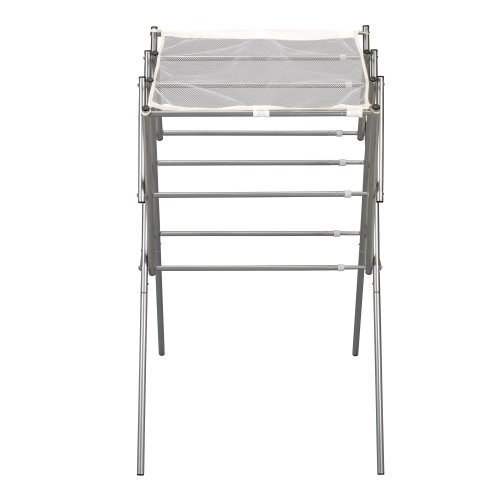
This rack shines for the knitter who oscillates between small accessory projects and full-sized garment quantities. The expandable width allows you to customize the rack to fit the exact amount of yarn you are currently processing.
The steel construction is robust enough to hold several pounds of damp wool without wobbling. I find the extra height on this model particularly useful, as it allows for better air circulation underneath the bottom layer of skeins.
One thing to watch for is the finish on the rods. While generally smooth, always do a quick check for any rough spots or weld burrs that could snag delicate fibers like mohair or silk.
Songmics Heavy Duty Steel Laundry Drying Rack

The Songmics rack is built like a tank, designed for those who process large quantities of yarn at once. If you are a dyer or someone who washes their entire stash seasonally, this is a reliable workhorse.
The sheer surface area is its biggest advantage. You can spread out multiple skeins of lace-weight yarn without them becoming a tangled mess, which is a common nightmare when trying to dry several hanks simultaneously.
Because it is heavy, it stays put even when you are hanging uneven loads. Just ensure you have the floor space to accommodate its footprint, as this isn’t a piece of equipment you want to be moving around a crowded room.
Polder Products Accordion Style Drying Rack

Polder has mastered the classic accordion design, which is perfect for knitters who prefer a simple, no-nonsense setup. It is lightweight yet surprisingly strong, provided you distribute the weight of your skeins evenly across the frame.
The horizontal bars are spaced perfectly for standard-sized skeins. I recommend this for anyone who mostly works with fingering or sport-weight yarn, as the bars are thin enough to allow maximum airflow through the center of the hank.
The main tradeoff here is the lack of height compared to tower-style racks. You won’t be able to hang long, heavy skeins without them dragging on the floor, so keep your yarn lengths in mind before purchasing.
Minky Homecare Multi-Level Drying Tower

Tower racks are a game-changer for knitters who don’t have a dedicated laundry room. By utilizing vertical space, the Minky tower allows you to dry a significant amount of yarn in a very small footprint.
The multi-level design lets you organize your skeins by weight or fiber type. You can put your heaviest, slowest-drying wool on the top tier where the airflow is best, and save the lower levels for lighter, faster-drying synthetics or blends.
Be aware that the top-heavy nature of tower racks requires a bit of balance. Always load the bottom tiers first to ensure the unit remains stable, especially if you have curious pets or children nearby.
Brabantia WallFix Retractable Drying Rack
For the knitter who is truly short on space, the WallFix is an ingenious solution. It mounts directly to the wall and folds out only when you need it, staying completely out of the way when you are busy knitting.
This is ideal for a dedicated craft corner. Because it is wall-mounted, it is incredibly stable and won’t tip over, regardless of how heavy your wet skeins are. It feels like a permanent fixture of your fiber studio.
The limitation is the fixed location. You cannot move it to a sunny window or a breezy spot, so you are dependent on the airflow of the specific room where it is installed.
Why Sturdy Racks Matter for Wet Wool Skeins
Wool is at its most vulnerable when it is soaking wet. The fibers are heavy, and the weight of the water can cause the yarn to stretch permanently if it isn’t supported correctly.
A flimsy rack will sag, causing the yarn to pool in the center of the bars. This creates "dents" or uneven tension in the skeins, which can lead to frustrating inconsistencies when you eventually wind the yarn into balls for knitting.
Furthermore, a sturdy rack allows for proper tensioning. By ensuring the skein is draped evenly, you maintain the original twist and structure of the yarn, ensuring that your gauge remains consistent from the first stitch to the last.
Proper Techniques for Blocking Hand-Dyed Yarn
When you take your yarn out of the dye bath, the goal is to remove excess water without wringing or twisting the fibers. I always suggest rolling the skeins in a thick, lint-free towel to absorb the bulk of the moisture first.
Once the yarn is damp but not dripping, hang it carefully on your rack. If the yarn is hand-dyed, consider rotating the skeins halfway through the drying process to ensure even color distribution and consistent moisture evaporation.
Avoid placing your drying rack in direct, harsh sunlight. While it might speed up the process, UV rays can fade delicate dyes and make some fibers, particularly wool and silk, brittle over time.
Essential Tips for Preventing Fiber Stretching
The biggest mistake I see beginners make is leaving heavy, wet yarn hanging for too long. Once the yarn is dry to the touch, take it down immediately to prevent gravity from doing its work on the fibers.
If you are drying delicate fibers like cashmere or alpaca, consider laying them flat on a mesh drying screen placed over your rack. This provides the support they need to avoid stretching under their own weight.
Remember that different fibers have different "memory" properties. Superwash wool, for example, is notorious for stretching when wet, so it requires extra care and a very level, supportive drying surface to maintain its shape.
Investing in a high-quality drying rack is just as important as choosing the right needles or high-grade wool. By providing your yarn with a stable, supportive environment, you protect the structural integrity of your fibers and ensure your finished projects look professional. Take the time to set up your drying station correctly, and your yarn will thank you with beautiful, consistent results. Happy knitting, and may your skeins always dry perfectly.