6 Best Fine Felting Needles For Smooth Finishing
Achieve a flawless finish with our top 6 fine felting needles. This guide details the best tools to refine textures and polish your needle-felted projects.
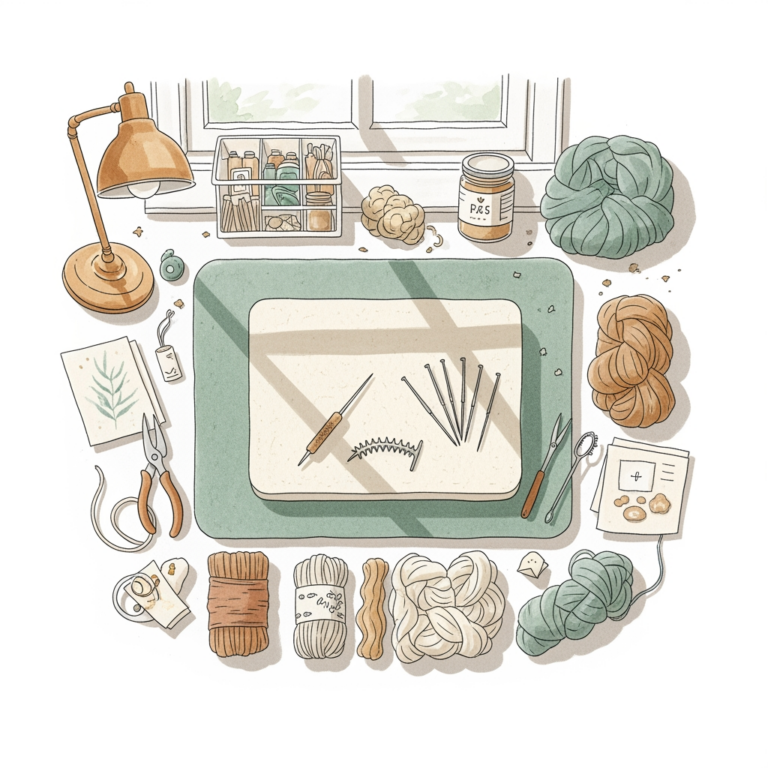
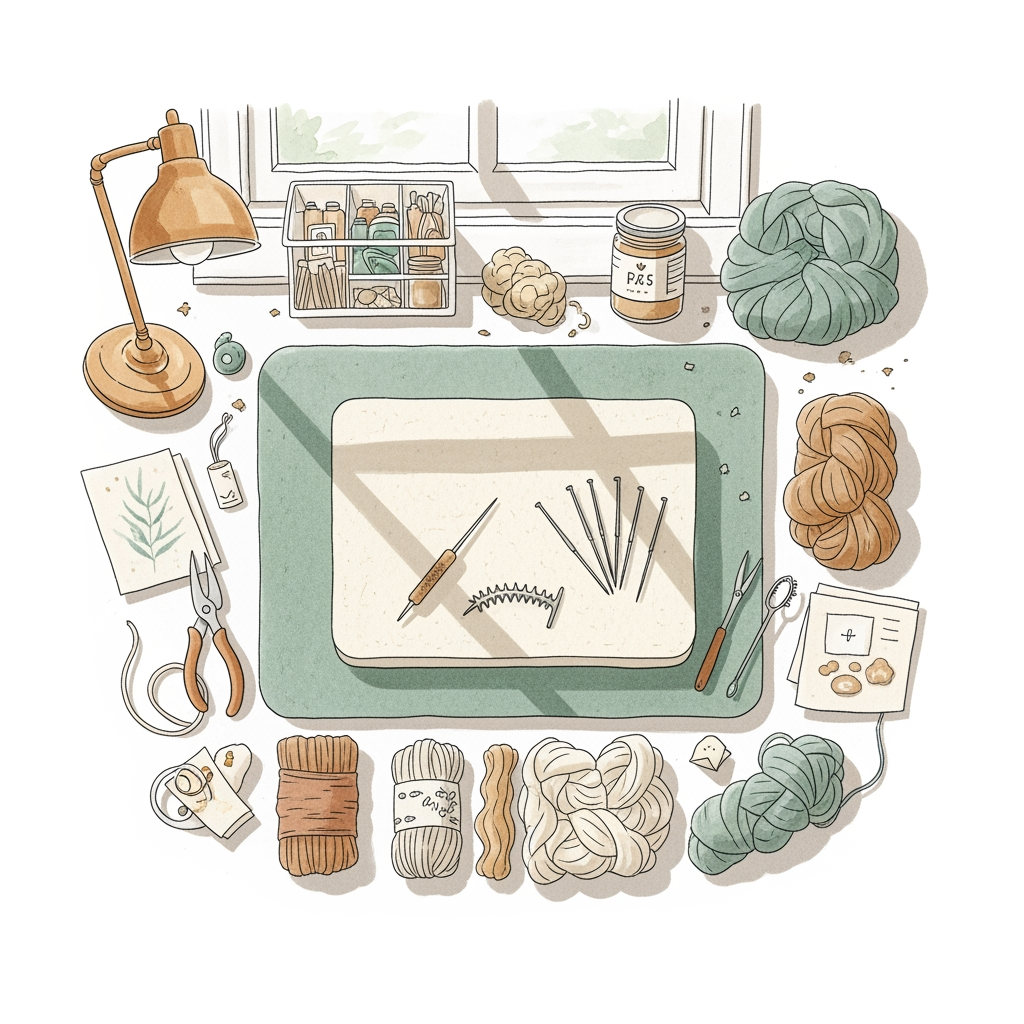
Achieving a flawless finish in needle felting requires more than just patience; it demands the right tool for the specific stage of your fiber sculpture. Whether you are refining the surface of a wool portrait or smoothing out the final contours of a 3D creature, the gauge and barb configuration of your needle are paramount. This guide explores the best fine felting needles designed to minimize holes and maximize fiber density. By understanding these precision instruments, you can elevate your craft from hobbyist experimentation to professional-grade artistry.
Clover Pen Style Needle Tool: Best All-Rounder


The Clover Pen Style tool is often the first upgrade a felter makes, and for good reason. It offers an ergonomic grip that mimics a fountain pen, which is a game-changer when you are working on a piece for hours at a time.
This tool typically houses three needles, allowing for faster fiber entanglement during the initial sculpting phase. However, by removing two needles, it transforms into a precise, single-needle instrument perfect for fine surface work.
The trade-off here is the proprietary nature of the replacement needles. While they are high quality, you are somewhat locked into the Clover ecosystem, which can be pricier than bulk industrial options.
Schmetz Felting Needles: Top Industrial Quality

Schmetz is a titan in the sewing machine needle industry, and their felting line carries that same reputation for consistency. When you pick up a Schmetz needle, you notice the uniform barb depth immediately.
Consistency matters because a needle with irregular barbs will leave uneven, unsightly pits in your wool. If you are working with fine merino or delicate alpaca, you need that predictable penetration to avoid tearing the fiber.
These are excellent for artists who have moved past beginner kits and want to standardize their toolkit. They aren’t the cheapest, but they offer a level of reliability that prevents the frustration of "mystery" needles that snap prematurely.
Hamanaka Fine Needle: Best for Delicate Detail

If you specialize in miniature felting or hyper-realistic animal features, Hamanaka needles are the industry gold standard. They are incredibly thin and designed specifically to work with high-density wools without leaving large entry points.
The precision of these needles allows you to "paint" with wool, adding tiny details like eye patches or subtle color gradients. Because they are so fine, they are less likely to pull unwanted base-color fibers to the surface.
The downside is their fragility; these needles are not meant for aggressive, deep punching. Use them strictly for the final finishing touches, or you will find yourself replacing them constantly.
Ashford Felting Needles: The Durable Standard

Ashford needles are the workhorses of the fiber arts community. They are robust, reliable, and widely available, making them a staple for those who go through needles quickly during large-scale projects.
They strike a middle ground in terms of gauge, making them versatile enough for both structural felting and surface smoothing. If you are a prolific maker who produces many sculptures, the durability of Ashford steel is a significant cost-saver over time.
While they may lack the extreme precision of a specialized fine-detail needle, they are excellent for the "heavy lifting" of a project. Keep a set of these on hand for when you need to firm up the core of your work before switching to finer tools.
Bear Creek Felting Needles: Precision Finish

Bear Creek needles are a favorite among professionals who prioritize a smooth, "pored-less" finish. Their barb geometry is engineered to push fibers inward rather than pulling them out, which is the secret to that coveted polished look.
Using these needles feels different; they glide through the wool with less resistance than standard needles. This makes them ideal for finishing surfaces that will be handled frequently, as they create a tighter, more pill-resistant bond.
They are an investment, but they pay for themselves in the reduced time spent on surface buffing. If you find your work looks "fuzzy" no matter how much you felt, switching to a Bear Creek fine gauge is often the solution.
Groz-Beckert Needles: Professional Consistency

Groz-Beckert is the manufacturer behind many of the needles sold under other brand names, and buying them directly guarantees you are getting the source quality. They are manufactured to incredibly tight tolerances, meaning every needle in the pack performs identically.
For the serious fiber artist, this predictability is essential. When you are halfway through a commission, the last thing you want is a needle that behaves differently than the one you started with.
Their range of barb styles—from conical to triangular—allows you to select the exact tool for your specific fiber blend. These are not intended for casual crafters but for those who view their felting as a precise technical discipline.
Understanding Needle Gauge and Barbed Geometry
Needle gauge refers to the thickness of the needle shaft, with higher numbers indicating a thinner needle. A 40-gauge needle is significantly finer than a 36-gauge, and it will leave a much smaller hole in your finished piece.
Barbed geometry is equally important; barbs are the tiny notches that catch and push the fiber. Fine needles often have smaller, shallower barbs that move less fiber per stroke, which is exactly what you want when smoothing a surface.
- Triangular needles: The most common, providing a balanced, all-purpose punch.
- Star needles: Feature more barbs, making them faster for surface work.
- Conical/Reverse needles: Used for specific finishing tasks or pulling fiber out to create a fuzzy texture.
How to Match Needle Size to Your Fiber Project
Matching your needle to your fiber is a matter of scale and density. For coarse, thick wools used in structural cores, a lower-gauge needle (32-36) is necessary to move large amounts of material quickly.
As you move toward the surface, you must switch to higher-gauge needles (38-42) to minimize the appearance of holes. If you use a 32-gauge needle on a fine-fiber surface, you will inevitably create visible tunnels in your work.
Always test your needle on a scrap piece of the same fiber blend you are using for your project. If the needle feels like it is "sticking" or dragging, the gauge is likely too thick for the density of the wool.
Essential Safety Tips for Fine Needle Felting
Fine needles are exceptionally sharp and brittle, making them a hazard if handled carelessly. Always work on a dense foam pad or a dedicated wool mat to ensure the needle doesn’t strike a hard surface, which is the primary cause of breakage.
Keep your fingers well away from the needle’s path, especially when using a multi-needle tool. It is easy to lose focus during repetitive motion, so take frequent breaks to maintain your concentration.
- Never hold the piece in your hand while felting.
- Always store needles in a labeled container to prevent accidental pokes.
- Replace any needle that shows signs of bending or dulling immediately.
Troubleshooting Common Felting Needle Breakage
Needle breakage usually stems from one of two issues: improper angle of entry or hitting a "hard spot" in the wool. If you enter and exit the wool at an angle rather than straight on, you put lateral stress on the shaft, which will snap even the best steel.
If you find yourself breaking needles frequently, examine your technique. Are you pushing too hard, or are you trying to force the needle through a section that is already fully felted?
If you hit a dense spot, don’t force it. Move to a finer-gauge needle, which will have less resistance, or work around the periphery of the dense area to gradually loosen the fibers.
Mastering the fine art of needle felting is a journey of learning how your tools interact with the unique properties of wool. By selecting the right gauge and barb style for each phase of your project, you can achieve a professional, smooth finish that stands the test of time. Remember that your choice of needle is an extension of your creative intent, so don’t be afraid to experiment with different brands and sizes. With the right tools in hand, your fiber sculptures will reach a new level of sophistication and durability.