7 Best LED Task Lamps For Low Light Visibility
Boost productivity with our top 7 LED task lamps. Discover features like adjustable brightness and color temperature to improve visibility in low-light areas.
Nothing ruins the rhythm of a complex lace project like struggling to see your stitches in the dim light of a living room. As a knitter, your eyes are your most important tool, and poor visibility leads to dropped stitches and unnecessary fatigue. The right task lamp transforms your knitting experience, making it easier to read charts and identify subtle cabling errors. Let’s explore the best lighting solutions to keep your hands moving and your eyes comfortable.
Brightech LightView Pro: Best Overall Lamp
The Brightech LightView Pro stands out because it combines a high-quality LED array with a built-in magnifying lens. For those working with dark, fingering-weight yarns where the stitch definition is nearly invisible, that 2.25x magnification is a total game-changer.
It is particularly useful when you are picking up dropped stitches in a mohair blend, where the halo of the fiber can obscure the live loop. The clamp design saves precious table space, which is usually already cluttered with notions tins, stitch markers, and pattern binders.

While the magnification is excellent, be aware that it can take a moment for your eyes to adjust to the focal distance. If you are prone to headaches, start with shorter sessions until you find the "sweet spot" where your needles stay in focus without straining your neck.
OttLite 2-in-1 LED Floor and Table Lamp
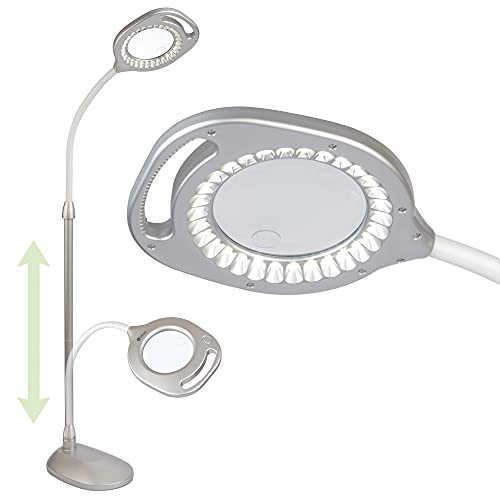
Versatility is the hallmark of the OttLite 2-in-1, as it transitions seamlessly from a floor lamp beside your favorite armchair to a desk lamp for your craft station. Its primary strength is the proprietary lighting technology, which is designed to mimic natural daylight.
When you are working with variegated hand-dyed wool, color accuracy is non-negotiable. This lamp ensures that the subtle differences between two skeins from the same dye lot are obvious before you start your project, preventing that dreaded "pooling" or color mismatch halfway through a sweater.
The trade-off here is the footprint, which is larger than a simple clip-on model. If your knitting nook is tucked into a small corner, ensure you have enough floor space to accommodate the weighted base without tripping over it during your next yarn-winding session.
Daylight Company Slimline 3 LED Lamp

The Slimline 3 is the professional choice for knitters who spend hours working on intricate stranded colorwork or complex charts. Its long, slender head provides a wide, even spread of light that eliminates the harsh shadows often cast by smaller, single-point bulbs.
Because it is fully dimmable, you can adjust the intensity based on the time of day or the fiber you are using. If you are working with a high-contrast white and black alpaca, a lower setting prevents glare, while a brighter setting is essential for navy or charcoal yarns.
The arm is incredibly flexible, allowing you to position the light exactly where you need it without it drifting over time. It is a premium investment, but for those who knit daily, the reduction in eye strain pays for itself in comfort alone.
TaoTronics LED Desk Lamp with USB Port

Sometimes the best tool is the one that simplifies your setup, and the TaoTronics lamp does just that with its integrated USB charging port. While you focus on your rows, you can keep your phone or tablet charged, which is essential if you use digital pattern apps like KnitCompanion.
The multiple color temperature modes allow you to shift from a cool, crisp white—perfect for seeing stitch anatomy—to a warmer, softer glow for evening relaxation. It is a subtle feature, but it helps signal to your brain that it is time to wind down your knitting session.
Keep in mind that this is a desk-bound lamp, so it works best if you have a dedicated side table next to your knitting chair. It lacks the reach of a floor lamp, so make sure your surface is at a height that allows the light to shine down onto your lap.
Lepower Metal Architect Swing Arm Lamp

The Lepower Architect lamp is a classic for a reason: it offers unmatched reach and adjustability. Its spring-balanced arm allows you to pull the light directly over your needles, providing focused illumination exactly where the action happens.
This is my go-to recommendation for knitters who prefer to work with rustic, woolly yarns that shed fiber. Because the lamp is sturdy and metal-constructed, it stands up well to the occasional bump or accidental tangle of yarn.
The trade-off is that you will need to purchase a high-quality LED bulb separately to get the best color rendering. Don’t settle for a cheap "soft white" bulb; look for one with a high CRI to ensure your colors remain true.
Globe Electric 56963 Multi-Joint Lamp

If you are a knitter on a budget, the Globe Electric multi-joint lamp offers a surprising amount of utility for the price. The multiple pivot points mean you can fold it away when you are finished, making it ideal for those who knit at the dining room table.
It is particularly effective for those working on smaller projects like socks or mittens. Because the light source is adjustable, you can direct the beam to highlight the tension of your stitches without creating glare on your needles, especially if you use slick metal ones.
The base is relatively lightweight, so be careful not to over-extend the arm, or it may tip over. It is a simple, no-frills solution that does exactly what it promises: it puts light on your work so you can keep knitting.
BenQ ScreenBar Halo for Close Work
If your knitting setup involves a computer or a tablet for following video tutorials, the BenQ ScreenBar Halo is a brilliant, space-saving innovation. It mounts directly to your monitor, casting light downward onto your workspace without taking up any room on your desk.
This is perfect for the "hybrid" knitter who follows online workshops or monitors a knitting group while working on a project. It provides a wide, flicker-free light that is gentle on the eyes, even during long sessions of intense focus.
The only downside is that it requires a monitor or a specific mounting surface to function effectively. If you prefer to knit in a comfy armchair away from a screen, this won’t be the right choice for your specific setup.
Why Color Rendering Index Matters for Knitters
The Color Rendering Index (CRI) measures how accurately a light source reveals the true colors of an object compared to natural daylight. For knitters, a high CRI—ideally 90 or above—is critical for identifying subtle color shifts in hand-dyed yarns.
- Low CRI: Colors appear muddy, washed out, or inaccurately shifted toward yellow or blue.
- High CRI: Greens, blues, and reds appear vibrant and distinct, just as they would in natural sunlight.
If you are working on a stranded colorwork sweater, a low CRI light might make two different shades of blue look identical. You don’t want to realize your mistake after you have already knit six inches of a yoke.
Essential Features for Knitting Task Lighting
When shopping for a lamp, look beyond the price tag and focus on the mechanics of the light. You want a lamp that offers:
- Dimmability: Essential for adjusting to the lightness or darkness of your yarn.
- Adjustable Color Temperature: Cool light for stitch definition, warm light for comfort.
- Flicker-Free Technology: Prevents the subtle, subconscious eye strain that leads to fatigue.
- Flexible Positioning: The ability to move the light source without moving your body.
Avoid lamps that create "hot spots" of glare, especially if you use reflective metal needles. A diffused light source is always superior to a harsh, pinpoint beam.
How to Position Lights to Reduce Eye Strain
The best light in the world won’t help if it’s positioned incorrectly. Always aim to place your lamp to the side of your dominant hand to minimize shadows cast by your needles or your hands as you move.
If you are right-handed, position the light to your left so your hand doesn’t block the illumination as you work. The goal is to have the light hit your needles from an angle that highlights the stitch anatomy, such as the V-shape of a knit stitch, without reflecting directly back into your eyes.
Finally, remember the "20-20-20" rule: every 20 minutes, look at something 20 feet away for 20 seconds. Combining this habit with a well-positioned lamp will keep your eyes fresh for years of knitting.
Investing in a quality task lamp is just as important as choosing the right needles or the perfect wool for your project. By prioritizing high CRI, adjustable positioning, and flicker-free technology, you can eliminate the frustration of low-light knitting. Choose the lamp that best fits your specific workspace and physical needs to ensure your craft remains a source of joy rather than strain. Happy knitting, and may your stitches always be clear and your tension perfectly even.