6 Best Lace Blocking Mats For Intricate Designs
Achieve professional results with these 6 top-rated lace blocking mats. Discover durable, heat-resistant options perfect for shaping your intricate designs.
Blocking is the final, transformative step that turns a crumpled piece of knitting into a professional-grade masterpiece. Without the right surface, your delicate lace motifs will never achieve the crisp, open definition they deserve. Choosing the correct mat depends on your project size, fiber content, and how often you engage in these finishing rituals. This guide explores the best tools to ensure your hard work shines exactly as intended.
Knitter’s Pride Lace Blocking Mats: Best Overall
These mats are the industry standard for a reason: they strike the perfect balance between density and ease of use. The material is firm enough to hold T-pins securely without them wobbling, yet soft enough to allow for easy repositioning.
For someone working on a complex Shetland lace shawl, these mats provide the stability needed to maintain tension across hundreds of stitches. They interlock smoothly, allowing you to create a custom-shaped surface that fits the exact dimensions of your project.
The downside is that they can be slightly bulky to store if you don’t have a dedicated craft space. However, for the serious knitter who blocks regularly, the durability and consistent grid alignment make them an unbeatable investment.
Bohin Extra Thick Blocking Mats for Precision


When you are working with fine lace-weight mohair or silk, you need a mat that doesn’t compress under the tension of your pins. Bohin mats are notably thicker than the standard foam tiles, which prevents them from bowing or warping when you pull your lace taut.
This extra thickness is a lifesaver when you need to pin at an angle to create specific points or scallops. Because the foam is denser, your pins stay exactly where you place them, even when working with "springy" fibers like wool that want to pull back.
They are a premium choice, and the higher price tag reflects the quality of the foam. If you find yourself frustrated by pins slipping out of standard mats during a long blocking session, this is your solution.
Susan Bates Knit Chek and Blocking Board Set
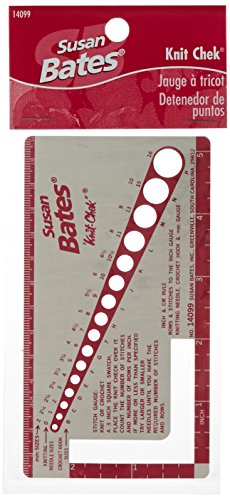
Sometimes, you don’t need a massive floor-sized setup; you just need a reliable, compact board for smaller accessories. The Susan Bates system is a classic for a reason, offering a rigid, reliable surface that is perfect for hats, cowls, or small triangular shawls.
The inclusion of the Knit Chek tool is a thoughtful touch for beginners who are still learning to measure their gauge accurately. It turns the blocking process into a learning opportunity, helping you understand how your fabric behaves after a soak.
This set is ideal for knitters with limited space or those who primarily focus on smaller items. It might not accommodate a full-sized blanket, but for precision work on smaller lace motifs, it is hard to beat.
Clover Blocking Mats for Delicate Lace Fibers
Clover’s approach to blocking mats focuses on a surface that is gentle on high-end fibers like cashmere or alpaca. These mats have a slightly softer texture that minimizes the risk of snagging delicate, halo-rich yarns while you are pinning them down.
The interlocking edges are engineered to be seamless, which is vital when you are blocking a large piece that spans multiple tiles. You won’t have to worry about your lace catching on a ridge or a gap where the tiles meet.
While they are excellent for delicate fibers, they are somewhat softer than the Bohin mats. If you are blocking heavy, dense wool projects, you might find you need to pin more frequently to keep the fabric stable.
ArtBin Foam Blocking Tiles for Large Projects
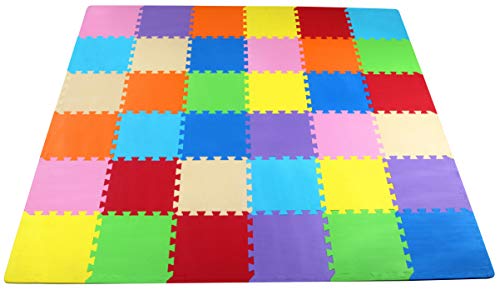
If you are a prolific knitter of large-scale lace tablecloths or oversized wraps, you need a modular system that scales easily. ArtBin tiles are designed for maximum coverage, allowing you to build a massive surface area that can handle even the most ambitious projects.
The material is lightweight, which makes moving the entire board—even with a wet project pinned to it—a bit easier than with heavier, denser mats. They offer a generous grid, which provides a clear visual guide for symmetry.
The tradeoff for this size and utility is that the foam is slightly less dense than premium specialty mats. Use these for large-scale, low-tension projects where surface area is more critical than extreme pin-holding power.
Mindful Collection Lace Mats by Knitter’s Pride

The Mindful Collection brings an aesthetic focus to the blocking process, featuring a calming color palette that makes the tedious work of pinning feel a bit more meditative. Beyond the look, these mats are highly functional, offering excellent grip for blocking wires.
If you prefer using blocking wires—long, flexible rods that thread through the edges of your lace—these mats provide a stable, consistent foundation. The foam is specifically calibrated to hold the tension created by these wires without bowing.
They are a fantastic choice for the knitter who values both form and function. While they perform similarly to the standard Knitter’s Pride mats, the added aesthetic appeal makes them a joy to use during long, detail-oriented blocking sessions.
Why Grid Markings Matter for Intricate Patterns
Grid markings are not just for show; they are your primary tool for ensuring your lace is perfectly symmetrical. When you are blocking a shawl with complex motifs, the grid helps you visually verify that your points are equidistant from the center.
Without these guides, it is incredibly easy to accidentally skew your project, leading to a finished piece that pulls to one side. The grid allows you to measure as you go, ensuring that every scallop and eyelet is opened to the exact same degree.
Always look for mats where the grid is printed with high-contrast, permanent ink. Faded or misaligned grids will only lead to frustration and uneven results in your finished lace.
Essential Features to Look for in Blocking Mats
When shopping for mats, ignore the marketing fluff and focus on the physical properties of the foam. You want a material that is closed-cell, meaning it won’t absorb the water from your damp knitting and become a breeding ground for mildew.
Consider the following features before you buy:
- Density: Can it hold a pin firmly at an angle without the pin shifting?
- Thickness: Is it thick enough to prevent your pins from scratching the floor beneath?
- Interlock Quality: Do the pieces stay together when you move the mat, or do they pull apart?
- Surface Texture: Is it smooth enough to avoid snagging delicate, hand-dyed silk or mohair?
A good mat should be a one-time purchase that lasts for years. Prioritize quality materials over the lowest price point to avoid having to replace your mats after only a few projects.
How to Properly Block Delicate Lace Garments
Blocking is all about controlling the moisture and the tension simultaneously. Start by soaking your garment in lukewarm water with a gentle wool wash, ensuring the fibers are fully saturated before gently squeezing—never wringing—out the excess water.
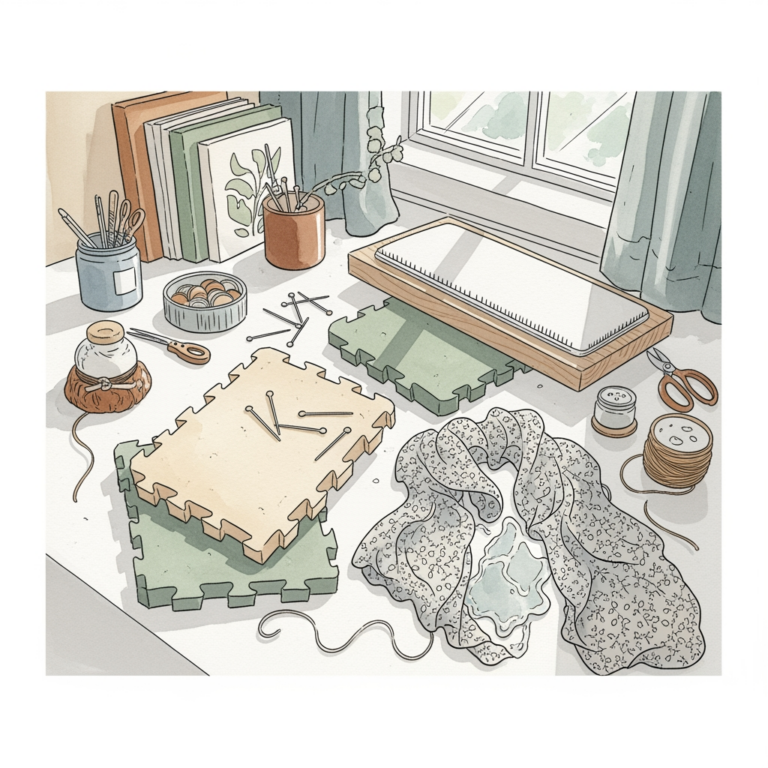
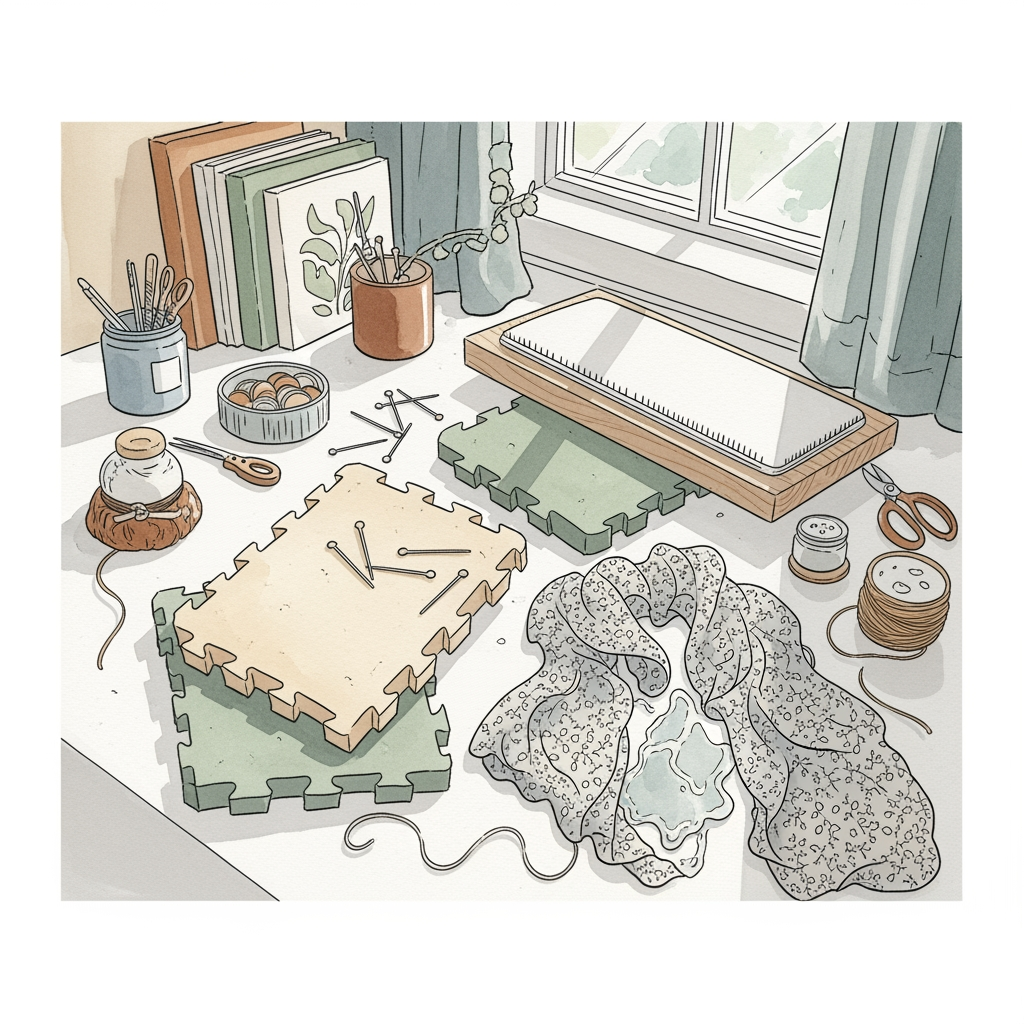
Lay your mats out and assemble them to the required size, then lay your project flat. Start pinning from the center and work your way outward, which helps distribute the tension evenly across the entire piece.
If you are using blocking wires, thread them through the edge stitches before pinning; this creates a straight, clean edge that is impossible to achieve with pins alone. Let the project dry completely in a well-ventilated area before removing the pins.
Maintaining Your Blocking Mats for Longevity
Your blocking mats will serve you for decades if you treat them with care. After every use, wipe them down with a damp cloth to remove any residual dye or fiber debris, especially if you have been blocking dark-colored yarns.
Store them in a cool, dry place, preferably stacked or kept in the original packaging to prevent the edges from getting crushed. If a tile gets a deep dent, you can sometimes "fluff" the foam back up with a quick blast from a hairdryer on a low setting.
Never store your mats while they are still damp, as this can lead to warping or mold. A little bit of maintenance after each project ensures that your surface remains perfectly flat and ready for your next lace adventure.
Investing in quality blocking mats is the single most effective way to elevate the look of your hand-knitted lace. By choosing a surface that suits your specific projects, you ensure that your stitches have the space to bloom and settle into their final, beautiful form. Remember that patience during the blocking process is just as important as the tools you use. May your points be sharp, your edges straight, and your lace perfectly defined.