6 Best Interchangeable Needle Adapters For Custom Lengths
Discover the top 6 needle adapters for custom knitting lengths. Learn how these versatile tools connect cables to expand your creative possibilities easily.
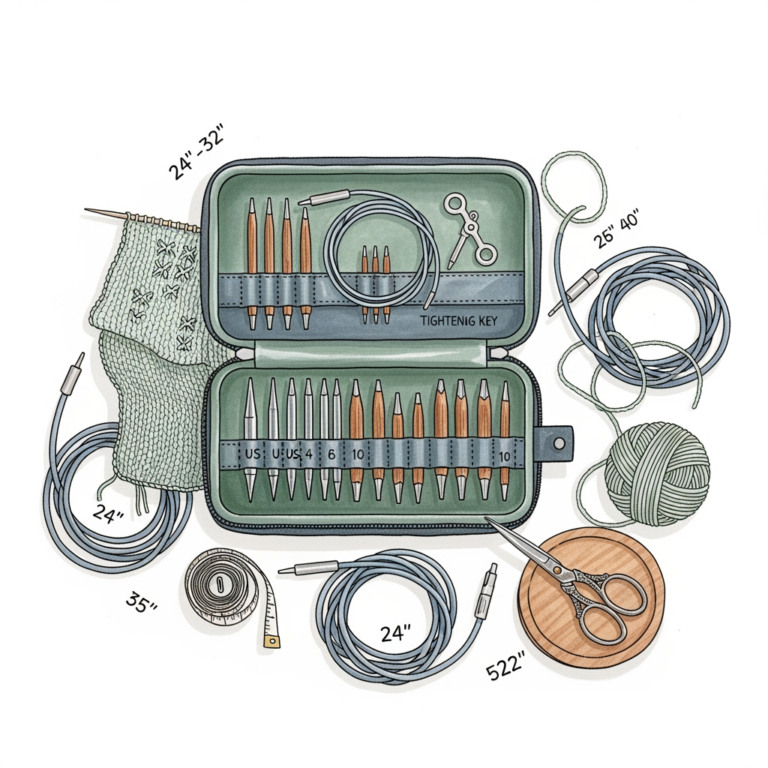
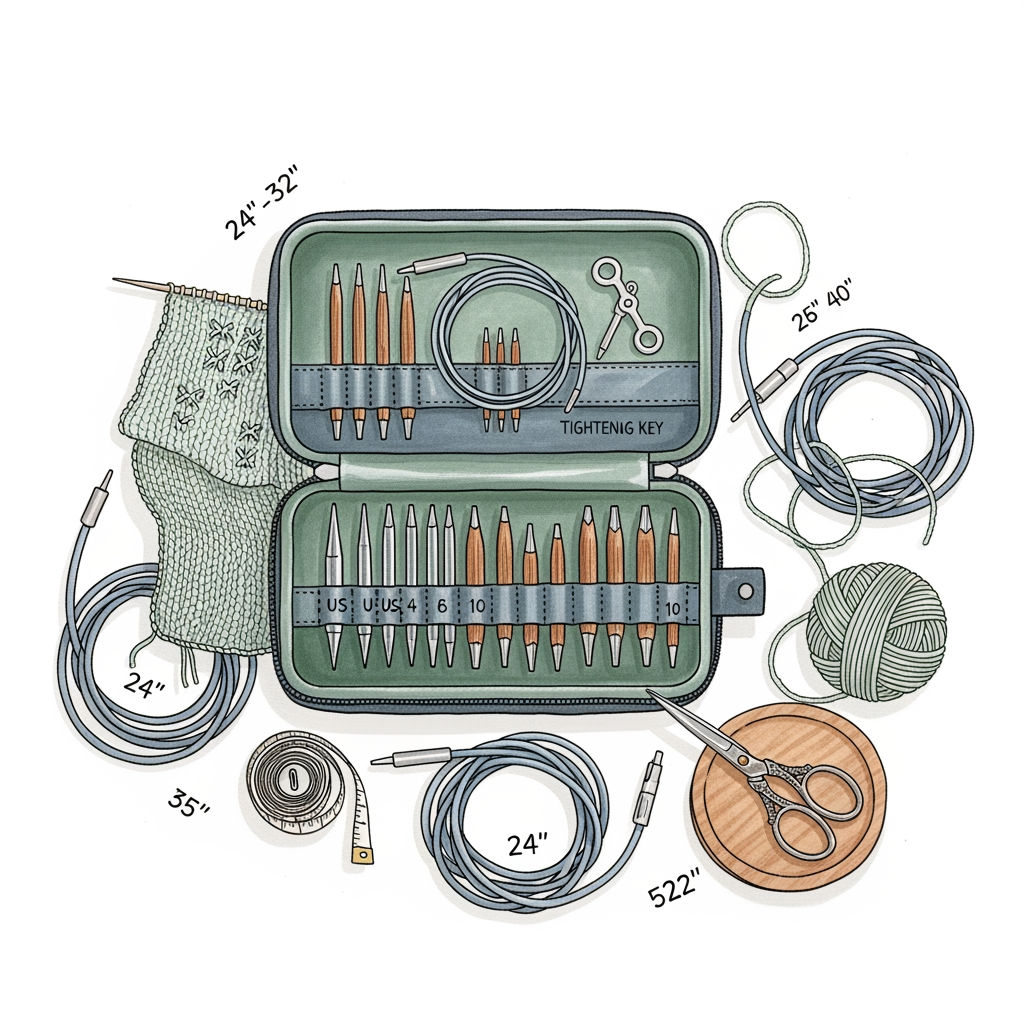
Building the perfect needle length for a massive project shouldn’t require buying an entirely new set of cables. Interchangeable needle adapters act as the bridge between your existing collection and the custom dimensions your pattern demands. Mastering these small tools allows you to combine cables, extend reach, and repurpose your favorite tips for any project size. With a little knowledge, you can save money and gain the flexibility needed for everything from tiny socks to expansive, heavy blankets.
ChiaoGoo Small to Large Cable Connectors Review


ChiaoGoo is the gold standard for many of us because their stainless steel cables have virtually no memory, meaning they don’t kink or coil up while you’re working. The Small to Large adapter is a lifesaver when you realize your favorite lace tips are "Small" gauge but your project requires a "Large" cable for stability or length.
These adapters are machined with precision, ensuring the transition between cable and adapter is almost imperceptible. This is vital when working with fine, lace-weight mohair or slippery silk yarns that tend to catch on even the smallest burr.
The trade-off is the added weight. Adding an adapter to your cable creates a slightly stiffer section, which might feel cumbersome if you are working on a very small circumference like a sleeve. Use these when you need to bridge different cable diameters for long-term projects.
Knitter’s Pride Mindful Collection Adapters

The Mindful Collection focuses on the meditative nature of knitting, and their adapters reflect that with smooth, snag-free surfaces. These adapters are designed to bridge the gap between various cable lengths in their system, allowing you to create a custom-length circular needle in seconds.
They are particularly useful if you have a mix of fixed and interchangeable components. Because the threading is consistent across the Mindful line, you can trust that the connection will remain secure throughout a long knitting session.
I find these especially helpful when working with natural fibers like wool or alpaca, which can be prone to snagging if a connection isn’t perfectly flush. Always double-check that the adapter is tightened with the provided key to ensure a seamless transition.
HiyaHiya Interchangeable Needle Tip Adapters

HiyaHiya is known for their swivel cables and sharp, precise tips, and their adapters follow suit in terms of quality. If you find yourself needing to connect two cables to reach an extreme length for a large-scale project, their adapters are incredibly reliable.
The beauty of the HiyaHiya system is the variety of sizes available, including the specialized "Sock" gauge. If you are knitting socks on 2.25mm needles for hours at a time, having a reliable adapter means you can create a custom length that fits your preferred circular knitting method without having to switch needle sets.
However, be aware that these are specific to the HiyaHiya threading system. They will not work with other brands, so don’t try to force a fit. Keep your adapters organized in a small tin or pouch, as their diminutive size makes them easy to lose in the depths of a project bag.
Addi Click System Conversion Connectors

The Addi Click system is unique because it uses a spring-loaded, push-and-twist mechanism rather than the traditional screw-in threading found in most other brands. This makes their conversion connectors essential, as you cannot simply screw in a different brand of cable.
These connectors are robust and engineered for heavy-duty use. They are perfect for knitters who work with heavy, aran-weight wools or bulky yarns that put significant tension on the cable connection point.
Because there is no screwing involved, you don’t have to worry about the connection loosening while you knit. If you prefer a tool-free assembly, the Addi Click system is the most efficient choice for your knitting workflow.
Lykke Interchangeable Needle Tip Adapters

Lykke needles are beloved for their beautiful, smooth wood finish, which offers just enough grip for slippery fibers like bamboo or silk. Their adapters are designed to maintain that same aesthetic and functional quality, ensuring that the transition between your needles and cables remains smooth.
These are ideal for knitters who appreciate the tactile experience of wood but need the versatility of custom cable lengths. The adapters are lightweight, which helps maintain the balance of the needle tip, especially if you are using longer, heavier wood needles.
Because wood can be more delicate than metal, handle these adapters with care during assembly. Avoid over-tightening with a key, as the pressure could potentially damage the threading on the wooden components.
Denise Interchangeable Needle Tip Adapters

Denise needles have been a staple in the fiber arts community for years, largely due to their unique, durable plastic construction. Their adapters are designed to work seamlessly with their locking mechanism, which is distinct from the metal screw-in styles used by most other manufacturers.
These adapters are fantastic for knitters who prefer a lighter tool. If you are working on a project with a lot of weight—like a heavy, cabled cotton sweater—the Denise system provides a secure, reliable connection that won’t add unnecessary strain to your wrists.
The plastic construction is also very forgiving. If you have a tendency to knit tightly, you won’t have to worry about the metal-on-metal wear that can occur with other systems. For those who prefer a non-metallic, lightweight tool, Denise adapters are a reliable and cost-effective choice.
Understanding Interchangeable Threading Systems
Not all interchangeable systems are created equal, and the most common mistake is assuming that "interchangeable" means "universal." Most brands use a proprietary threading gauge, meaning an adapter from one brand will rarely fit the cable of another.
- Screw-in systems: Require a tightening key to ensure the cable doesn’t back out while you knit.
- Click/Lock systems: Use a spring or tension-based mechanism, which is generally more secure but brand-specific.
- Thread pitch: The actual number of threads per millimeter differs between manufacturers, making cross-brand compatibility nearly impossible.
Always verify your system type before purchasing adapters. Attempting to force a mismatched adapter can permanently damage the threading on your expensive needle tips.
How to Match Connectors With Needle Brands
When matching connectors, start by identifying the "gauge" of your needle tips. Most brands categorize their tips into Small, Large, or specific millimeter ranges, and your adapter must align with these categories.
If you are unsure of your brand’s specific system, look at the cable itself. Is the threading male or female? Does it have a hole for a tightening key? These visual cues are the best way to determine which adapter family you need.
If you are a beginner, stick to a single brand for your primary set. Mixing and matching systems is a recipe for frustration; keep your tools consistent to save your focus for the pattern, not the hardware.
Avoiding Common Cable Connector Snag Issues
A snag at the connection point is the fastest way to ruin your knitting rhythm. To prevent this, always ensure that the adapter is screwed in until it is perfectly flush with the cable and the needle tip.
If you notice a small gap, the yarn will inevitably catch on the edge of the metal. This is especially problematic with lace-weight mohair or high-twist yarns, which act like velcro when they hit a snag.
If you still feel a slight ridge, you can use a small piece of clear, low-tack tape over the connection point as a temporary fix. A smooth connection is the hallmark of a professional-looking project; take the extra ten seconds to ensure everything is perfectly aligned.
Essential Tips for Tightening Your Connections
The most common "broken" needle complaint is actually just a loose connection. You should always use the tightening key or the rubber gripper provided by the manufacturer to cinch the connection firmly.
Do not rely on hand-tightening alone. The natural motion of knitting, especially when working in the round, creates a subtle torque that will slowly unscrew the needle tip from the cable if it isn’t secured with a tool.
If you are working with heavy, superwash wool that has a lot of "drape" and weight, check your connections every few rows. A secure connection is your best defense against dropped stitches and accidental cable detachment.
Investing in high-quality adapters transforms your interchangeable needle set into a truly versatile toolkit. By understanding the mechanical differences between brands and prioritizing a flush, secure connection, you can tackle any project with confidence. Remember that your tools should serve your craft, not complicate it, so choose the system that feels most intuitive to your personal knitting style. Happy knitting, and may your joins always be smooth and your gauge perfectly consistent.