6 Best Needle Trays For Workbench Organization Experts
Optimize your workspace with our top 6 needle tray picks. Discover durable, organized solutions that keep essential tools accessible for every craft project.
Every knitter eventually faces the "needle sprawl" dilemma, where your favorite circulars and DPNs begin to take over your living room, sofa cushions, and floor. Organizing your tools isn’t just about aesthetics; it is about protecting the precision instruments that define your stitch quality. Finding the right tray or storage system can transform a chaotic workbench into a streamlined, creative sanctuary. Here are the top six solutions for keeping your needles safe, accessible, and ready for your next cast-on.
Cocoknits Maker’s Keep: Best for Magnetic Storage
There is nothing more frustrating than losing a tapestry needle or a stitch marker in the middle of a complex lace chart. The Cocoknits Maker’s Keep solves this by utilizing a powerful magnetic surface that keeps your metal tools anchored right where you need them.
This tool is essentially a silicone snap-bracelet with a magnetic plate, but it functions perfectly as a stationary desk tray. It is ideal for those who frequently switch between cable needles and stitch markers, ensuring they don’t roll off the table and vanish into the carpet.
While the magnetic strength is excellent for steel needles, it won’t hold your bamboo or wooden tools. The bottom line: Use this if you work primarily with metal needles and need to keep your workspace clutter-free during intense sessions.
Della Q Circular Needle Case: Best for Portability
If you are the type of knitter who takes a project to the coffee shop, the park, and the knitting circle, you need a system that travels well. The Della Q case is legendary because it treats your circular needles like a professional filing system.
It features dedicated pockets that allow you to label your needle sizes clearly, preventing that annoying game of "guess the diameter" with your calipers. The canvas construction is rugged enough to withstand being tossed into a project bag without damaging the needle cables.
Keep in mind that these cases are designed for circulars; your long straight needles will still need a separate home. The bottom line: Invest in this if you are a "mobile maker" who values being able to identify your needle sizes at a glance.
Nancy’s Knit Knacks Needle Tray: Best for Sorting
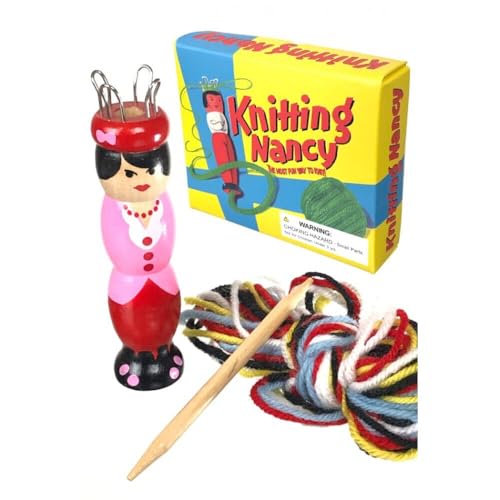

When you have a massive collection of DPNs (double-pointed needles) accumulated over years of sock knitting, sorting becomes a chore. Nancy’s Knit Knacks offers trays that allow for granular organization by size and material.
These trays are often modular, meaning you can expand your storage as your collection grows. They are particularly useful for those who obsess over needle gauge; having a dedicated slot for every 0.25mm increment ensures you never accidentally grab the wrong size for a gauge-sensitive project.
The tradeoff here is space; these trays are best suited for a permanent workbench rather than a portable bag. The bottom line: Perfect for the serious collector who wants a permanent, highly visible home for every needle in their arsenal.
Namaste Maker’s Tray: Best for Small Workspace
Small apartments and shared craft rooms often mean your knitting space has to be multifunctional. The Namaste Maker’s Tray is designed with a slim profile that fits neatly onto a crowded desk without dominating the surface.
It provides a clean, neutral aesthetic that keeps your needles organized without feeling like a hardware store display. The compartments are sized to hold not just needles, but also scissors and measuring tapes, keeping your "essential kit" within arm’s reach.

Because of its compact nature, it isn’t meant for storing your entire collection, but rather your current "in-rotation" needles. The bottom line: Choose this if you value a tidy, minimalist workspace and only keep your most-used tools on the desk.
KnitIQ Blocking and Storage Tray: Best for Utility
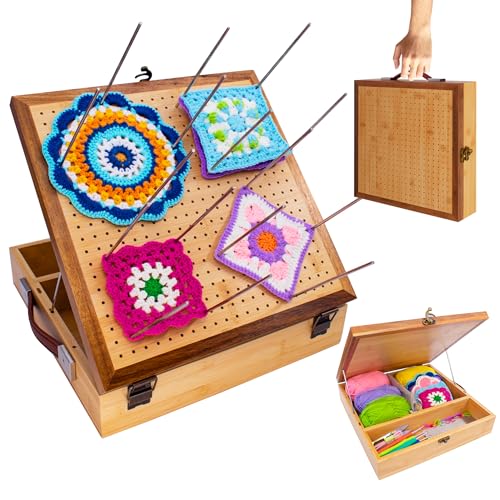
Blocking is the final, essential step that makes your finished garment look professional, and this tray doubles as a staging area. It is built for the knitter who is as focused on the finishing process as they are on the knitting itself.
The utility of this tray comes from its versatility; it can hold your needles while you aren’t using them, and provide a stable surface for your blocking pins and wires. It is a workhorse tool that acknowledges that knitting isn’t just about the needles—it’s about the entire lifecycle of the project.
It is bulkier than a standard tray, so ensure you have the footprint to accommodate it. The bottom line: Ideal for knitters who prioritize the finishing process and want a tool that serves multiple functions.
ChiaoGoo Bamboo Tray: Best for Needle Protection

If you prefer bamboo or wooden needles, you know that the tips can be fragile and prone to warping if stored incorrectly. A dedicated wooden tray provides a natural, non-abrasive environment that preserves the integrity of your needles.

ChiaoGoo’s trays are crafted to prevent needles from rubbing against each other, which keeps the finish smooth and prevents snags on delicate yarns like alpaca or silk. This is crucial because a nick in a needle tip can easily split a fine-ply yarn.
These trays are beautiful but require a bit more care than plastic or metal organizers. The bottom line: This is the gold standard for protecting high-end wooden needles from scratches, nicks, and moisture.
How to Optimize Your Knitting Workbench Layout
Your workbench should mirror your knitting process: tools used in the "cast-on" phase should be closest to hand. Place your most-used needles in the center, and move your "occasional" tools (like cable needles or stitch holders) to the periphery.
Lighting is just as important as storage; ensure your tray is placed in an area with high-contrast light so you can easily see the etched sizes on your needles. If you are working with dark yarn, a light-colored tray will help you spot dropped stitches or stray tools instantly.
Finally, keep a "trash" container nearby for snipped yarn ends to prevent them from tangling with your needle storage. A clean desk leads to a clean project.
Essential Criteria for Selecting Needle Storage
When shopping for a tray, look for material compatibility first; metal needles can scratch wooden trays, and rough plastic can snag delicate wooden needles. Consider the accessibility of the storage—if it takes too long to put a needle away, you won’t do it.
- Capacity: Does it hold your current collection or just your current project?
- Visibility: Can you see the size labels without picking up every single needle?
- Durability: Will the tray survive a drop?
- Footprint: Does it fit your dedicated knitting chair or desk?
Don’t prioritize aesthetics over function. A beautiful wooden box is useless if it’s too heavy to move or if the needles slide around and clatter every time you open it.
Maintaining Your Needles for Long-Term Quality
Needles are precision tools, and they require occasional maintenance to keep them working at their best. For wooden needles, a light wipe with a damp cloth followed by a tiny bit of wax can restore their "glide."
Metal needles can occasionally develop a "tarnish" or oxidation, especially if you live in a humid climate. Keep a small microfiber cloth in your tray to wipe them down after a long knitting session to remove hand oils and moisture.
If you notice a needle tip becoming dull or snagging, use a very fine-grit sanding block to gently smooth it out. Always test your repaired needle on a swatch of scrap yarn before using it on a project.
Frequently Asked Questions on Needle Management
Q: Should I store my circular needles coiled or straight? A: Always try to store them as straight as possible, especially if the cables are nylon. Coiling them tightly for long periods can cause "memory," where the cable remains kinked and fights you while you knit.
Q: Is it okay to keep all my needles in one giant bin? A: You can, but it is a recipe for frustration. You will spend more time untangling cables and searching for the right size than you will actually knitting.
Q: How do I handle needle sizes that have rubbed off? A: Use a needle gauge tool to measure them, then mark the size on the needle with a small piece of masking tape or a permanent marker. Never rely on your memory—it’s the fastest way to ruin your gauge.

Organizing your needles is an act of respect for your craft and the time you invest in every stitch. By choosing a storage solution that fits your specific habit—whether you are a mobile knitter or a bench-bound expert—you clear the path for more creativity and less frustration. Take the time to curate your tools, and you will find that your knitting flows much more smoothly. Happy knitting, and may your needles always be organized and your tension be perfectly even.