7 Best Blocking Grids For Precise Measurements
Achieve perfect proportions with our top 7 blocking grids. These essential tools ensure precise measurements and consistent results for every crafting project.
Every knitter knows that the magic of a finished project truly happens during the blocking process. While your stitches might look uneven or puckered right off the needles, a proper soak and stretch transforms them into a professional-grade garment. Investing in a quality blocking grid ensures that your hard work maintains its intended dimensions and shape. These tools are the silent partners to your knitting needles, turning good projects into great ones.
Knitter’s Pride Knit Blockers: The Best Overall Pick


These blockers are a game-changer because they replace the tedious work of inserting dozens of individual T-pins. Instead of pinning every half-inch, you simply press these plastic bars into the mat, which saves your fingers from unnecessary strain and speeds up the process significantly.
They are particularly effective for straight edges, such as the ribbing on a sweater hem or the side seams of a scarf. The integrated pins are sharp enough to grip the foam securely but spaced perfectly to keep your tension consistent across a long edge.
Keep in mind that while they excel at straight lines, they aren’t meant for intricate curves. If you are blocking a circular shawl, you will still need a few standard pins to handle the delicate shaping at the edges.
Boye Interlocking Foam Mats: Best Budget Solution

If you are just starting your knitting journey and don’t want to break the bank, these interlocking tiles are a reliable entry point. They provide a soft, forgiving surface that absorbs moisture well and allows for easy pin penetration.
The main benefit here is modularity; you can buy a small set for baby hats or expand your collection as you graduate to larger adult sweaters. They are lightweight and easy to store, making them perfect for knitters with limited space.
The downside is that they lack the printed grid lines found on more expensive sets. You will need to use a measuring tape to ensure your project is perfectly square, which takes a little more patience but yields the same professional result.
Cocoknits Knitter’s Block Kit: The Premium Choice

This kit is the gold standard for the organized knitter who values both form and function. It includes high-quality, heat-resistant tiles and a specialized set of pins that won’t rust or damage your delicate wool fibers.
The standout feature is the inclusion of a specialized cloth with a printed grid that lays over the mats. This allows you to block your lace shawls or colorwork garments with absolute geometric precision without worrying about ink transfer.
While the price point is higher, you are paying for durability and a system that is designed to last for decades. If you primarily work with high-end, luxury fibers like cashmere or silk, this kit provides the gentle, secure environment those yarns require.
Exerpeute Extra Thick Tiles: Best for Heavy Pieces
When you are blocking a heavy, cabled wool sweater, standard thin mats can sometimes bow or feel unstable. These extra-thick tiles offer superior structural integrity, ensuring that your heavy garments don’t pull the mat out of alignment while drying.
The added density also means that T-pins stay firmly in place, even when you are applying significant tension to open up a cabled pattern. This is essential for preventing "pin-creep," where the weight of the wet fabric causes the pins to lean or pop out.
If you find yourself mostly knitting chunky-weight pullovers or dense, felted projects, the stability of these tiles is worth the extra storage space they require. They provide a rock-solid foundation for even the heaviest hand-knits.
Magma Blocking Mats: Best for Delicate Lace Work

Lace knitting requires a precise, airy touch, and these mats are designed specifically with that in mind. They offer a very smooth surface that won’t catch on loose mohair or delicate lace filaments, preventing snags during the pinning process.
The material is highly resistant to water, which is crucial because lace often requires a very wet block to fully open up the eyelets. You won’t have to worry about the mats becoming waterlogged or developing a musty smell after frequent use.
These are the ideal choice if your project bag is full of intricate, fine-gauge shawls. The surface texture provides just enough grip to hold the lace in place, but not so much that it causes fiber breakage when you remove the pins.
ArtBin Foam Blocking Tiles: Best for Large Projects
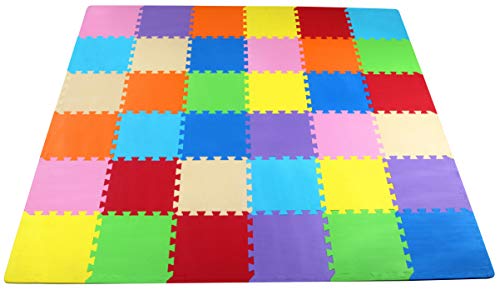
If you enjoy knitting full-length afghans or oversized wraps, you need a surface area that can accommodate them without constant re-blocking. These tiles are designed to be easily expanded, allowing you to create a massive blocking station on a dining room table or floor.
They are surprisingly durable and hold their shape well, even when configured into large, irregular rectangles. The interlocking mechanism is robust, meaning the tiles won’t drift apart while you are stretching your fabric.
The best approach with these is to designate a "blocking corner" in your home where they can stay assembled. Because they are designed for large-scale work, they are less about portability and more about providing a permanent, reliable space for your biggest creative endeavors.
KnitIQ Blocking Mats: Best Grid Precision System
For the knitter who demands mathematical accuracy, these mats are a dream come true. The grid lines are printed with high contrast, making it incredibly easy to align your stitches and ensure your gauge is perfectly consistent across the entire piece.
The system is designed to help you spot uneven tension immediately. If your project isn’t lining up with the grid, you know exactly where you need to adjust your pinning, which is a massive help for beginners learning to control their tension.
These are particularly useful for colorwork projects, where maintaining a square shape is vital for the pattern to look correct. If your goal is to achieve a professional finish that looks like it came from a high-end boutique, this precision system is your best tool.
Why Blocking Grids Are Essential for Your Projects
Blocking is the final step of the knitting process, and it is where the "fabric" of your work truly settles. Without a grid, it is easy to accidentally stretch a garment out of proportion or leave it slightly skewed.
Using a grid allows you to measure your work against your pattern’s schematic. If your sweater back is supposed to be 20 inches wide, a grid ensures you are stretching it to exactly that measurement, rather than guessing.
Ultimately, blocking grids provide the structure necessary to showcase your stitch definition. Whether it’s a simple stockinette or a complex cable, the grid ensures that every stitch is presented in its best light.
How to Properly Use T-Pins With Your Blocking Mats
Always insert your T-pins at a slight angle, pointing away from the center of your project. This creates a "hook" effect that prevents the weight of the damp fabric from pulling the pin out of the foam as it dries.
Avoid pinning too close to the edge of your fabric, as this can cause the yarn to stretch unevenly and create a "scalloped" look. Instead, pin every inch or so along the edge to distribute the tension evenly across the entire seam.
If you are working with delicate fibers like silk or alpaca, be extra careful not to pierce the yarn itself. Gently wiggle the pin between the plies of the yarn to hold the shape without damaging the fiber integrity.
Maintaining Your Foam Mats for Long-Term Durability
After you finish blocking, always let your mats dry completely in a well-ventilated area before stacking them away. Trapping moisture between the tiles can lead to mold or mildew, which can ruin your future projects.
If your mats become dirty or pick up lint, a simple wipe with a damp cloth is usually sufficient. Avoid using harsh chemical cleaners, as these can break down the foam material over time and cause it to crumble.
Store your mats flat whenever possible to prevent the edges from warping or curling. If you treat them with care, a good set of blocking mats will be a cornerstone of your knitting toolkit for many years to come.
Choosing the right blocking grid is an investment in the longevity and beauty of your hand-knits. Whether you prioritize precision, portability, or sheer size, there is a system out there to support your specific needs. Take your time to select the one that fits your space and your typical project size. Once you start using a proper blocking grid, you will wonder how you ever managed to finish your garments without one.