6 Best Blocking Pins For Square Projects To Use
Achieve perfect corners with our top 6 blocking pins for square projects. Discover which tools offer the best stability and precision for your fiber crafts.
Achieving perfectly square corners on a knitted blanket or a set of modular squares is the hallmark of a professional finish. While your knitting technique creates the fabric, your blocking tools define its final geometry and drape. Choosing the right pins can be the difference between a frustrating, wavy edge and a crisp, heirloom-quality result. This guide explores the best blocking pins to ensure your hard work looks exactly as you intended.
Knitter’s Pride Knit Blockers: Best Overall Pick


These unique, comb-like tools have revolutionized the way many of us block large, square projects. Instead of wrestling with dozens of individual pins, you simply press a single blocker into your mat to secure several inches of fabric at once.
The primary advantage here is efficiency and consistent tension. When you are blocking a large afghan square, individual pins can sometimes create "scalloped" edges if they aren’t spaced perfectly. Knit Blockers eliminate that guesswork by keeping the edge of your work in a perfectly straight line.
However, they can be overkill for very delicate lace or small, intricate motifs. Because they are rigid, they don’t allow for the micro-adjustments that individual pins offer when you’re trying to coax a stubborn corner into a sharp 90-degree angle.
Bottom line: If you frequently knit blankets or large squares, these are an essential investment for your sanity and speed.
Clover T-Pins: Best for Precision and Stability
Clover is a brand that understands the tactile needs of a knitter, and their T-pins are a staple in my own kit. The "T" shape provides a wide, flat surface that is incredibly easy to grip, even if your hands get tired after a long blocking session.
The steel is sturdy enough that it won’t bend under the tension of a heavy wool project. This is crucial when you are blocking a dense, superwash wool blanket that wants to snap back to its original shape.
Some knitters find the heads slightly large, which can occasionally snag delicate fibers if you aren’t careful. Always ensure you are inserting the pin through the knitting, not splitting the individual plies of the yarn.
Bottom line: These are the gold standard for reliable, everyday blocking where precision matters most.
Susan Bates Rust-Proof T-Pins: Best for Wet Blocking

Wet blocking is non-negotiable for most natural fibers, but it introduces the constant threat of rust. Nothing is more heartbreaking than finishing a beautiful cream-colored project only to find orange stains left behind by cheap pins.
Susan Bates pins are specifically treated to resist oxidation, making them the safest bet for soaking and heavy misting. When working with high-moisture blocking methods, the quality of your hardware is just as important as the quality of your yarn.
The trade-off is often a slightly higher price point, but it is a small insurance policy for your finished garments. If you are working with expensive hand-dyed wool or silk blends, never gamble on unknown pin quality.
Bottom line: If you regularly use a soak-and-pin method, these rust-proof pins are well worth the investment to protect your yarn.
Boye Steel T-Pins: Best for Budget-Conscious Knitters
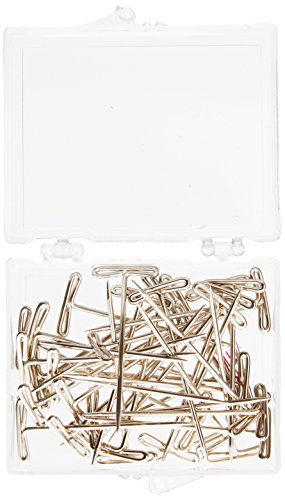
If you are just starting your knitting journey, you don’t necessarily need the most expensive tools to get professional results. Boye offers a solid, no-frills T-pin that gets the job done without breaking the bank.
These pins are functional and widely available at most craft retailers. They provide the necessary tension to hold your squares in place while they dry, which is the most important factor in the blocking process.
The only downside is that they may be prone to rust if left in damp fabric for an extended period. Always remove your pins as soon as the project is completely dry to avoid any potential discoloration.
Bottom line: A perfect entry-level choice for the knitter who wants to build their toolkit without overspending.
Cocoknits Stainless Steel Pins: Best for Durability
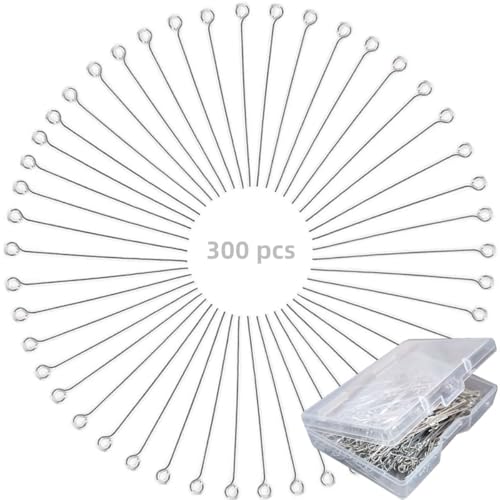
Cocoknits has a reputation for thoughtful, high-quality design, and their stainless steel pins are no exception. These pins are incredibly smooth and refined, which prevents them from catching on fine mohair or delicate silk fibers.
Stainless steel is the premium choice for longevity. Unlike plated pins, which can chip or wear down over years of use, these will remain smooth and functional for decades.
The weight and feel of these pins also suggest a level of craftsmanship that makes the tedious process of blocking feel a bit more like a luxury experience. If you value tools that last a lifetime, this is your best option.
Bottom line: An excellent choice for the dedicated maker who wants a "buy it once" solution for their studio.
Dritz Extra-Long T-Pins: Best for Thick Projects
When you are working with bulky yarn or multiple layers of fabric, standard-length pins often pop out before the project has a chance to set. Dritz extra-long pins provide the extra reach needed to anchor heavy fabric securely into your blocking mats.
These are particularly useful if you use thick foam blocking tiles. The extra length ensures that the pin is deeply embedded, providing a stable anchor point that won’t shift as the yarn dries and shrinks.
Be mindful that with extra length comes a higher risk of bending if you apply too much lateral force. Always insert the pin straight down into the mat rather than at an angle to maintain maximum stability.
Bottom line: Essential for the knitter who loves working with chunky weight yarns or thick, textured stitch patterns.
Why Blocking Pins Matter for Square Projects
Blocking is the final step of the knitting process, and for squares, it is the most critical. Without proper pinning, your squares will lack the structural integrity required for assembly, making it difficult to mattress stitch them together neatly.
Pins act as the "scaffolding" for your work. They force the stitches to relax, open up, and settle into a uniform size, which is especially important for colorwork or cables that tend to pull inward.
Remember that blocking isn’t just about size; it’s about evening out the tension. Even the most uneven stitches can be transformed into a professional-looking square with the right amount of patience and a set of reliable pins.
How to Choose the Right Pin Size and Material
Choosing the right pin depends entirely on your fiber choice and project weight. For delicate, lace-weight fibers, you want a thin, smooth pin that won’t distort the stitch. For heavy, worsted-weight wools, you need a thicker, sturdier pin that can handle the tension.
Always consider the finish of the pin as well. Nickel-plated pins are very common, but if you have a nickel allergy or are working with very light-colored yarns, stainless steel or coated pins are a better choice to avoid skin irritation or staining.
If you are unsure, keep a variety of sizes on hand. Having a mix of standard T-pins and a few extra-long pins will ensure you are prepared for whatever project hits your needles next.
Tips for Achieving Perfectly Straight Edges
To get that crisp, professional edge, start by pinning your corners first. Once the four corners are secured, work your way toward the center of each side, placing pins at regular intervals to distribute the tension evenly.
Don’t be afraid to use more pins than you think you need. A high density of pins along the edge will prevent the fabric from bowing or scalloping between the anchor points.
If you are struggling to get a perfectly straight line, use a tape measure or a blocking mat with a grid printed on it. Aligning your work with the grid lines is the easiest way to ensure your squares are perfectly symmetrical.
Essential Blocking Tools Beyond the Pins

Pins are only one part of the equation. A good set of interlocking foam blocking mats is essential, as they provide a surface that is both pinnable and moisture-resistant.
Blocking wires are another game-changer, especially for long, straight edges. By threading a wire through the edge of your knitting, you can create a perfectly straight line with only a few pins, saving you time and effort.
Finally, a good spray bottle or a dedicated basin for soaking is necessary for wet blocking. Whatever tools you choose, remember that the goal is to give your yarn the space it needs to bloom and reach its full potential.
Mastering the art of blocking is a journey that turns a "handmade" item into a professionally finished piece. By selecting the right pins for your specific project, you ensure that your squares are uniform, stable, and ready for assembly. Don’t rush the process, and remember that your tools are there to support the beauty of the yarn you’ve chosen. Happy knitting, and may all your corners be perfectly square.