6 Best Stitch Counters For Round Knitting Worth Owning
Keep track of your rounds effortlessly. We explore the 6 best stitch counters for circular knitting to help you maintain precision and improve your projects.
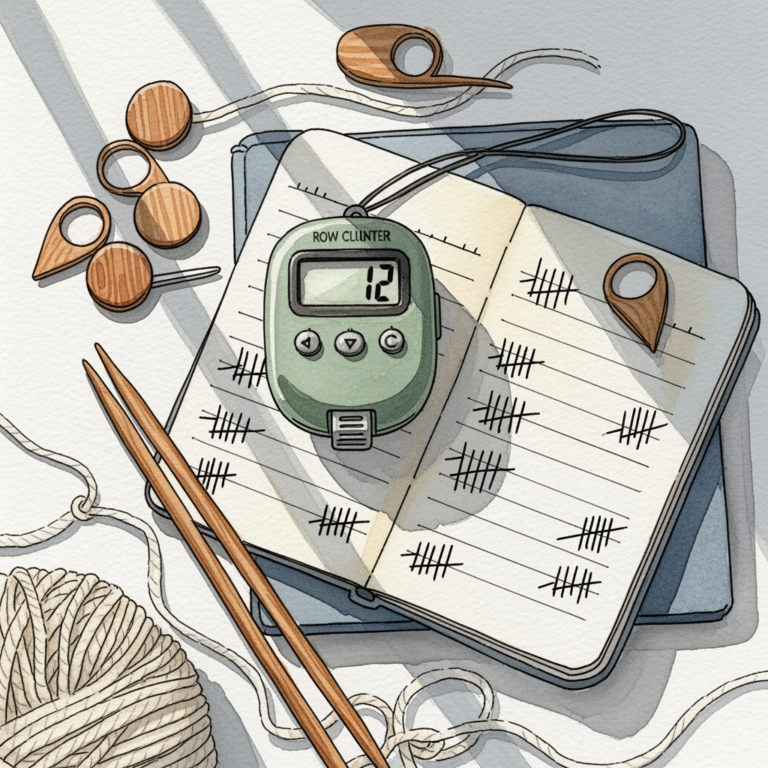
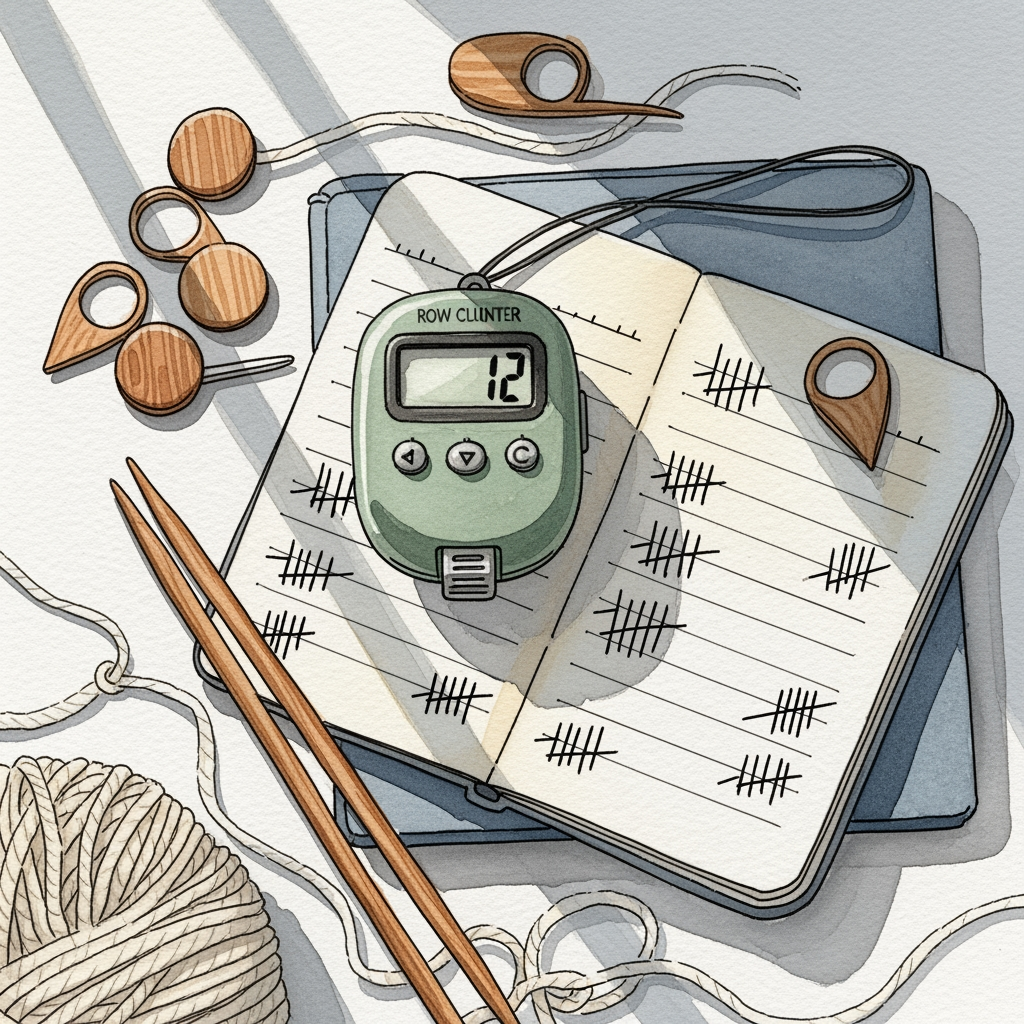
Keeping track of your rows while working in the round is the difference between a perfectly symmetrical sweater and a frustrating case of "oops, I dropped a row." Whether you are tackling a complex cable motif or simply maintaining a consistent gauge on a stockinette tube, the right counter is your best defense against frogging. After two decades at the needles, I have learned that the best tool is the one that becomes an extension of your rhythm rather than an interruption. Let’s look at the best counters to keep your circular projects on track.
Knitter’s Pride Mindful Collection Ring Counter


This elegant, wearable counter is designed for those who find the act of reaching for a separate device to be a major distraction. It sits comfortably on your finger, allowing you to click the count with your thumb without ever putting your needles down.
The aesthetic is clean and calming, fitting perfectly into the Mindful Collection’s focus on the meditative nature of knitting. Because it is worn, it stays within your immediate field of vision, which is a massive help when you are working on a long, mindless stockinette section where your mind might start to wander.
However, be mindful that the ring size is fixed. If you have particularly slender or large fingers, it might feel slightly loose or restrictive during a long marathon knitting session.
Clover Kacha-Kacha Click Counter for Knitting

The Kacha-Kacha is a staple in many project bags for a reason: it is virtually indestructible and provides a satisfying, audible "click" that confirms your input. That tactile feedback is crucial when you are working with dark-colored yarns where visual confirmation of a row is difficult.
The design allows it to be attached to a necklace or simply kept in your palm. I’ve found that the locking mechanism is its best feature; it prevents the count from accidentally changing if it gets tossed into your knitting bag alongside your scissors and cable needles.
While it is a mechanical marvel, it can be a bit bulky if you prefer a minimalist setup. If you are knitting lace on delicate lace-weight silk, the slightly larger footprint might feel a bit cumbersome compared to a sleek ring.
Cocoknits Maker’s Keep Magnetic Wrist Counter
This tool is a game-changer for knitters who lose everything the moment they put it down. It is essentially a magnetic slap bracelet that holds your stitch markers and needles, with a built-in counter that keeps everything centralized on your wrist.
The magnetic surface is incredibly strong, meaning your tapestry needles and metal markers won’t go wandering off. For someone working on a complex colorwork project where you need to switch between markers frequently, having them stuck to your wrist is a massive efficiency boost.
The trade-off is the weight; it is heavier than a standard ring counter. If you are prone to wrist fatigue or are knitting for several hours at a time, you might find the extra heft slightly noticeable by the end of the day.
Susan Bates Digital Row Counter for Circulars

This classic digital counter is designed to slide directly onto your circular needle cable. It is a simple, no-nonsense solution that keeps the count right where the action is happening.
Because it sits on the cable, it is impossible to "forget" to count a row. Every time you finish a round, your hand is already right there, making it an incredibly intuitive part of your knitting flow.
The downside is that it can occasionally snag on delicate, loosely spun single-ply yarns. If you are working with mohair or a yarn with a delicate halo, the plastic edges might catch, so be careful during the transition from needle to cable.
Row Counter Ring by ChiaoGoo for Precision

ChiaoGoo is known for their precision engineering, and this ring counter is no exception. It is made from high-quality stainless steel, which feels substantial and durable on the finger without being heavy.
The rotating bezel is smooth and precise, allowing you to advance the count with a flick of your finger. It is particularly great for knitters who use the "flicking" or "lever" knitting style, as the ring doesn’t interfere with the movement of your yarn-holding hand.
Because it is metal, it can feel a bit cold in the winter months if you are knitting in a chilly room. However, the durability is unmatched, making it a "buy it once" tool that will likely last you for the rest of your knitting career.
The Knitting Barber Locking Stitch Markers

While not a "counter" in the digital sense, these are essential for tracking repeats within a round. They are essentially tiny, flexible silicone cords that act as a "stopper" for your stitches, allowing you to move them easily across your needles.
I use these to mark the beginning of the round or to delineate sections in a complex lace repeat. They are soft and won’t snag even the most delicate hand-dyed wool, which is a common issue with hard plastic or metal rings.
They don’t count rows for you, but they make the counting process significantly easier by breaking your work into manageable chunks. If you are prone to miscounting your stitches in a round, these are your best insurance policy.
Why Mechanical Counters Beat Digital Alternatives
Digital counters often rely on batteries, which have a nasty habit of dying right in the middle of a complex heel turn. A mechanical counter, by contrast, is always ready to go and requires no maintenance beyond a quick wipe with a soft cloth.
There is also something to be said for the tactile nature of a physical click. Mechanical counters provide a sensory "punctuation" to your row, which helps reinforce your memory of where you are in the pattern.
Digital screens can also be difficult to read in low light or while traveling. Mechanical counters, especially those with high-contrast numbers, are much more reliable in a variety of environments, from airplane cabins to dimly lit living rooms.
How to Integrate Stitch Counting Into Your Routine
The secret to never losing your place is to make the counting action a mandatory part of your "round-closing" ritual. Don’t wait until you’ve set your work down to count; click the counter the exact moment you pass your start-of-round marker.
If you find yourself forgetting, try pairing the action with a physical cue, like taking a sip of tea or adjusting your posture. Creating a mental "handshake" between finishing the round and hitting the counter will eventually make the action subconscious.
It is also helpful to keep a paper tally nearby for larger projects. While the counter tells you what row you are on, the paper tally can help you track how many repeats of a section you have completed, preventing the dreaded "how many times have I done this?" panic.
Essential Features to Look for in Row Counters
When shopping for a counter, prioritize durability and ease of use over fancy features. You want a device that can withstand being dropped on a hardwood floor or buried at the bottom of a heavy tote bag.
- Visibility: Can you read the numbers clearly without your glasses?
- Tactile Feedback: Does the button or wheel provide a satisfying "click" or resistance?
- Locking Mechanism: Will it stay on the number you set, or does it reset if it bumps against your project?
- Weight: Is it light enough to wear for hours without causing strain?
Always consider the weight of your yarn and the size of your needles. A heavy counter can drag on fine lace, while a tiny, delicate counter might get lost in a chunky, worsted-weight project.
Troubleshooting Common Stitch Counting Mistakes
The most common mistake is "phantom counting," where you click the counter out of habit even though you haven’t finished the row. If you realize you have miscounted, don’t panic; simply use your stitch markers to count the actual rows on your needle and adjust the counter accordingly.
Another frequent issue is forgetting to reset the counter when starting a new project. I always keep a small post-it note on my project bag that says "Reset Counter" to remind myself before I cast on the first stitch.
Finally, if you find yourself constantly losing your place, your project might be too complex for a single counter. Don’t be afraid to use two: one for the row count and one for the repeat count.
Finding the right stitch counter is a deeply personal process that evolves alongside your skill level and the complexity of your projects. Whether you prefer the tactile reliability of a mechanical ring or the convenience of a wrist-mounted magnetic tool, the goal remains the same: to remove the friction from your process so you can focus on the joy of the craft. Trust your instincts, experiment with these tools, and remember that even the most seasoned knitter occasionally has to rip back and start over. Happy knitting, and may your rows always stay perfectly counted.