6 Best Touch Control Lamps For Messy Craft Hands
Crafting with messy hands? Discover 6 top touch-control lamps that keep your workspace clean and bright. These picks offer effortless, hands-free lighting.
When you are deep into a complex lace chart or trying to spot a dropped stitch in dark mohair, proper lighting is just as vital as your choice of needles. Messy craft hands—covered in wool fibers, lanolin, or hand cream—make standard switches a nuisance that interrupts your flow. These six touch-control lamps offer a seamless way to brighten your workspace without fumbling with buttons. Let’s look at the best tools to keep your project visible and your hands moving.
TaoTronics LED Desk Lamp: Best Overall Choice
The TaoTronics LED Desk Lamp is a staple for a reason, offering a clean, minimalist design that fits perfectly next to a project basket. Its touch-sensitive base is incredibly responsive, which is a lifesaver when your fingers are sticky from handling natural wools or prepping yarn for a project.
For those working with dark, high-twist yarns like navy alpaca, the multiple color temperature settings are non-negotiable. You can shift from a warm, cozy glow for evening knitting to a crisp, cool daylight mode that makes identifying stitch definition much easier.
However, keep in mind that the footprint is relatively small. If you tend to spread your patterns, circular needles, and notions pouches across the entire table, you might find yourself bumping the base. It is a reliable workhorse, but ensure your craft station is organized enough to accommodate its specific reach.
Lepower Metal Architect Lamp: Best Flexibility


If you are a knitter who constantly adjusts your posture or switches between a sofa and a dedicated craft chair, the Lepower Metal Architect Lamp is your best friend. Its swing-arm design allows you to pull the light source directly over your hands, which is critical when working on tight, intricate cables.
The touch control is conveniently located on the head of the lamp, meaning you don’t have to reach down to the desk surface to adjust the brightness. This is a subtle but massive ergonomic win when you are in the middle of a "just one more row" session.
The metal construction is durable, but because it is an architect-style lamp, the joints can occasionally stiffen over time. A quick spritz of silicone lubricant usually fixes this, but it is a maintenance reality for those who move their light source every single day.
Brightech Litespan LED Floor Lamp: Best Reach
Sometimes your knitting chair is nowhere near a side table, and that is where the Brightech Litespan shines. This floor lamp features a gooseneck design that provides an incredible range of motion, allowing you to hover the light directly over your lap.
This is particularly helpful for knitters who work with long circular needles or large-scale projects like blankets. Trying to illuminate a heavy, four-foot-wide project on your lap with a desk lamp often results in shadows; this floor lamp eliminates them entirely.
The touch-dimming feature is smooth, allowing you to transition between levels without a harsh clicking sound. It is a bit of an investment, but for those who suffer from eye fatigue during long knitting marathons, the ability to flood your workspace with light is worth every penny.
Globe Electric 56963 Touch Lamp: Best Compact

Not every knitter has a massive studio space, and the Globe Electric 56963 is designed for the rest of us. It is small, unobtrusive, and perfect for those who knit in tight corners or shared living spaces where a large lamp would be an eyesore.
Because the entire base is touch-sensitive, you don’t have to hunt for a specific button. You can simply tap the side with the back of your hand or your wrist, which is ideal if your fingertips are currently busy managing tension or holding a stitch.
The trade-off here is the light output; it is not as powerful as the floor lamps on this list. It is best suited for light-colored, high-contrast yarns. If you are working on a black-on-black colorwork project, you might find it a bit dim for long-term use.
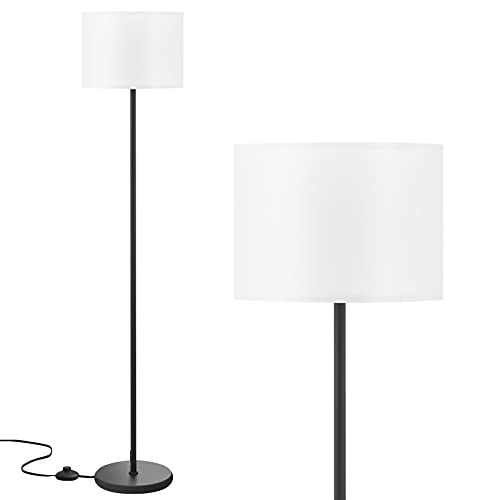
O’Bright Dimmable LED Lamp: Best Task Lighting
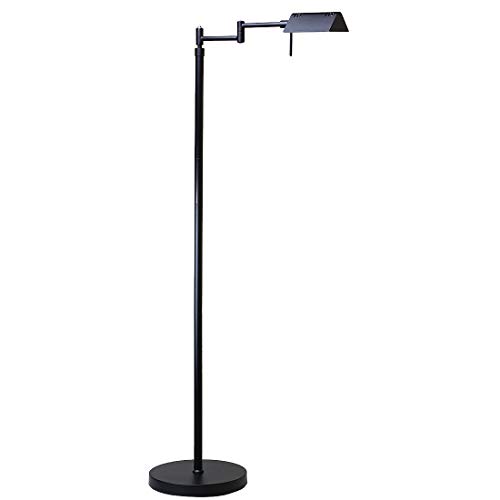
The O’Bright Dimmable LED Lamp is engineered for precision, making it the top choice for lace knitters or those working with fine-gauge lace weight yarn. The light is focused and directional, which helps highlight the "yarn-overs" and "decreases" that are so easy to miss in low light.
Its touch dimmer is remarkably sensitive and offers a wide range of intensities. You can dim it down for a subtle ambient light while watching a movie, or crank it up to full brightness to count your rows on a complex chart.
Be aware that because this lamp is so focused, it doesn’t do a great job of lighting up your entire room. It is a task light, pure and simple. If you are the type of knitter who keeps your pattern, water, and yarn scattered, you will need to keep your items clustered tightly under the beam.
Joly Joy Swing Arm Lamp: Best For Large Work
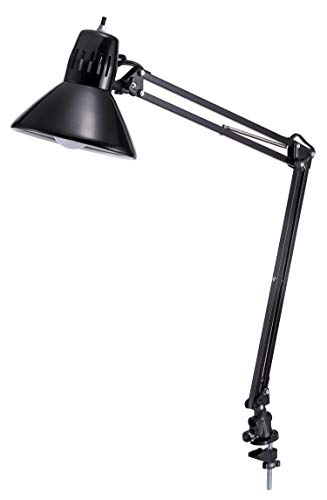
The Joly Joy Swing Arm Lamp is a heavy-duty option for those who tackle large, complex projects like full-size sweaters or intricate afghans. Its long, articulated arm can span across a large workspace, ensuring even illumination across your entire needle span.
The touch control is located on the lamp head, which keeps the base clear for your notions. If you are a knitter who keeps a heavy project bag on the table, this lamp’s ability to "float" above the clutter is a massive advantage.
It is a substantial piece of equipment, so make sure your table is sturdy enough to hold the clamp or base. It’s not the lamp you want to move from room to room, but as a permanent fixture for your primary knitting station, it is hard to beat.
Why Touch Control Matters for Fiber Crafters
When you are deep in the "zone," the last thing you want is a clunky mechanical switch that requires a firm, two-handed grip. Fiber arts inherently involve hands that are often coated in natural oils, lanolin from raw wool, or even hand cream used to prevent dry skin from snagging yarn.
Touch-control lamps allow for a quick tap with the back of a hand or a wrist, keeping your project clean and your rhythm uninterrupted. It’s about minimizing the friction between you and your craft.
- Hygiene: Keep your yarn clean by avoiding switches that collect dust and grime.
- Efficiency: Save time and frustration during complex pattern repeats.
- Ergonomics: Prevent repetitive wrist strain by using a light touch instead of a mechanical click.
Key Lighting Features for Intricate Knitting
When shopping for a lamp, don’t just look at the wattage; look at the Color Rendering Index (CRI) and Color Temperature. For knitters, a high CRI (90+) is essential because it ensures the colors you see under the lamp are the colors of the yarn in natural daylight.
If you are knitting with variegated yarns or stranded colorwork, a low-CRI bulb will make your colors look muddy and dull. You will struggle to see if your contrast colors are popping the way you intended.

- Cool White (5000K+): Best for seeing stitch definition and fixing dropped stitches.
- Warm White (2700K-3000K): More comfortable for long, relaxing sessions.
- Dimmable: Essential for adjusting to the time of day and your specific eye fatigue levels.
How to Position Lamps to Reduce Eye Strain
The goal of your lighting setup should be to eliminate shadows on your needles. If you are right-handed, position your lamp on your left side to prevent your hand from casting a shadow over your work as you move the needle.
If you are working on a complex lace pattern, angle the light so it hits the yarn from the side rather than straight down. This creates "raking light," which highlights the texture of the yarn and makes the individual stitches stand out against the background.
Avoid placing the lamp directly in your line of sight, as the glare from the bulb can be just as tiring as working in the dark. A good rule of thumb is to keep the light source slightly above your head level, angled downward toward your hands.
Essential Tips for Maintaining Your Craft Lamp
Because your lamp lives in a fiber-rich environment, it will inevitably collect dust and stray yarn fibers. Use a soft, microfiber cloth to wipe down the touch-sensitive surface once a week to ensure the sensor remains responsive.
If your lamp uses an articulated arm, check the tension screws periodically. Knitting is a hobby that involves a lot of subtle movement, and over time, the vibrations can cause joints to loosen.
Finally, never use harsh chemical cleaners on your lamp, especially near the LED housing. A simple damp cloth is enough to keep your light bright and your workspace clean, ensuring your lamp lasts for as many sweaters as you have the patience to knit.
Finding the right light is an investment in your long-term knitting health and the quality of your finished garments. Whether you choose a compact desk lamp for your small apartment or a heavy-duty swing arm for your craft room, the goal is always the same: to make your time behind the needles more enjoyable. Don’t settle for dim, frustrating setups when a simple touch can bring your beautiful work into focus. Happy knitting, and may your rows always be even.