6 Best Fringe Scissors For Clean Edges To Try
Achieve salon-quality bangs at home. We review the 6 best fringe scissors designed for precision, sharp blades, and clean, professional-looking edges.
Achieving a perfectly crisp fringe is the final, high-stakes step that can either elevate your knitted shawl or make it look unfinished. When you have spent dozens of hours on intricate stitch patterns, the last thing you want is a jagged edge that refuses to drape properly. Choosing the right scissors is not just about aesthetics; it is about ensuring the structural integrity of your yarn ends. Here are the tools that will help you achieve that professional, clean finish every single time.
Gingher 8-Inch Knife Edge Dressmaker Shears


If you have ever felt the frustration of a scissor blade "chewing" through a thick wool blend, you know why the Gingher 8-inch dressmaker shears are a staple in the sewing world. These are precision-ground, which means the blades meet at a specific angle designed to slice through fibers rather than crushing them.
For a knitter working with heavy-weight yarns or multiple strands held together, these shears offer a substantial, balanced feel. They are heavy enough to provide stability, which helps when you are trying to cut a long, uniform fringe across the bottom of a heavy blanket.
The trade-off here is the weight; they can be tiring to use if you are trimming a fringe that spans several feet. However, the knife-edge grind ensures that even slippery fibers like silk or bamboo blends don’t slide away from the blades.
Kai 7250 Professional Series 10-Inch Shears

When you are working with delicate, high-end fibers like alpaca or mohair, you need a tool that operates with surgical precision. The Kai 7250s are renowned for their high-carbon stainless steel, which maintains an incredibly sharp edge over long periods of use.
These scissors are exceptionally smooth to open and close, reducing hand fatigue during repetitive cutting tasks. If you are preparing fringe for a large-scale wall hanging or a series of scarves, the 10-inch length allows you to make long, sweeping cuts that minimize the risk of uneven lengths.
Keep in mind that these are professional-grade tools that require respect. Because they are so sharp, they can easily snag a loose stitch if you aren’t careful, so always keep your project work separate from your cutting area.
Westcott Titanium Bonded Straight Trimmers

Westcott trimmers are the workhorse of the crafting world, offering a fantastic balance between affordability and performance. The titanium-bonded blades are significantly harder than standard steel, which helps them resist the dulling effect that synthetic yarns can sometimes have on metal.
These are an excellent choice if you are a beginner who isn’t ready to invest in high-end professional shears yet. They handle standard wool and acrylic yarns with ease, providing a clean enough cut for most everyday knitting projects.
The main consideration is that they are lighter and feel a bit more "plastic" in the hand compared to forged steel. If you are a heavy-duty user, you might find that the pivot point loosens slightly over time, but for the occasional fringe project, they are more than capable.
Fiskars Amplify RazorEdge Fabric Shears
Fiskars introduced the Amplify technology to address the problem of fabric separation, which is exactly what happens when you try to cut a thick bundle of yarn. These scissors feature a torsion spring that senses the thickness of the material and adjusts the blades to keep them in perfect contact.
This is a game-changer for knitters who like to cut their fringe in bulk. By holding a large cluster of yarn strands together, you can ensure that every single thread is severed in one clean motion, preventing that annoying "stair-step" effect.
Be aware that the mechanism adds a bit of bulk to the hinge area. While it makes cutting easier, it can feel slightly different if you are used to the simple, streamlined movement of traditional shears.
LDH Scissors Midnight Edition Fabric Shears
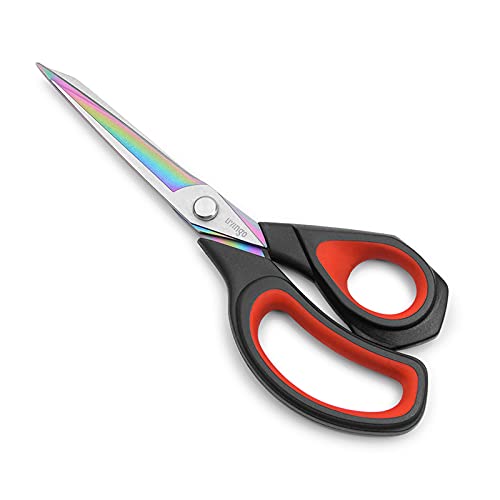
LDH Scissors have become a favorite among modern makers for their sleek design and high-quality industrial steel. The Midnight Edition, in particular, features a matte black finish that isn’t just for looks—it provides a non-stick quality that is helpful when working with sticky or resin-treated fibers.
These shears are exceptionally sharp at the very tip, which is ideal if you need to go back and trim a single, rogue strand of yarn that looks longer than the rest. They feel substantial and well-balanced, providing the control needed for intricate fringe work.
Because they are a premium tool, you will want to store them in their original packaging or a protective case. Treat them as a dedicated fiber tool, and they will reward you with years of clean, effortless cuts.
Havel’s Serrated Edge Crafting Scissors

Serrated blades are a bit of a secret weapon in the fiber arts community. Unlike standard blades that slice, the micro-serrations on Havel’s scissors grip the yarn, preventing it from slipping forward as you close the blades.
This is specifically useful for slippery, superwash wool or high-twist cotton yarns that tend to "jump" away from the scissors. If you struggle with getting a straight line on a fringe made of fine lace-weight yarn, the serrated edge provides the stability you need.
The trade-off is that they don’t produce the same "razor-smooth" cut as a high-end knife-edge shear. However, for the purpose of getting an even, consistent fringe, the grip they provide is often more valuable than the finish of the cut itself.
Why Sharp Blades Prevent Frayed Fringe Ends
A dull blade is the enemy of a clean fringe. When your scissors are dull, they act more like a wedge, crushing the fibers and pushing them apart rather than slicing through them.
This crushing action causes the individual plies of the yarn to fray or untwist at the ends. Over time, these frayed ends will look messy and can even lead to the fringe unraveling further up into your project.
A sharp, precision-ground blade slices through the yarn cleanly, leaving the twist intact. This keeps your fringe looking crisp and prevents the "fuzzy" halo that often appears on worn-out, poorly trimmed edges.
Essential Tips for Achieving Even Fringe Cuts
To get that perfectly straight line, stop trying to cut your fringe while it is hanging loosely. Instead, lay your project flat on a cutting mat and use a clear quilting ruler to guide your cut.
Another trick is to use a piece of masking tape or painter’s tape to mark your desired length across all the fringe strands before you cut. This gives you a visual guide and helps keep the bundle together while you work.

Finally, always cut your fringe slightly longer than you think you need. You can always trim it shorter, but you can’t add length back once the yarn has been severed.
How to Maintain Your Scissors for Longevity
Never use your good fabric scissors to cut paper, cardboard, or wire. Paper contains clay and fillers that will dull your blades faster than almost anything else in your craft room.
Wipe your blades down with a soft, dry cloth after every use to remove lint and dust. If you notice them getting sticky from certain fibers, a tiny drop of sewing machine oil on the hinge will keep the movement fluid and prevent rust.
If you find that your scissors are consistently bending the yarn rather than cutting it, it is time to have them professionally sharpened. A local tailor or sewing machine repair shop can often provide this service for a very reasonable price.
Choosing the Right Blade Length for Projects
Blade length is largely a matter of the scale of your work. For small, decorative tassels or delicate fringe on a baby bonnet, a 5-inch or 6-inch shear offers the control you need to avoid cutting into the main body of the work.
For large blankets, wall hangings, or heavy scarves, opt for 8-inch to 10-inch blades. The longer blades allow you to span the entire width of the fringe area, which is the only way to ensure a perfectly straight line without "stepping" your cuts.
Ultimately, the best tool is the one that feels comfortable in your hand and gives you the confidence to make the cut. Don’t be afraid to try a few different lengths to see what suits your specific project style.
Investing in a quality pair of scissors is one of the most practical decisions you can make for your fiber arts practice. By choosing blades that suit your fiber type and project scale, you eliminate the guesswork and frustration of uneven edges. Remember that your tools are an extension of your hands, and with proper care, these scissors will help you finish your projects with the professional polish they deserve. Happy crafting, and may your fringe always be perfectly straight.