7 Best Yarn Bowls For Heavy Wool Worth Investing In
Discover the 7 best yarn bowls for heavy wool. Learn how these sturdy, weighted designs prevent tangles and tipping, ensuring a smooth knitting experience.
Every knitter knows the frustration of a yarn ball escaping across the floor or tangling mid-row during a complex cable pattern. Investing in a high-quality, heavy-duty yarn bowl is the single most effective way to keep your tension consistent and your workspace organized. When you work with bulky wools or large skeins, a lightweight bowl simply won’t cut it. This guide explores the best options to ensure your yarn stays put while you focus on your stitches.
Furls Fiberarts Wooden Yarn Bowl: Best Overall


The Furls Fiberarts wooden bowl is a masterclass in balance and craftsmanship. Its substantial weight prevents the dreaded "bowl-walk," where your yarn container slowly migrates across the table as you pull from the center.
The wood is polished to a mirror-like finish, which is critical for preventing snagging. If you are working with delicate mohair or hand-dyed singles, a rough surface can cause unwanted pilling or fiber breakage.
This bowl is an investment piece that ages beautifully. While wood requires a bit more care than ceramic, its natural grip makes it feel like an extension of your knitting kit.
Yarn Valet Ceramic Bowl: Best for Heavy Skeins
When you are working with a massive "cake" of wool, you need a bowl with a wide aperture. The Yarn Valet ceramic bowl offers a generous diameter, accommodating even the largest 200-gram skeins without feeling cramped.
The ceramic construction provides natural heft, keeping the bowl anchored firmly on your side table. I find this especially useful when knitting heavy blankets or oversized sweaters where the yarn pull is constant and vigorous.
The design is straightforward and functional. If you value utility over ornate aesthetics, this is the reliable workhorse you want by your side for long marathon knitting sessions.
Nagina International Rosewood Bowl: Best Stability
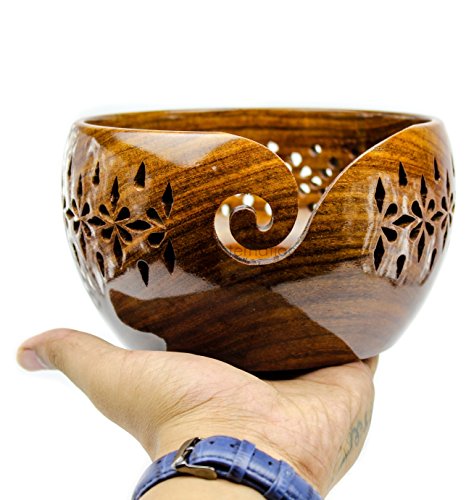
Stability is the primary concern for any knitter using a yarn bowl, and the Nagina International rosewood bowl excels here. Its low center of gravity makes it nearly impossible to tip over, even when you are pulling yarn at odd angles.
The deep, rich grain of the rosewood is not just for show; it adds a density that lighter woods lack. This weight is a huge advantage when you are working with sticky, high-friction fibers like pure highland wool.
While it is heavier to transport, it is the perfect "stay-at-home" tool. If your knitting space is a high-traffic area, the sheer mass of this bowl will keep your yarn safe from accidental bumps.
Athena’s Elements Ceramic Bowl: Best Heavyweight

If your biggest pet peeve is a yarn bowl that skitters across the floor, look no further than Athena’s Elements. This is a genuinely heavy ceramic piece that stays exactly where you put it.
The weight is distributed perfectly toward the base, creating a solid foundation. This is vital when you are working on lace projects that require a light touch; you don’t want the bowl moving and pulling on your delicate yarn.
Because it is ceramic, it is also incredibly easy to clean. If you happen to spill a bit of tea near your project, a quick wipe will keep your bowl looking pristine.
Fiber Artist Supply Co. Maple Bowl: Best Durable

Maple is a remarkably hard and durable wood, making this bowl a lifelong companion for any serious knitter. It withstands the occasional drop or bump far better than its ceramic counterparts.
The artisans at Fiber Artist Supply Co. pay close attention to the spiral cutout, ensuring the edges are smooth. This is essential for preventing the yarn from snagging as it feeds out, especially with multi-ply yarns that have a tendency to "catch" on imperfections.
If you are a knitter who travels to workshops or knit-nights, this is your best bet. It offers the weight you need for stability without the fragility of kiln-fired clay.
Crafty Girl Studios Pottery Bowl: Best Aesthetic

Sometimes, you want your knitting tools to double as home decor. The Crafty Girl Studios pottery bowls are artisanal, hand-thrown pieces that bring a touch of beauty to your craft room.
Beyond the looks, the hand-thrown nature of these bowls often results in a thicker, heavier wall. This provides the necessary weight to keep your yarn in place while you work through a complicated stranded colorwork chart.
These bowls are often unique, so you are getting a piece of art along with a functional tool. They make excellent gifts for the knitter who has everything but appreciates the finer details.
KnitPal Large Wooden Yarn Bowl: Best for Big Yarn
The KnitPal large wooden bowl is designed specifically for those of us who love knitting with bulky, super-bulky, or jumbo-weight yarns. Its wide, deep basin is cavernous enough to hold a giant ball of wool without it popping out the top.
The wood is smooth and snag-free, which is crucial when dealing with chunky yarns that have a lot of texture or slubs. If you are working on a heavy-gauge project, the bowl’s weight keeps the yarn feeding smoothly despite the tension required.
It’s a functional, no-nonsense tool that solves the specific problem of "big yarn" overflow. If your stash is mostly heavy-weight wool, this bowl will quickly become your favorite tool.
Why Heavy Bowls Prevent Yarn Tangling and Tipping
A lightweight bowl is essentially a sail; every time you pull your yarn, the bowl moves. This movement causes the yarn to bunch up, leading to the dreaded tangle that halts your knitting progress.
- The Physics of Pull: A heavy bowl uses gravity to resist the horizontal pull of your yarn.
- The Tipping Point: Wide-based bowls are harder to tip than tall, narrow ones, regardless of material.
- Tension Consistency: When your bowl stays put, your tension remains consistent, which is the secret to a professional-looking finished fabric.
If you find yourself constantly reaching over to nudge your bowl back into position, your current tool is too light. A heavier bowl allows you to maintain a steady, rhythmic flow of yarn.
Ceramic vs. Wood: Choosing Your Ideal Yarn Bowl
Ceramic bowls are generally heavier and offer a sleek, cool-to-the-touch feel that many knitters find satisfying. They are excellent for heavy-weight yarns, but they are fragile; one drop on a hardwood floor can lead to a shattered bowl.
Wood, on the other hand, is warm, tactile, and durable. It offers a natural grip that helps keep the yarn from sliding too quickly, which is a benefit if you are using slippery synthetic or silk-blend yarns.
- Choose Ceramic if: You want maximum weight, easy cleaning, and a stationary tool that doesn’t move.
- Choose Wood if: You want durability, a beautiful natural aesthetic, and a bowl that feels "alive" in your hands.
Ultimately, both materials perform well, provided they have enough mass to stay anchored. Your choice should come down to your personal style and how much you value portability versus permanence.
How to Properly Feed Yarn Through Bowl Cutouts
The spiral cutout is the heart of a yarn bowl, designed to keep your yarn contained while allowing it to feed freely. To get the best results, always place the yarn ball in the bowl so that it unwinds from the center, which prevents the ball from bouncing around.
Slide the yarn into the spiral slot, ensuring it sits at the bottom of the curve. If your bowl has a secondary hole, you can use that for multi-strand knitting to keep your yarns from twisting together.
If you feel resistance, check the spiral for any microscopic splinters or rough patches. A quick rub with a fine-grit sandpaper or a bit of wax can smooth out even the most stubborn wooden cutouts, ensuring your yarn glides effortlessly through every stitch.

Choosing the right yarn bowl is about balancing the weight of your fiber with the stability of your workspace. Whether you opt for the heft of ceramic or the enduring beauty of solid wood, a high-quality bowl will transform your knitting rhythm. Invest in a piece that feels right in your hands and matches your project needs, and you will never struggle with runaway yarn again. Happy knitting, and may your tension always be even.