7 Best Tension Masts For Multi-Color Knitting Tools
Optimize your multi-color knitting with our guide to the 7 best tension masts. Discover tools that prevent tangles and ensure consistent yarn flow for projects.
Mastering the art of multi-color knitting requires more than just patience; it demands consistent tension to keep your floats even and your fabric smooth. Tension masts and yarn guides act as a "third hand," managing multiple strands so your fingers don’t have to do the heavy lifting. Whether you are tackling a complex Fair Isle sweater or a simple striped hat, the right tool can transform a frustrating, tangling mess into a fluid, rhythmic experience. Here are the top seven tools to help you achieve professional-looking results every time you pick up your needles.
Yarn Cotton Yarn Tension Guide: The Best Overall


When you are working with multiple colors, the Yarn Cotton Yarn Tension Guide stands out for its straightforward, reliable design. It excels at keeping strands separated, which is the primary hurdle when you are juggling two or more balls of yarn simultaneously.
This tool is particularly effective for knitters who find that their yarn tends to twist or tangle as they work. By providing a dedicated path for each strand, it prevents the dreaded "yarn soup" that often occurs during complex colorwork projects.
The trade-off here is the setup time; it requires a bit of patience to thread your yarn correctly before you begin. However, once it is set, the consistent feed it provides is unmatched for long-term projects like blankets or sweaters.
KnitIQ Knitting Tension Guide: Best for Beginners
If you are just starting your journey into stranded colorwork, the KnitIQ Knitting Tension Guide is an excellent entry point. It features a user-friendly interface that doesn’t require a master’s degree in engineering to operate.
Beginners often struggle with "death-gripping" their yarn, which leads to puckered fabric and uneven gauge. This guide helps you relax your hands by taking the burden of tension management off your fingers.
While it may lack some of the heavy-duty features of professional-grade masts, it is perfect for learning the rhythm of colorwork. It’s an affordable way to see if you enjoy the technique before investing in more expensive equipment.
Stanwood Needlecraft Yarn Tensioner: Best Value

The Stanwood Needlecraft Yarn Tensioner is a workhorse that offers incredible durability for the price. It is designed for those who knit frequently and need a tool that can handle the wear and tear of daily use.
Unlike plastic alternatives, this tensioner often features a more robust construction that stays put on your table. It is ideal for knitters who want a "set it and forget it" solution that won’t slide around during a marathon knitting session.
Keep in mind that its size is slightly larger, so it is better suited for a dedicated craft space rather than on-the-go knitting. For the value-conscious maker, this is the most reliable tool for the money.
Tulip Yarn Guide Ring: Best Portable Accessory
Sometimes you need to take your colorwork on the train or to a knitting circle, and the Tulip Yarn Guide Ring is the perfect companion. It fits comfortably on your finger, acting as a wearable tensioner that goes wherever you do.
This is a game-changer for knitters who prefer to hold their yarn in their left hand while performing Continental-style knitting. It keeps your strands neatly aligned without the need for a bulky table-mounted mast.
While it may not provide the same level of micro-adjustment as a large mast, its portability is unmatched. It is a fantastic tool for knitters who value freedom of movement and spontaneity.
Prym Ergonomics Yarn Guide: Best for Comfort

The Prym Ergonomics Yarn Guide is specifically designed with hand fatigue in mind. If you suffer from cramping after long hours of colorwork, this tool will feel like a gift to your joints.
It sits lightly on the finger and features a smooth surface that allows the yarn to glide effortlessly. This reduction in friction is vital when working with delicate fibers like alpaca or mohair, which can easily snag on rougher guides.
It is a specialized tool, so it might take a few rows to get used to the feel if you are accustomed to holding yarn directly. Once you adjust, the improvement in your knitting endurance is palpable.
Clover Knitting Yarn Guide: Best for Precision
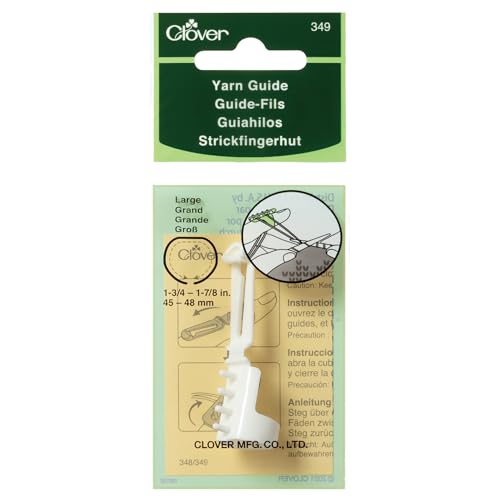
Clover is synonymous with quality, and their yarn guide is no exception when it comes to precision. It offers fine-tuned control that allows you to adjust your tension with surgical accuracy.
This is the tool of choice for knitters working on intricate lace or fine-gauge colorwork where every stitch counts. It ensures that your tension remains identical across hundreds of rows, resulting in a perfectly uniform fabric.
Because it is so precise, it does require a bit more attention to detail during the initial setup. If you are a perfectionist who wants total control over your yarn flow, this is the guide for you.
Addi Multi-Color Yarn Feeder: Best for Fair Isle

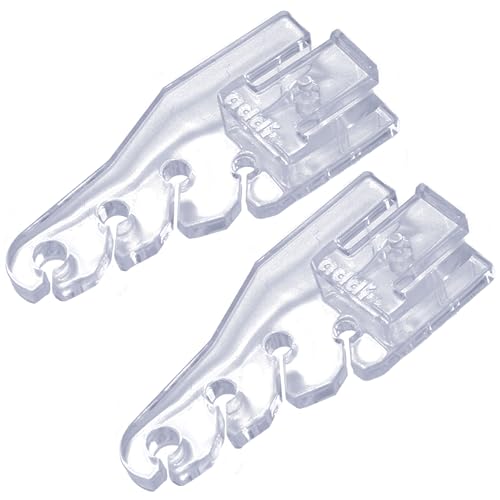
The Addi Multi-Color Yarn Feeder is the gold standard for Fair Isle enthusiasts. It is engineered to handle the specific demands of stranded knitting, where you are constantly switching between two or more colors.
This feeder keeps your yarns separate and organized, preventing the colors from bleeding into each other or twisting at the back of your work. It creates a smooth, continuous flow that allows you to maintain a steady pace.
It is a slightly more advanced piece of equipment, but the payoff in speed and consistency is worth the learning curve. If you are serious about stranded colorwork, this tool will quickly become an essential part of your kit.
How to Choose the Right Tension Mast for Your Work
Choosing the right tool depends entirely on your personal knitting style and the complexity of your project. If you are a high-volume knitter, prioritize durability and stability; if you are a traveler, prioritize portability.
Consider the yarn you use most often. Slippery silk or bamboo yarns require a guide with enough tension to prevent them from sliding off, while grippy wools need a smooth, snag-free path.
Always test your gauge with the tool before committing to a large project. A tension guide can subtly alter your gauge, so it is important to see how your stitches look and feel with the tool engaged.
Benefits of Using Tension Guides for Colorwork
The primary benefit of a tension guide is the elimination of uneven floats. By controlling the feed of each yarn, you ensure that the strands at the back of your work are neither too loose nor too tight.
These tools also significantly reduce hand strain. When you aren’t constantly adjusting your grip to maintain tension, you can knit for longer periods without the typical aches and pains associated with colorwork.
Finally, they improve the overall look of your finished project. Consistent tension results in a professional-looking fabric that blocks out beautifully and holds its shape over time.
Troubleshooting Common Yarn Tensioning Issues
If you find your yarn is still tangling, check the pathing of your yarn through the guide. Often, the issue isn’t the tool itself, but a slight misalignment in how the yarn is threaded.
If your fabric is coming out too tight, try loosening the tension settings on the mast or guide. Conversely, if your floats are too loose, tighten the tension incrementally until you find the "sweet spot."
Don’t be afraid to experiment with different tension settings for different fibers. A superwash wool will behave very differently than a rustic, non-superwash yarn, and your tension guide should be adjusted accordingly.
Finding the right tension mast is a personal journey that evolves alongside your knitting skills. By experimenting with these tools, you can alleviate hand strain, improve your colorwork consistency, and ultimately enjoy your craft more deeply. Remember that even the best tool is only as good as your practice, so take the time to find the rhythm that works for you. Happy knitting, and may your floats always be perfectly tensioned.