6 Best Cotton Warps For Structural Integrity
Selecting the right cotton warp is vital for fabric strength. Discover the six best options that ensure optimal structural integrity for your weaving projects.
Selecting the right cotton warp is the difference between a meditative weaving session and a frustrating afternoon of fixing broken threads. While many fibers look similar on the shelf, their internal twist and fiber length dictate how they handle the relentless tension of a loom. Choosing a warp with high structural integrity ensures your finished piece remains stable and true to your original design. These six options represent the most reliable choices for weavers who value durability and consistent results.
Maysville 8/4 Cotton Warp: The Gold Standard


Maysville 8/4 is the workhorse of the weaving world, and for good reason. It is a soft, unmercerized cotton that possesses just enough "tooth" to grip itself, making it incredibly forgiving during the warping process.
Because it isn’t overly slick, it stays exactly where you put it in the heddles. This makes it an ideal choice for beginners who are still mastering the art of consistent tensioning across the width of the loom.
The tradeoff here is that it lacks the high-sheen finish of mercerized yarns. If you are aiming for a crisp, professional look with high luster, you might find the matte appearance of Maysville a bit too rustic.
Bottom line: If you want a reliable, no-fuss warp that rarely snaps under pressure, Maysville is your best friend.
Brassard 8/4 Cotton: Best for Fine Weaving
Brassard 8/4 is a mercerized cotton that offers a tighter, more uniform twist than standard options. This processing gives the yarn a subtle sheen and a smoother surface, which is essential when you are working with finer reeds.
The mercerization process—a treatment that swells the cotton fibers—also increases the yarn’s tensile strength. You will notice that it doesn’t fray or "fuzz" as easily as unmercerized cotton, even after repeated passes of the shuttle.
However, because it is smoother, it can be slightly more slippery than a matte warp. You must ensure your tensioning is precise, or you might find the threads shifting slightly during the weaving process.
Bottom line: Choose this when you need a polished, professional finish and have the experience to manage a slightly slicker thread.
Maurice Brassard 8/8 Cotton: High Durability
When you are weaving heavy-duty items like rugs, placemats, or sturdy tote bags, the 8/8 weight is the gold standard. It is essentially two strands of 8/4 twisted together, providing double the strength and a much more substantial hand.
The increased mass of this yarn means it can withstand significant beat-in force without stretching or thinning. It is exceptionally resistant to abrasion, which is crucial if your shuttle is hitting the warp threads frequently.
Be aware that this yarn creates a much thicker fabric. It is not the right choice for delicate scarves or fine table linens where you want a soft, fluid drape.
Bottom line: Use 8/8 for projects that need to survive years of heavy daily use.
Gist Yarn Beam Cotton: Superior Consistency
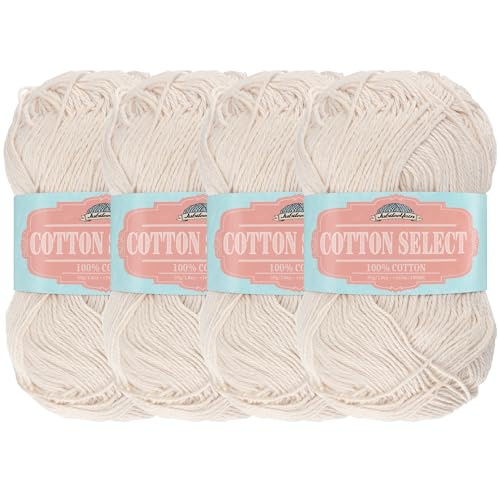
Gist Yarn has built a reputation on extreme quality control, and their Beam cotton is a testament to that. It is designed specifically to be a warp, meaning it has a high-twist construction that minimizes elasticity.
In weaving, elasticity is often the enemy; if your warp stretches unevenly, your fabric will ripple once it comes off the loom. Beam cotton remains stable throughout the entire length of the warp, ensuring your tension stays uniform from the first inch to the last.
The higher price point reflects this precision. It is an investment, but one that pays off when you are working on a long, complex project where re-warping would be a nightmare.
Bottom line: If you are working on a large-scale project where consistency is non-negotiable, reach for Beam.
Lily Sugar’n Cream 4-Ply: Best Budget Choice

Many weavers start their journey using readily available craft-store cotton like Lily Sugar’n Cream. It is widely accessible and comes in a massive array of colors, which is perfect for playing with color theory.
However, there is a catch: this yarn is designed for knitting, not weaving. It has a much lower twist than dedicated warp yarns, meaning it is prone to pilling and snapping under high tension.
If you use this, keep your tension moderate and avoid aggressive beating. It works beautifully for wall hangings or decorative pieces that don’t require high structural rigidity.
Bottom line: It is a fantastic, affordable way to practice, but be gentle with your loom settings.
Ashford Mercerized Cotton: Best for Tension

Ashford’s mercerized cotton is engineered for weavers who want a crisp, clean look with high color saturation. The mercerization doesn’t just add shine; it makes the fiber more receptive to dye, resulting in vibrant, lasting colors.
This yarn holds tension exceptionally well. Because it is so uniform, it allows for a very even "shed"—the space between your warp threads—which makes passing the shuttle much faster and smoother.
The only downside is that the smoothness can make knots slip if you aren’t careful. Use a secure knot, like a weaver’s knot, to ensure your joins don’t come undone mid-project.
Bottom line: An excellent choice for intricate patterns where you need the yarn to behave perfectly under tension.
Why Structural Integrity Matters in Cotton Warps
Structural integrity is the backbone of your project. If your warp is weak or uneven, your fabric will look distorted, with wavy edges and inconsistent gaps in the weave.
Cotton is a natural fiber that can be susceptible to humidity and temperature changes. A high-quality warp is twisted specifically to resist these environmental shifts, keeping your fabric stable.
Remember: you can always fix a mistake in the weft, but a broken warp thread is a structural failure. Investing in a strong warp saves you hours of repair work.
Understanding Ply and Twist in Warp Selection
"Ply" refers to how many strands are twisted together to create the yarn. An 8/4 cotton, for example, is four strands of an 8-weight yarn twisted together.
"Twist" is the direction and tightness of that spin. For a warp, you want a "hard" or "high" twist. This keeps the fibers locked together, preventing the friction of the reed and heddles from fraying the yarn.
Don’t be fooled by soft, squishy yarns; they are meant for the weft, where they can provide texture and softness. Always prioritize a firm, tight twist for your warp.
Proper Tensioning Techniques for Cotton Warps
Tensioning is an art, not just a mechanical step. Start by ensuring your warp is wound evenly across the back beam, using paper or sticks to prevent the layers from digging into each other.
If you find your edges are pulling in, you are likely tensioning the outer threads too tightly. Keep the tension consistent across the entire width by checking the "ping" of the threads; they should all sound similar when plucked.
Always release your tension if you are leaving the loom for more than a few hours. Cotton can relax over time, and keeping it under constant strain can weaken the fibers unnecessarily.
Troubleshooting Common Warp Thread Breakages
When a warp thread snaps, don’t panic. It is a common occurrence even for the most seasoned weavers.
The most frequent culprit is a "frayed" area caused by a rough reed or a sticky heddle. Check your loom hardware for any burrs or sharp edges that might be snagging the thread as it passes.
If a thread breaks, use a "repair thread" to bridge the gap. Tie the new thread to the back beam, pass it through the heddle and reed, and weight it with a small fishing sinker or a clothespin to maintain the correct tension until you can weave it into the fabric.
Mastering your warp selection is the most significant step toward becoming a confident weaver. By understanding the mechanical properties of these cottons, you can choose the right tool for every specific project on your loom. Remember that even the best yarn requires careful handling, so take your time with tensioning and loom maintenance. With the right foundation, your woven pieces will possess the strength and beauty that only quality fiber can provide.