6 Best Practice Swatches For Testing Placement Tips
Optimize your design workflow with these six swatch testing tips. Learn how to refine color placement and contrast to ensure visual clarity in every project.
Many knitters view swatching as a tedious chore that delays the excitement of starting a new project. However, treating your swatch as a diagnostic tool rather than a hurdle is the secret to professional-looking garments. By testing specific techniques before committing to your yarn, you ensure that your final piece fits perfectly and wears beautifully. These six methods will transform your approach to gauge and help you master the nuances of your chosen fiber.
The Standard 4×4 Inch Flat Stockinette Swatch
The standard 4×4 inch flat swatch is the baseline for almost every sweater pattern you will encounter. It provides a controlled environment to measure your stitch and row count without the complexity of decorative motifs.
When knitting this swatch, ensure you work at least two inches beyond the 4×4 center area to account for edge tension. The stitches at the very beginning and end of a row are often looser or tighter due to the turn, which can skew your measurements if included in your count.
Always cast on enough stitches to create a generous square, then bind off loosely. If you bind off too tightly, the fabric will pull inward, making it impossible to get an accurate reading of the fabric’s true width.
The Circular In-The-Round Gauge Swatch Method
Knitting flat and knitting in the round are two different physical motions that often result in different gauges. Many knitters find their purl stitches are looser than their knit stitches, meaning their flat gauge is significantly different from their circular gauge.
To mimic the behavior of a sweater body, you should knit your swatch in the round. You can do this by carrying the yarn across the back of the work between rounds, effectively creating a tube of "floats" that you cut open later.
This method is non-negotiable for projects worked entirely in the round, such as hats or seamless pullovers. If you rely on a flat swatch for a circular project, you risk ending up with a garment that is far too large or small.
The Pattern Stitch Texture Placement Swatch
Cables, bobbles, and twisted stitches pull the fabric in, creating a denser, narrower result than plain stockinette. A 4×4 inch stockinette square will never accurately predict the gauge of a complex, cabled cardigan.
You must swatch your pattern repeat in its entirety to see how the texture interacts with the yarn. If your pattern has a 12-stitch cable repeat, ensure your swatch includes at least two full repeats plus a buffer of stockinette on either side.
This is where you will discover if your chosen needle size creates a fabric that is too stiff or too holey. If the cables look "choked," go up a needle size; if they look loose and sloppy, go down.
The Colorwork Intarsia Transition Swatch
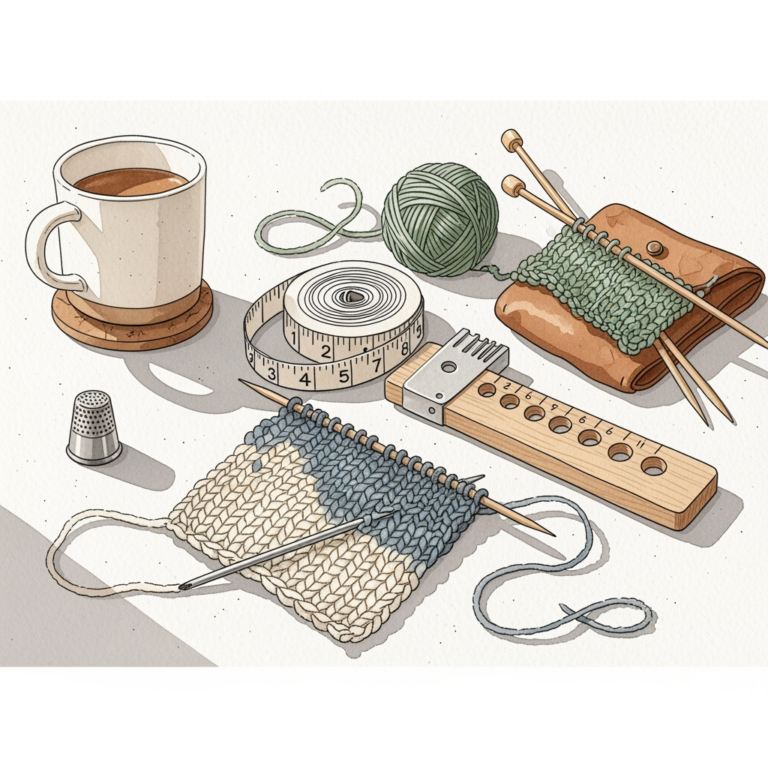
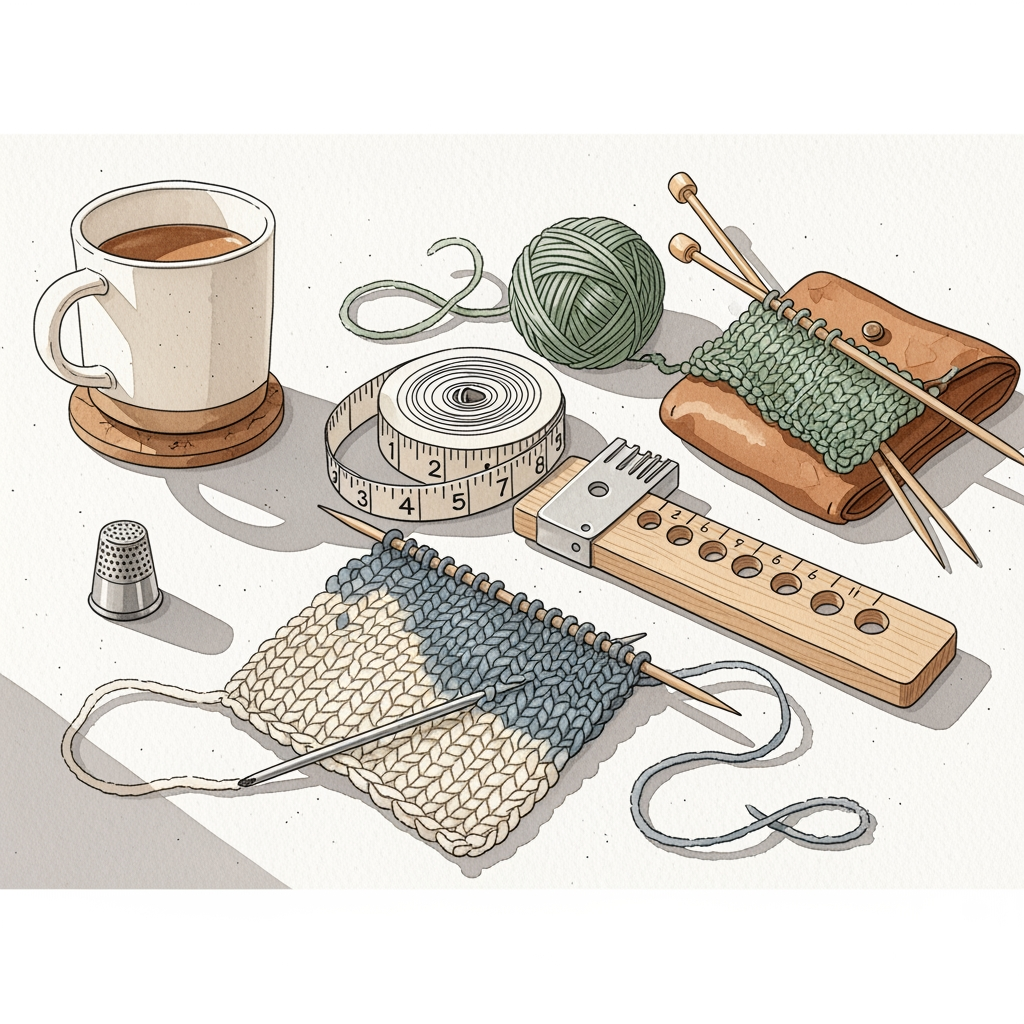
Intarsia presents a unique challenge because the yarn is not carried across the back, but rather twisted at the color boundaries. These twists can create "tugs" that distort the fabric if not managed with consistent tension.
Your test swatch should include at least three color blocks to practice your joins. Pay close attention to the vertical lines where colors meet, as this is where tension issues most frequently appear.
If you notice gaps or "ladders" at the color changes, focus on how you cross the yarns. You may need to pick up the new color from underneath the old color to twist them securely without creating a visible bump.
The Ribbing Elasticity and Recovery Swatch
Ribbing is the structural foundation of most cuffs, collars, and hems. Unlike stockinette, ribbing needs to snap back into shape after being stretched, which is a property known as recovery.
Knit your ribbing swatch using the same needle size you intend to use for the body, then try a second swatch with needles one or two sizes smaller. You want the ribbing to be firm enough to hold its shape, but not so tight that it feels like a tourniquet.
Test the recovery by stretching the swatch horizontally and observing how quickly it returns to its original width. If the fabric stays stretched out, the fiber content may lack elasticity, or your needle size is simply too large for the yarn.
The Lace Pattern Openwork Placement Swatch
Lace is deceptive because it usually looks like a tangled, uneven mess before it is blocked. You cannot judge lace gauge until the fabric has been washed and pinned out to its intended dimensions.
When swatching lace, be sure to include the "rest" rows—the plain purl or knit rows between pattern repeats. These rows provide the structure that keeps the lace from collapsing into a shapeless heap.
Remember that lace grows significantly during blocking. If your swatch is too small, you won’t get an accurate sense of how the yarn behaves under tension. Always swatch a piece at least 6×6 inches to allow the lace pattern to fully open up.
Why You Must Wash and Block Every Test Swatch
Blocking is not just about making the fabric look pretty; it is about relaxing the fibers. Many yarns, especially wool and alpaca, expand or contract significantly when they meet water and heat.
If you skip this step, you are essentially guessing at your final gauge. A swatch that measures 20 stitches over 4 inches before washing might measure 18 or 22 stitches after, completely changing the fit of your garment.
Treat your swatch exactly as you intend to treat the finished item. If you plan to machine wash your sweater, throw the swatch in the machine; if you plan to hand wash, soak it in your preferred wool wash.
Calculating Row and Stitch Gauge Accurately
Use a dedicated gauge ruler or a clear measuring tape to count your stitches. Avoid using a soft measuring tape that can stretch over time, as this will lead to inaccurate measurements.
Count your stitches and rows over exactly 4 inches, but don’t stop there. Divide your total count by 4 to get your per-inch measurement, as this makes it much easier to calculate the total number of stitches needed for your specific size.
If you have partial stitches, be precise. A difference of half a stitch per inch can mean the difference between a garment that fits perfectly and one that is two sizes too big.
How Yarn Fiber Content Affects Gauge Stability
The fiber content of your yarn dictates how it will react to your needles and the environment. Animal fibers like wool have a "crimp" that provides natural elasticity and grip, making them more forgiving for beginners.
Plant fibers like cotton or linen have zero elasticity and can feel "dead" on the needles. These fibers often require smaller needles to maintain a crisp look, and they tend to grow significantly after washing.
Synthetic fibers, such as acrylic or nylon, are often heat-set and may not change much after blocking. Always consider the "memory" of the fiber—if the yarn doesn’t want to hold a shape, your gauge will be much harder to maintain.
Troubleshooting Common Swatch Tension Issues
If your swatch is consistently smaller than the pattern gauge, you are likely a "tight" knitter. Try moving up one needle size or focusing on relaxing your grip on the yarn as it flows through your fingers.
Conversely, if your swatch is too large, you are knitting loosely. You may need to switch to a different needle material, such as wood or bamboo, which provides more friction and can help you maintain a tighter, more consistent tension.
Don’t be afraid to experiment with different needle types. Metal needles are fast and slick, while wood needles provide a bit of "grab" that can help stabilize inconsistent tension.
Swatching is the ultimate act of respect for your time and your materials. By testing your gauge, texture, and fiber behavior before you cast on, you eliminate the guesswork that leads to unfinished projects. Embrace the process, keep a record of your findings, and you will find that your knitting becomes more precise and enjoyable than ever. Happy making, and may your gauge always be true.