6 Best Heavy Duty Snaps For Wool Bag Security
Secure your wool bags with confidence. We review the 6 best heavy-duty snaps, focusing on durability, fabric protection, and ease of use for your projects.
Selecting the right hardware for a handmade wool bag is as critical as choosing the perfect yarn for a complex cable pattern. A beautiful, hand-knit bag deserves a closure that matches its structural integrity and aesthetic charm. If your snaps are too weak, your project will sag; if they are too aggressive, you risk tearing your precious fibers. These six options provide the balance of security and longevity needed for your next fiber arts masterpiece.
KAM Plastic Snaps: Best for Lightweight Projects


KAM snaps are the go-to choice when you’ve finished a project using a lighter-weight wool or a delicate blend. Because they are made from polyacetal resin, they won’t rust or corrode over time, which is a major plus if you live in a humid climate.
These are incredibly easy to install with a simple handheld press, making them perfect for knitters who aren’t comfortable with heavy-duty metal tools. However, they lack the "bite" required for thick, fulled wool.
If you are making a small notions pouch or a light accessory bag, these are ideal. Just remember that they don’t have the same mechanical strength as metal, so avoid using them on bags meant to carry heavy items like water bottles or large knitting projects.
Dritz Heavy Duty Metal Snaps: Superior Durability

Dritz Heavy Duty snaps are a staple in most craft stores for a reason: they provide a reliable, industrial-grade hold. When you hear that satisfying "snap" sound, you know your bag is secure.
These are best suited for medium-weight wools, particularly those that have been felted or worked at a very tight gauge. They offer a much stronger grip than plastic, ensuring that the mouth of your bag stays closed even when stuffed with yarn cakes.
One trade-off is that they require a specific setting tool and a bit of force. Always practice on a scrap piece of fabric first to ensure your alignment is perfect before committing to your finished bag.
Prym Sew-On Press Fasteners: The Classic Choice

Sometimes, you don’t want to punch a hole through your hard-earned knitting. Prym sew-on fasteners are the traditionalist’s solution, allowing you to attach hardware using a needle and thread rather than a hammer or press.
These are gentle on your fibers, making them the safest choice for delicate or hand-dyed wools that might fray if punctured. You can use a sturdy nylon or waxed thread to anchor them, which distributes the stress of the snap across a wider area of the fabric.
They won’t provide the same "pop" as a mechanical snap, but they offer a beautiful, artisanal finish. If you’ve spent weeks on a project, the extra time spent sewing these on is a small price to pay for security.
Tandy Leather Line 24 Snaps: Rugged Construction

Tandy Line 24 snaps are built for the kind of abuse that leather goods—and heavy wool bags—frequently endure. If you are working with thick, boiled wool or a heavy-duty tweed, these are the heavy hitters you need.
They have a very deep post and a robust spring mechanism that won’t give up easily. Because they are designed for leather, they are inherently thicker than sewing-specific snaps, so ensure your bag’s flap or opening has enough structure to support the metal hardware.
These are an investment in the longevity of your bag. If you are making a "workhorse" project bag that will be thrown into the back of a car or carried daily, this is the hardware that will outlast the wool itself.
Scovill Dot Durable Snaps: Best for Heavy Wool

Scovill Dot snaps are the professional standard for outdoor gear and heavy-duty canvas. They are engineered to withstand high tension, making them the best choice for bags that see heavy daily use.
When working with dense, heavy wool, you need a snap that can penetrate multiple layers without losing its grip. These snaps have a high-profile design that locks firmly, providing a level of security that prevents the bag from popping open under pressure.
They do require a bit of a learning curve to install correctly, as the setting tools are more specialized. However, once they are set, they are virtually indestructible.
YKK Heavy Duty Metal Snaps: Professional Grade
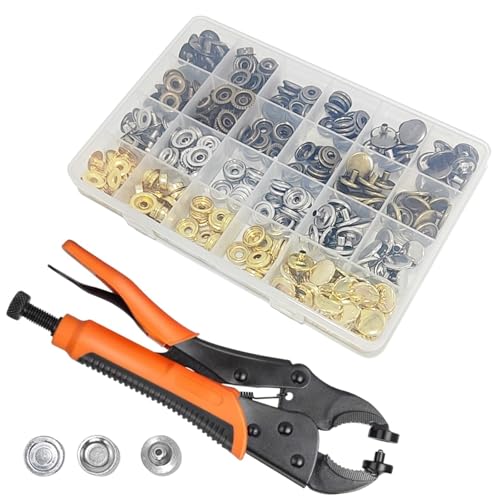
YKK is synonymous with quality closures, and their heavy-duty metal snaps are no exception. They are consistent, reliable, and smooth to operate, which is exactly what you want when you’re reaching into your bag mid-knit.
The finish on these is usually superior, resisting scratching and flaking over time. They are an excellent choice for a high-end project where the hardware needs to look as professional as the knitting itself.
While they are slightly more expensive than generic alternatives, the precision engineering means you are less likely to have a "dud" snap that fails after only a few uses. For a heirloom-quality bag, YKK is a smart choice.
How to Install Snaps Without Damaging Your Wool
The biggest mistake knitters make is trying to install a snap directly into a single layer of knitting. Because wool is a porous, elastic fiber, the metal post will eventually pull through the stitches if it isn’t properly supported.
- Always use a small piece of fusible interfacing on the backside of the fabric where the snap will be placed.
- Consider adding a small leather or felt washer between the snap and the wool to provide extra surface area.
- If possible, place your snaps on a "facing" or a lined section of the bag rather than directly into the main knitted fabric.
By creating a "sandwich" of fabric, interfacing, and hardware, you prevent the metal from cutting the yarn. Treat your snap installation as a structural component, not just a decorative afterthought.
Choosing the Right Snap Size for Your Bag Weight
The weight of your bag dictates the size of the snap you should choose. A tiny snap on a heavy bag will pop open the moment you put a project inside, while a massive snap on a light bag will weigh down the fabric and look clumsy.
- Small (10-12mm): Perfect for small notions pouches or light accessory bags.
- Medium (15mm): The sweet spot for most standard-sized project bags.
- Large (20mm+): Reserved for heavy-duty totes or bags made from thick, felted wool.
Always consider the "pull" of the bag. If you are prone to overstuffing your bags, err on the side of a larger, more robust snap to ensure the closure stays intact.
Reinforcing Your Wool Fabric for Snap Attachment
Reinforcement is the secret to a professional-looking bag that doesn’t stretch out of shape. Even if your wool is thick, the constant opening and closing of a snap will put immense stress on the surrounding stitches.
I recommend sewing a small square of cotton canvas or heavy interfacing behind the snap location. This creates a stable anchor point that doesn’t rely on the elasticity of the wool to hold the hardware in place.
If you don’t have interfacing, a small scrap of leather or even a double layer of the same wool fabric can work. The goal is to distribute the tension so that the metal snap pulls against the reinforcement, not your delicate hand-knitted stitches.
Troubleshooting Common Snap Issues on Wool Bags
If your snap is loose or spinning, it usually means the post was not set with enough pressure or the fabric is too thin. You can often fix this by adding an extra layer of reinforcement behind the snap and re-setting it.
If your snap is too tight and hard to open, don’t force it, as you might rip the wool. You can apply a tiny amount of dry lubricant, like graphite, to the spring mechanism to help it glide more smoothly.
- Snap won’t stay closed? Your fabric may be too thick for the post length; try a longer post or reduce the thickness of the fabric behind the snap.
- Snap is tearing the wool? You need more reinforcement. Add a patch of leather or webbing to distribute the force.
Remember, most snap issues in knitting are actually fabric issues. If the foundation is stable, the hardware will perform exactly as it should.
Choosing the right snap is about respecting the time and effort you put into your knitting. Whether you opt for the ease of KAM plastic or the industrial strength of Scovill Dot, always prioritize the structural integrity of your bag. With the right reinforcement and a bit of patience during installation, your closure will be as durable as your stitches. Happy making, and may your project bags always stay securely closed.