6 Best Drop Spindles For Learning To Spin
Mastering spinning starts with the right tool. We evaluate six beginner-friendly drop spindles, focusing on weight, balance, and ease of use for new crafters.
Learning to spin your own yarn is a transformative experience that changes how you view every skein of commercial yarn in your stash. While the process can feel intimidating at first, the right drop spindle acts as a steady, reliable partner in your journey toward mastery. This guide breaks down the best tools to help you transition from a curious knitter to a confident spinner. Choosing the right equipment now will save you from the frustration of fighting your tools rather than focusing on your fiber.
Schacht Hi-Lo Drop Spindle: Best Overall Choice


The Schacht Hi-Lo is a favorite in my studio for one simple reason: it is incredibly versatile. It features a unique design that allows you to use it as either a top-whorl or bottom-whorl spindle, giving you the best of both worlds.
For a beginner, this flexibility is a game-changer. You might find that you prefer the stability of a bottom-whorl for learning the basics of drafting, but as you grow, you will likely gravitate toward the faster spin of a top-whorl setup.
The weight distribution is consistent, which helps maintain a steady momentum. If you’ve ever struggled with a spindle that wobbles or stops spinning prematurely, the Hi-Lo’s precision engineering will feel like a breath of fresh air. It is the gold standard for a reason.
Kromski Sonata Student Spindle: Top Value Pick
If you are just starting out and don’t want to break the bank, the Kromski Student spindle is an excellent entry point. It is lightweight, durable, and crafted with the same attention to detail that the brand puts into their full-sized spinning wheels.

The wood finish is smooth enough to prevent your fiber from snagging, which is a common issue with cheaper, poorly sanded alternatives. When you are learning to manage your fiber supply and your twist simultaneously, the last thing you need is a rough surface grabbing your wool.
This spindle is particularly well-suited for those who want to practice spinning finer yarns. Because it is light, it won’t pull apart your delicate roving before you have a chance to add enough twist to hold it together.
Jenkins Turkish Spindle: Best for Easy Cop Winding

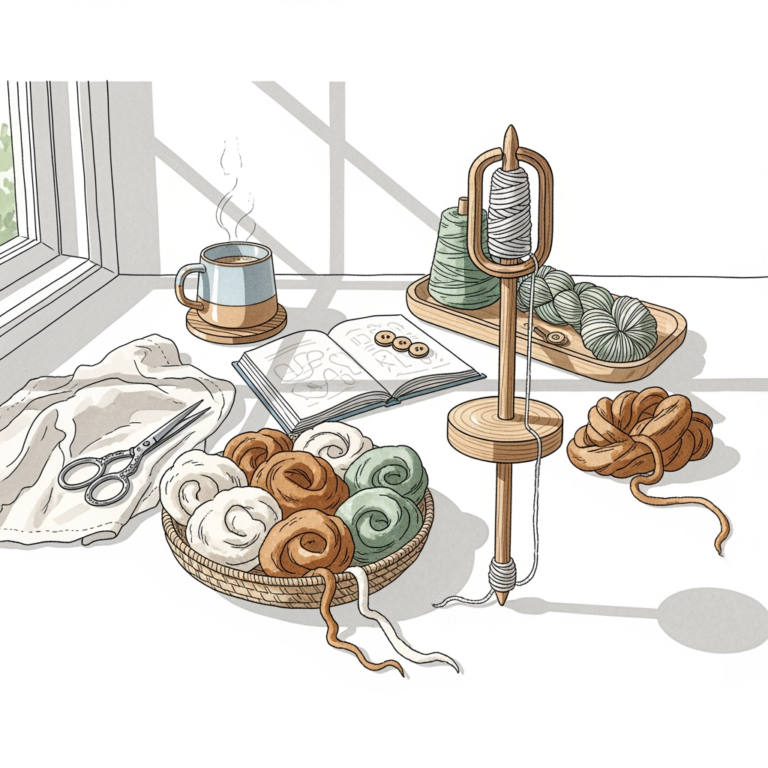
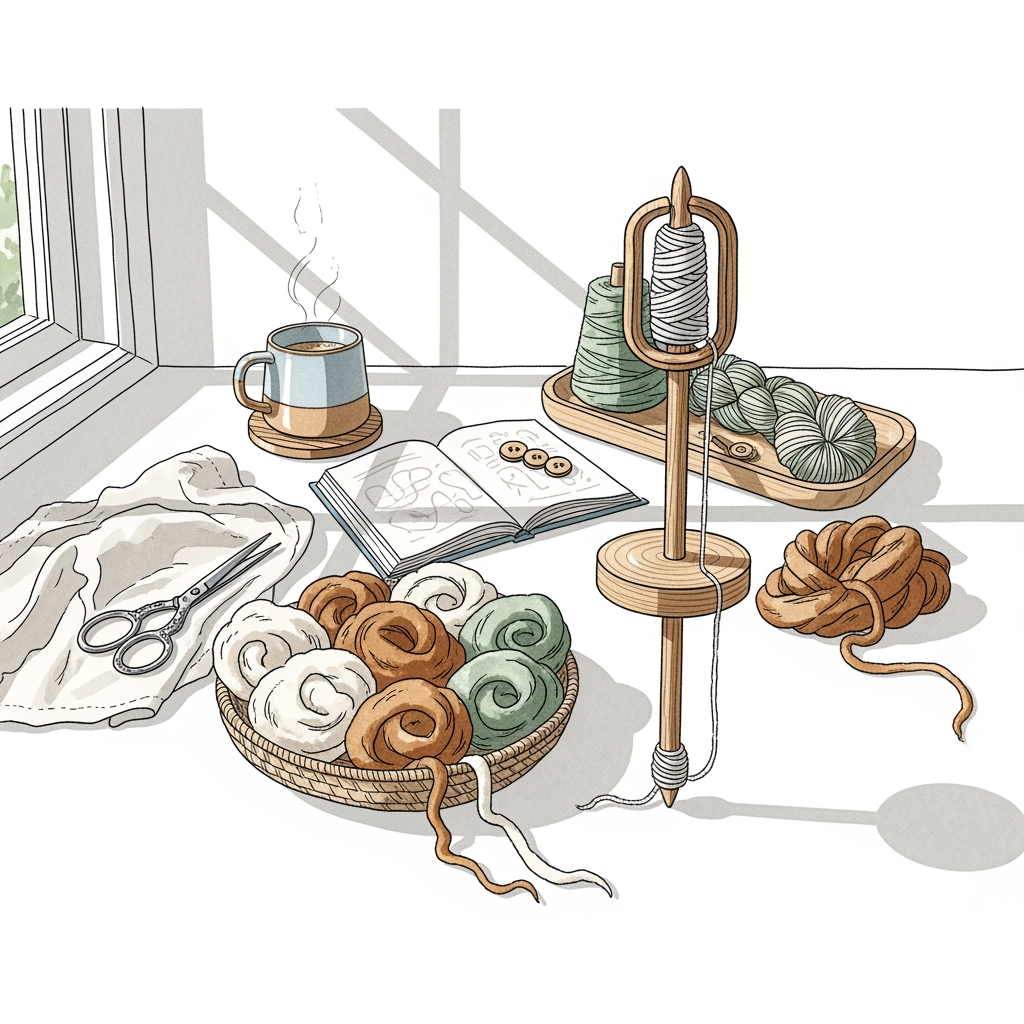
The Turkish spindle is a masterpiece of design, consisting of two crossed arms that form the whorl. Once you have finished your spinning session, you can slide the arms off to reveal a perfectly wound, center-pull ball of yarn.
For a knitter who is used to winding yarn from hanks, the ability to create a ready-to-use cake of yarn directly off the spindle is immensely satisfying. It removes the extra step of winding your finished yarn after you have finished plying.
However, keep in mind that the balance of a Turkish spindle is very sensitive. It takes a little practice to get the arms centered, but once you master it, the efficiency is unmatched. It’s a tool that grows with you as your skills improve.
Snyder Bottom Whorl Spindle: Best for Beginners
Bottom whorl spindles are inherently more stable because the weight is concentrated at the base. This acts like a gyroscope, keeping the spindle upright even if your hands aren’t perfectly steady yet.
The Snyder spindle is built for durability and ease of use. Its lower center of gravity makes it much easier to start and stop, which is crucial when you are still learning to coordinate your fingers to draft the fiber.
Many beginners find top-whorl spindles frustrating because they can be "fiddly" to start. If you feel like you are constantly chasing your spindle across the floor, switching to a bottom-whorl model like the Snyder will likely solve your problem immediately.
Ashford Student Drop Spindle: Best Weight Balance
Ashford has been a household name in fiber arts for decades, and their student spindle reflects that deep industry knowledge. It is designed with a specific weight that feels substantial in the hand without being heavy enough to snap your yarn.
The balance is impeccable, which allows for a long, smooth spin. When you are learning, a long spin time is your best friend because it gives you more time to focus on drafting your fiber without having to stop and re-spin the whorl.
It is a no-frills, sturdy tool that can take a beating. If you are the type of knitter who likes to take their projects to the park or a coffee shop, this is the spindle you want in your project bag.
Bosworth Mini Spindle: Best for Fine Spinning
When you are ready to move beyond chunky, thick-and-thin yarns, the Bosworth Mini is the gold standard for fine, delicate spinning. It is incredibly lightweight and balanced with surgical precision.
Spinning fine yarn requires a spindle that doesn’t add unnecessary tension to the fiber. If your spindle is too heavy, it will act like a weight on a string, pulling your yarn apart before you can build up the required twist.
This is a "pro" tool that will last a lifetime. While it might be a bit challenging for your very first day, it is the perfect upgrade once you have mastered the basics of drafting and want to spin yarn suitable for lace-weight projects.
Understanding Spindle Weight and Whorl Placement
The weight of your spindle dictates what kind of yarn you can spin. A heavier spindle is better for thick, lofty wools, while a lighter spindle is essential for fine, delicate fibers like silk or alpaca.
Whorl placement—whether the weight is at the top or the bottom—changes the mechanics of the spin. Top-whorl spindles are generally faster and better for spinning while walking or sitting, while bottom-whorl spindles offer superior stability for stationary spinning.
- Under 1 ounce: Best for lace-weight and fine fibers.
- 1 to 2 ounces: The "sweet spot" for most worsted-weight projects.
- Over 2 ounces: Ideal for spinning thick, bulky, or "art" yarns.
Top Fiber Choices for Your First Spinning Project
Not all fibers behave the same way under the spindle, and choosing the wrong one can lead to unnecessary frustration. For your first project, you want something that is forgiving and easy to draft.
- Corriedale: My top recommendation. It has a medium staple length and a nice "crimp" that helps the fibers cling to each other.
- Polwarth: Slightly softer than Corriedale, it drafts very smoothly.
- Bluefaced Leicester (BFL): A bit more slippery, but it creates a beautiful, lustrous yarn that is perfect for sweaters.
Avoid "slick" fibers like mohair or long-staple silk when you are just starting. These fibers require a level of tension control that typically comes only after months of practice.
Essential Tips for Mastering Your Spindle Draft
The secret to a good yarn is the draft—the act of pulling fibers out of the mass to be twisted. If you pull too much, your yarn will be uneven; if you pull too little, your yarn will be thick and ropey.
Try the "park and draft" method initially. Spin the spindle, let it twist the fiber, then "park" the spindle between your knees while you draft out the next section of fiber. This separates the two physical actions, allowing your brain to focus on one at a time.
Remember that your yarn is a product of both the twist and the draft. If your yarn feels like it’s going to fall apart, you need more twist; if it feels hard and wiry, you have added too much twist.
Troubleshooting Common Beginner Spinning Problems
If your yarn keeps breaking, you are likely drafting too thin or not adding enough twist. Try drafting a bit more fiber into the mix or giving the spindle an extra flick to increase the torque.
If your spindle keeps hitting the floor, slow down. You don’t need to spin the spindle at top speed to get a good result; a slow, steady, and consistent spin is far more effective than a fast, chaotic one.
Finally, don’t worry about the "lumpy" texture of your first few yards. That is the charm of handspun yarn. Your goal is not perfection, but consistency—and that only comes with time and practice.
Spinning is a skill that rewards patience, observation, and a willingness to embrace the process. By starting with one of these reliable spindles, you provide yourself with the mechanical support needed to develop your own unique rhythm. Keep practicing your drafting, trust your hands, and enjoy the magical transition from raw fiber to your very own handspun yarn. Happy spinning!