6 Best Knitting Pins For Holding Seams Worth Trying
Struggling with seams? Discover our top 6 knitting pins designed to hold pieces securely, ensuring perfect alignment and professional results for every project.
Achieving a professional finish on a hand-knitted garment often comes down to the unsung heroes of your notions bag: the pins used to hold your seams in place. While many beginners rely on guesswork, seasoned makers know that precise alignment is the difference between a sweater that looks store-bought and one that looks homemade. The right tool prevents shifting, puckering, and uneven tension during the seaming process. Investing in quality pins will save you hours of ripping out crooked mattress stitch and re-seaming.
Clover Locking Stitch Markers: The Best All-Rounder
These locking markers are perhaps the most versatile tool in any knitter’s kit. Because they snap shut like a safety pin, they provide a secure anchor that won’t snag your yarn or slide out while you are maneuvering your pieces.
They are particularly useful when you need to pin two edges together before sewing. Instead of a sharp point piercing the fabric, the smooth, rounded plastic holds the stitches in place without distorting the fiber.
If you are working with delicate lace or a yarn prone to splitting, these are your safest bet. They offer a gentle hold that respects the structure of your knitting while keeping your alignment perfectly on track.
Cocoknits Colored Steel Pins: Best for Precision


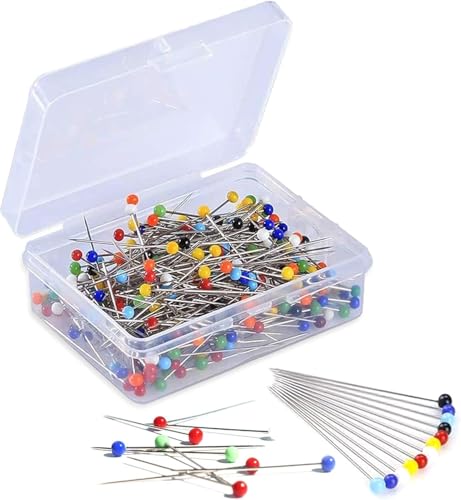
When you need to line up complex colorwork or stripes, standard pins can feel clumsy. Cocoknits steel pins are incredibly thin and sharp, allowing you to pierce through the exact center of a stitch without distorting the surrounding fabric.
The colored glass heads make them easy to see against even the darkest navy or black wool. This visibility is a lifesaver when you are exhausted at the end of a long project and just want to finish that final side seam.
Because they are made of steel, they are strong enough to hold through multiple layers of fabric. They are my top recommendation for knitters who prioritize surgical precision over all else.
ChiaoGoo T-Pins: Essential for Blocking Seams

T-pins are the heavy-duty workhorses of the blocking world. When you are pinning out a damp, heavy wool sweater to set the seams, these pins provide the necessary leverage to keep everything in place.
The "T" shape allows you to push them deep into your blocking board without them disappearing into the fabric. This is crucial when you are trying to stretch a garment to its final, intended measurements before seaming.
Avoid using these on very fine, lightweight lace, as the gauge of the pin is quite thick. However, for seaming sweaters and heavier accessories, they are unbeatable for structural stability.
Tulip Etimo Large Eye Needles: Best for Finishing

While technically a needle rather than a pin, these are essential for the final step of the seaming process. A high-quality finishing needle should have a slightly bent tip, which helps you glide under the loops of your mattress stitch with ease.
The large eye accommodates even the thickest Aran-weight yarns without fraying the fibers. If you’ve ever struggled to thread a needle with a fuzzy wool blend, you know why the design of the eye matters as much as the point.
Using the right needle ensures that your seam is flat and flexible. A stiff, blunt needle can make your seam look bulky and rigid, effectively ruining the drape of your hard work.
Brittany Birch Wood Pins: Best for Delicate Yarns

Sometimes, metal pins can be too slick or aggressive for luxury fibers like silk, angora, or high-end cashmere. Brittany birch wood pins offer a gentle, grippy surface that holds onto the yarn without damaging the delicate halo.
Because they are made of natural wood, they are lightweight and won’t weigh down the fabric while you are pinning. They are a tactile pleasure to use and feel much warmer in the hand than cold steel.
If you are working with an expensive, slippery yarn, the natural friction of wood is a massive advantage. They provide a secure, non-slip hold that prevents your carefully aligned edges from sliding apart.
Dritz Quilting Pins: Best for Heavy Wool Seams
Dritz quilting pins are extra long and sturdy, making them perfect for thick, dense wools that might otherwise push a shorter pin out of alignment. Their length allows you to secure large swaths of fabric at once.
They are readily available and incredibly durable, standing up to years of use in a busy knitting studio. While they aren’t as specialized as some boutique options, they are the reliable standard for a reason.
If you are working on a heavy-gauge coat or a felted project, these pins offer the necessary rigidity. They won’t bend or warp under the tension of a thick, heavy seam.
How to Properly Align Seams Before You Start
Before you even touch your needle and yarn, you must pin your pieces together. Start by pinning the corners of your seams, then move to the center, and finally fill in the gaps.
This "halving" method ensures that the fabric is distributed evenly across the seam. If you just start pinning from one end to the other, you will almost certainly end up with excess fabric at the end, leading to a puckered result.
Always check your alignment on a flat surface. Never try to pin a seam while holding the garment up, as gravity will distort the fabric and lead to uneven results.
Essential Techniques for Invisible Seaming
The goal of any seam is to mimic the structure of the knitting itself. The mattress stitch is the gold standard here, as it creates a vertical "ladder" that hides the seam inside the fabric.
When seaming, always work from the right side of the fabric. Use your pins to hold the edges together so that you can clearly see the "V" of the stitches you are working into.
Take your time with the tension. If you pull the yarn too tight, the seam will be rigid; if you pull too loosely, the seam will gap. A consistent, balanced tension is the secret to a professional finish.
Why Pinning Matters for Professional Finishes
Pinning is not just about holding things together; it is about controlling the drape and shape of your final garment. If your seams are misaligned, the entire sweater will hang incorrectly on the body.
Many knitters skip pinning because they are eager to finish, but this is a mistake that shows in the final product. A properly pinned seam allows you to focus on your stitching technique rather than struggling to keep the edges aligned.
Treat your pinning process as a critical part of the construction. When you respect the geometry of your knitwear, the results will be far more polished and durable.
Frequently Asked Questions About Knitting Pins
Should I use rust-proof pins? Always. If you are blocking or pinning a damp garment, non-rust-proof pins will leave permanent stains on your yarn.
How many pins do I need? A standard set of 20 to 30 pins is usually sufficient for most sweaters. It is better to have a few extra than to run out halfway through a long side seam.
Can I use regular sewing pins? You can, but they are often too short and thin for the weight of knitting fabric. Investing in dedicated knitting or quilting pins will significantly improve your experience.
Mastering the art of seaming is the final hurdle between a good project and a great one. By choosing the right pins for your specific fiber and project weight, you take control of your garment’s structural integrity. Don’t rush this stage, as the time you spend pinning is an investment in the longevity and appearance of your knitwear. Happy seaming, and enjoy the satisfaction of a perfectly finished piece.