6 Best Wall Mounted Yarn Storage Units for Craft Rooms
Maximize your craft room efficiency with our top 6 wall-mounted yarn storage picks. Discover space-saving, stylish solutions to keep your supplies organized.
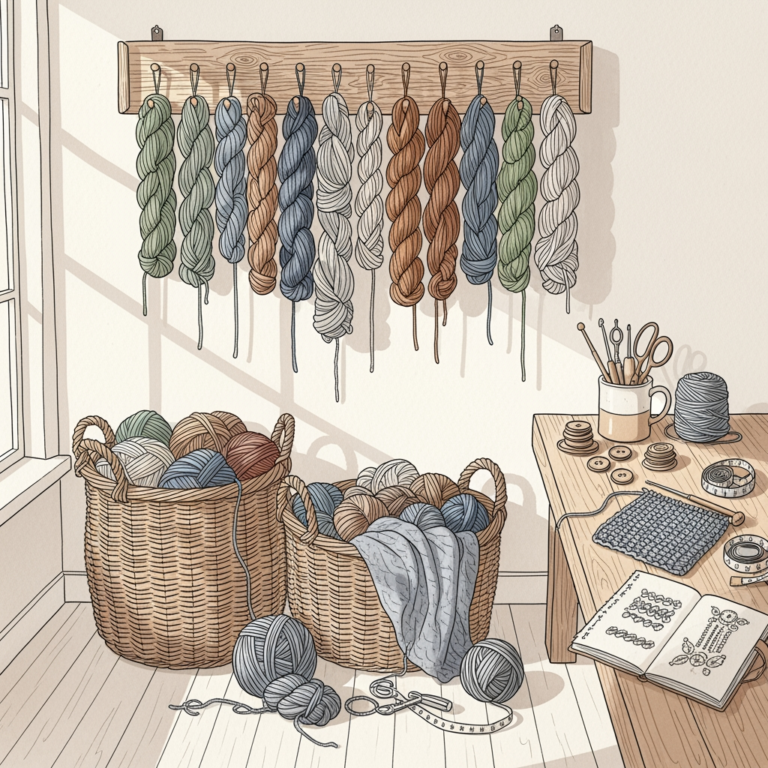
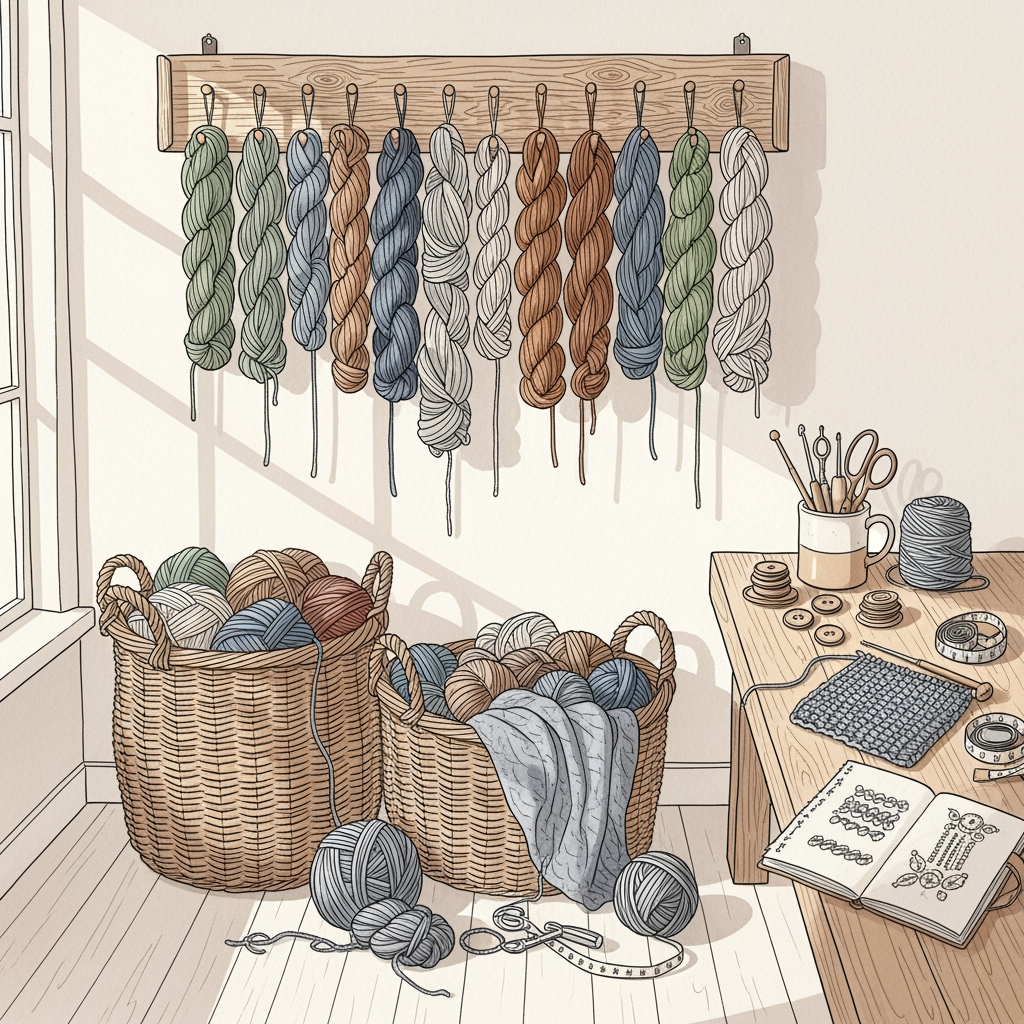
Every knitter knows the struggle of a yarn stash that threatens to take over the entire living space. Wall-mounted storage is the ultimate solution for keeping your precious skeins visible, accessible, and off the floor. By utilizing vertical space, you transform your collection from a cluttered pile into an inspiring display of color and texture. These six storage solutions will help you curate your craft room while keeping your fiber stash in perfect condition.
IKEA Skådis Pegboard: Best Versatile Wall System
The Skådis is a staple in many craft rooms because it is infinitely reconfigurable. Unlike fixed shelving, you can move hooks, shelves, and elastic cords as your stash grows or changes.
If you are someone who works on multiple projects at once, this system is a game-changer. You can dedicate one section to current WIPs (Works in Progress) and another to your favorite hand-dyed fingering weight yarns.
The main tradeoff here is weight capacity. While it is perfect for lightweight skeins and notions, you shouldn’t overload it with heavy, bulky wool sweaters or massive quantities of cotton cones.
Wall Mounted Wooden Spool Rack: Best for Stash


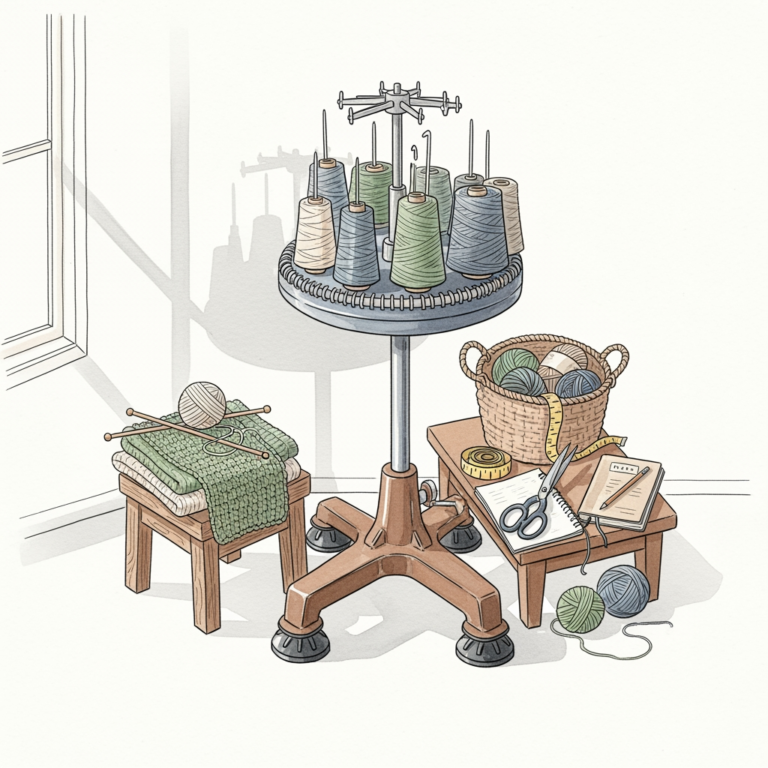
Originally designed for sewing thread, these racks are secret weapons for organizing fingering weight yarn and mini-skeins. The pegs are perfect for holding small balls of yarn, keeping them from tangling while you work on colorwork projects.
I love using these for my leftover scraps from sock projects. It keeps the colors visible so I can easily pull matching shades for heels and toes.
Be aware that these are best for wound cakes or balls. If you store loose hanks here, they will likely slide off or get caught on the wooden pegs.
Honey-Can-Do Wall Grid: Best for Modern Studios

Wall grids offer a clean, industrial aesthetic that works well in modern, minimalist workspaces. You can use S-hooks to hang yarn bags or small baskets directly onto the grid.
This is particularly useful if you prefer to keep your yarn in project bags to prevent dust accumulation. Simply hang the bags by their handles, and you have a catalog of your current projects at eye level.
The downside is that the grid itself doesn’t provide "shelving" for loose skeins. You will need to invest in compatible clip-on baskets to make this a truly effective yarn storage system.
Design Ideas Wire Basket Wall Rack: Best Storage

Wire baskets are excellent for holding yarn that has already been wound into cakes. Because the sides are open, you can see exactly which color you have without digging through a bin.
This is my preferred method for storing yarn by weight. You can dedicate one basket to lace weight, another to DK, and a third to worsted, making it easy to grab what you need for your next pattern.
Just ensure the wire isn’t too sharp. You don’t want your delicate merino or mohair snagging on the edges when you pull a skein out.
MyGift Rustic Floating Shelf: Best Display Unit

Sometimes you just want to look at your beautiful yarn collection. Floating shelves allow you to stack your favorite skeins like books, creating a cozy, boutique-like atmosphere in your craft room.
This is the perfect place for your "precious" yarns—the hand-dyed skeins you are saving for a special project. Keeping them displayed ensures they don’t get lost in the back of a closet.
However, floating shelves provide no protection from the elements. If your craft room gets direct sunlight, be prepared for your yarn to fade significantly over time.
Spectrum Diversified Wall Mount: Best Organizer

This system is built for utility and heavy-duty organization. It often comes with various modular components that can hold everything from scissors and measuring tapes to full skeins of yarn.

If you are a serious knitter with a large stash, this is a more robust option than a decorative shelf. It feels more like a professional studio setup than a home craft corner.
The aesthetic is very functional, which might not appeal to everyone. If you want your room to feel like a sanctuary, you might find the industrial look a bit too clinical.
Factors to Consider When Mounting Yarn Shelving
Before you drill holes in your wall, think about the structural integrity of your space. Yarn is surprisingly heavy, especially when you start accumulating bulky wools.
- Weight capacity: Always check the manufacturer’s weight limits.
- Accessibility: Mount your most-used yarns at eye level.
- Wall type: Ensure you are using appropriate anchors for drywall, brick, or studs.
- Expansion: Leave room for your stash to grow—because we all know it will.
How to Protect Your Yarn From Dust and Sunlight
Sunlight is the enemy of natural fibers. UV rays can break down the proteins in wool and cause vibrant colors to fade or shift, potentially ruining a perfectly matched dye lot.
Dust is another silent killer, as it settles into the fibers and can attract moths. If you use open shelving, consider using fabric covers or storing yarn in breathable cotton bags.
If you must store yarn in direct light, rotate your stock regularly. Never store your yarn in plastic bins for long periods, as trapped moisture can lead to mildew.
Maximizing Small Craft Room Wall Space Efficiency
In a small room, every square inch counts. Use the space above your door frames or along the sides of your windows to install narrow shelving or pegboards.
Don’t be afraid to go vertical all the way to the ceiling. Use a small step stool to reach the higher shelves where you can store seasonal yarns like cottons for summer or heavy wools for winter.
Group your yarn by weight or fiber content to save time. When everything has a designated home, you spend less time searching and more time knitting.
Best Practices for Organizing Yarn by Fiber Type
Organizing by fiber is essential for maintaining the integrity of your collection. Animal fibers like wool and alpaca should be kept away from rougher plant fibers to prevent pilling or abrasion.
- Protein fibers (Wool, Alpaca, Silk): Keep in a cool, dry place away from pests.
- Cellulose fibers (Cotton, Linen, Bamboo): Less prone to moths but can be heavy; ensure shelves are supported.
- Synthetics (Acrylic, Nylon): These are the most durable and can handle more exposed storage.
If you are storing luxury fibers like cashmere or angora, consider putting them in sealed, breathable containers on your shelves. This adds an extra layer of protection while still allowing you to keep them organized on your wall units.
Investing in wall-mounted storage is one of the best ways to respect your stash and elevate your creative process. By keeping your yarn visible and organized, you remove the friction that often stops a knitter from starting a new project. Choose the system that fits your space and your aesthetic, and enjoy the peace of mind that comes with a tidy, inspiring craft room. Happy knitting!