6 Best Bag Stabilizers For Maintaining Shape To Try
Keep your favorite handbags looking pristine. We explore the 6 best bag stabilizers to prevent sagging, maintain structure, and extend your accessory’s life.
Nothing ruins the aesthetic of a carefully crafted project quite like a bag that sags or loses its structural integrity after just a few uses. Whether you are stitching a complex intarsia tote or a simple felted carry-all, the internal support system is the silent partner in your success. Selecting the right stabilizer is as critical as choosing the correct needle material for your specific yarn weight. These six options provide the foundation needed to keep your handmade bags looking professional and crisp.
Pellon 71F Peltex Fusible Ultra Firm Stabilizer


When you need a bag to stand up on its own like a store-bought piece, Peltex is the gold standard. It is an ultra-firm, heavyweight stabilizer that feels almost like a thin craft foam or cardboard.
Think of this as the "blocking board" for your bag panels. Just as you wouldn’t expect a delicate lace shawl to hold its shape without aggressive blocking, you shouldn’t expect a soft fabric to hold a boxy silhouette without this level of reinforcement.
The trade-off here is flexibility; once you fuse this to your fabric, it becomes rigid. It is perfect for bag bottoms or structured boxy clutches, but it will fight you if you try to turn it inside out after sewing.
Bosal In-R-Form Single Sided Fusible Foam

This foam stabilizer is a favorite for those who want structure without the harsh, cardboard-like feel of a heavy interfacing. It offers a soft, padded touch that gives your bag a high-end, professional "cushion."
If you are creating a project bag to hold your circular needles and notions, this foam acts as a shock absorber. It protects your tools while keeping the bag from collapsing into a heap on your craft table.
Because it is foam, it adds a slight loft to your fabric. This is wonderful for visual depth, but be mindful of your seam allowances; adding foam to every layer can make your seams bulky and difficult to navigate under a standard presser foot.
Annie’s Soft and Stable Bag Making Batting
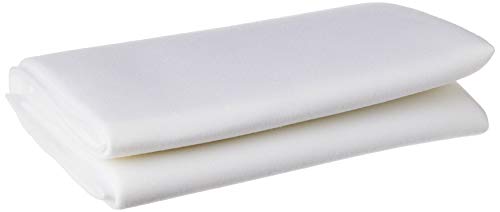
Soft and Stable is the go-to choice for makers who want their bags to hold their shape while remaining soft to the touch. It is essentially a high-density, thin foam sandwiched between two layers of fabric.
Unlike traditional fusible interfacings that can sometimes feel stiff or crinkly, this batting maintains a lovely, fabric-like drape. It is incredibly forgiving to sew through, making it a great entry point for those new to bag construction.
The only downside is that it is not fusible, meaning you must quilt or baste it to your fabric layers. While this adds an extra step, it prevents the bubbling that can sometimes occur with heat-activated adhesives over time.
ByAnnie’s Stiff Stuff Firm Fusible Interfacing

Stiff Stuff is a dense, firm stabilizer that sits right in the middle of the spectrum. It is sturdier than standard batting but less rigid than Peltex, making it a versatile middle ground for many bag patterns.
I often recommend this to knitters transitioning into sewing who are worried about "over-structuring" their work. It provides enough backbone to keep a bag from slouching, yet it remains pliable enough to manipulate during the final assembly stages.
Keep in mind that its firmness comes from a dense weave that can be slightly abrasive to needles. Ensure you are using a fresh, sharp needle—much like you would switch to a new set of nickel-plated needles when your bamboo ones start to snag on high-twist wool.
Shape-Flex SF101 Woven Fusible Interfacing

Shape-Flex is a lightweight, woven fusible that acts more like a "second skin" for your fabric. It doesn’t provide extreme structure, but it prevents your fabric from stretching out of shape during the life of the bag.
Think of this as the "reinforcement" you might add to a button band on a cardigan. It doesn’t change the drape of the yarn, but it ensures the garment doesn’t sag under the weight of the buttons.
This is the perfect choice for delicate cottons or silks used in bag lining. It adds durability without adding bulk, which is essential if you are working with multiple layers of fabric and heavy-duty hardware.
Vilene Decovil I Heavy Iron-On Stabilizer

Decovil is often described as a "leather-like" stabilizer because it gives fabric a firm, smooth, and professional finish. It is ideal for bags that need to look polished and structured, such as a structured satchel or a sophisticated tote.
The material is unique because it is both firm and flexible, resisting creasing even when folded. It feels substantial in the hand, giving your finished project a weight and quality that mimics high-end retail accessories.
The trade-off is the price and the application process, which requires a bit more care with the iron. Treat this like a luxury fiber—it requires precise heat and time to bond correctly, but the result is arguably the most professional-looking finish available.
How to Select the Perfect Stabilizer for Bags
Choosing the right stabilizer is all about the intended use of the bag. Ask yourself if the bag needs to hold a heavy load, like a project bag filled with yarn cakes, or if it is a light accessory for a night out.
- For boxy, structured shapes: Choose Peltex or Decovil.
- For soft, padded protection: Choose In-R-Form or Soft and Stable.
- For light reinforcement: Choose Shape-Flex.
Always consider the weight of your outer fabric. If you are using a thin fabric, a heavy stabilizer will look unnatural; if you are using a heavy canvas, a light stabilizer will do nothing to help the shape.
Understanding Fusible vs Sew-In Stabilizers
Fusible stabilizers use a heat-activated adhesive to bond directly to your fabric. They are excellent for beginners because they effectively turn two layers into one, making the fabric much easier to cut and sew without shifting.
Sew-in stabilizers, like batting or some heavier foams, must be physically attached to the fabric. While this takes more time, it is often the safer choice for delicate fabrics that might be damaged by the high heat required for a strong fusible bond.
If you are unsure, perform a test swatch. Just as you would knit a gauge swatch to check tension, fuse a small piece of stabilizer to a scrap of your fabric to see how the hand and drape are affected.
Tips for Applying Fusible Interfacing Correctly
The most common mistake is using too little heat or pressure. You need to press—not slide—your iron across the fabric to ensure the adhesive melts into the fibers of the fabric.
Use a "press cloth" between your iron and the stabilizer to protect your equipment from stray adhesive. This is especially important if you are working with synthetics that might melt under direct contact with a hot iron.
Allow the fabric to cool completely before moving it. The bond is at its weakest while the adhesive is still warm; letting it set for a few minutes ensures a permanent, professional hold.
Essential Tools for Precision Bag Construction
Precision is the difference between a homemade bag and a handmade one. Invest in a dedicated pair of fabric shears that you never use on paper, and keep a set of clips handy to hold thick layers together while you sew.
A walking foot for your sewing machine is also a game-changer. It feeds the layers of fabric and stabilizer through the machine evenly, preventing the "shifting" that often happens when you are working with multiple thicknesses.
Finally, keep a seam ripper nearby. Even the most experienced makers make mistakes; knowing when to unpick and redo a seam is part of the craft, just like knowing when to drop down a row to fix a cable twist.
Finding the right stabilizer is a journey of experimentation, much like finding your favorite yarn base or needle material. By understanding how these materials interact with your fabric, you can ensure your hard work stays as beautiful as the day you finished it. Don’t be afraid to mix and match these stabilizers to achieve the exact level of structure you desire. Your bags deserve a foundation that is just as thoughtful as the stitches you put into them.