7 Best Pattern Reading Lights For Evening Knitting
Illuminate your craft with our top 7 pattern reading lights. Find the perfect balance of brightness and comfort to enhance your evening knitting sessions.
Knitting by the glow of a dedicated lamp is the difference between a relaxing evening and a session filled with dropped stitches and eye strain. When working with dark yarns or intricate lace patterns, standard living room lighting simply doesn’t cut it. The right tool illuminates your needles without casting harsh shadows that obscure your stitch definition. These seven lighting solutions are curated to keep your hands moving comfortably long after the sun goes down.
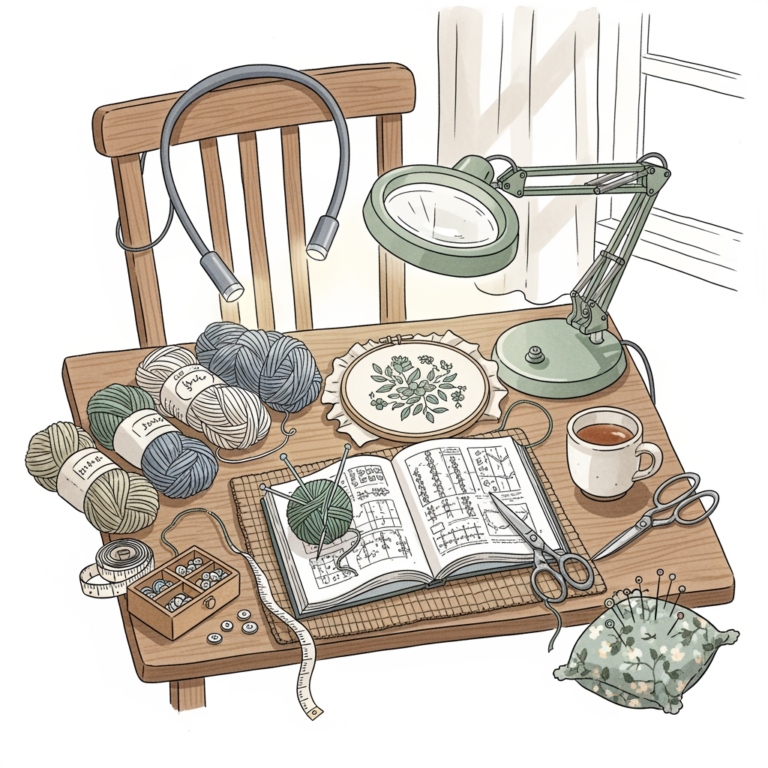
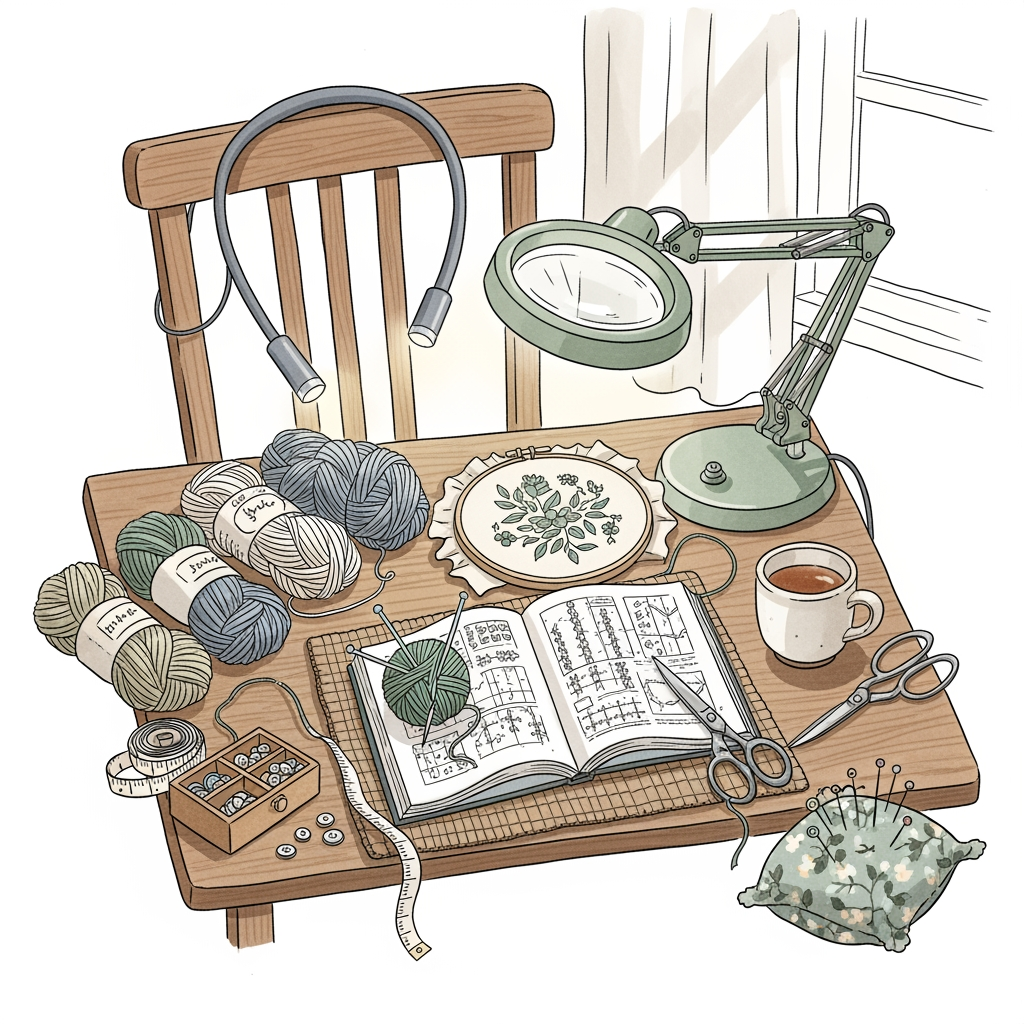
Glocusent LED Neck Reading Light: Best Overall


This light sits comfortably around your neck, directing beams exactly where your hands are working. It is a game-changer for those of us who shift positions frequently, whether we are curled up in an armchair or leaning over a complex chart.
The beauty of this design lies in its independence from your knitting needles or yarn. Because the light source moves with your body, you never have to adjust a clip or reposition a desk lamp when you decide to change your posture. It provides a consistent, focused glow that is perfect for tracking rows on a printed pattern.
Be mindful, however, that the weight of the neckband can become noticeable during marathon knitting sessions. If you are sensitive to pressure around the collarbone, you might find it distracting after a few hours. The bottom line: It is the most versatile option for knitters who prioritize constant, hands-free illumination.
Vekkia Rechargeable Book Light: Best for Comfort
This light features a soft, silicone neck that is remarkably gentle against the skin. If you are the type of knitter who enjoys wearing lightweight loungewear while working on a project, the lack of hard plastic edges makes this a superior choice.
The light head is compact and lightweight, which prevents it from pulling on your clothes or feeling cumbersome. It offers a soft, diffused light that is less jarring than a high-intensity clinical beam. This is particularly helpful when you are working with delicate fibers like silk or mohair, where you need to see the halo of the yarn without glare.
The tradeoff here is the reach of the light; it is best suited for close-up work rather than lighting up a wide area of your lap. If you value comfort above all else during your evening knitting, this is the light that will stay on your person without causing irritation.
Mighty Bright NuFlex Light: Best for Portability

Portability is essential for the knitter who never leaves home without a project bag. This light is designed to fold down into a tiny, durable footprint that tucks easily into a notions pouch alongside your tapestry needles and stitch markers.
It is surprisingly sturdy for its size, offering a precise, steady beam that won’t flicker when you move. When you are knitting on a train or in a dimly lit waiting room, this light provides the focused attention needed to spot a missed yarn-over in a lace repeat.
The downside is the battery life compared to larger units, as its compact nature necessitates smaller power cells. Always keep a backup set of batteries in your project bag, as this light is the gold standard for knitting on the go.
LuminoLite Rechargeable Light: Best Wide Coverage

If you are working on a large-scale project, such as a heavy cabled sweater or a wide blanket, you need a light that covers more than just a few inches of fabric. This model offers a broad beam that illuminates your entire working area.
Wide coverage is vital when you are managing multiple balls of yarn or keeping track of a long, complex cable chart. By illuminating the entire lap, you reduce the need to constantly shift the light source to see where your yarn is feeding from.
The main drawback is that a wider beam can sometimes wash out the texture of your stitches, making it harder to see the definition in dark-colored yarns. Use this light when you need to see the "big picture" of your project rather than the microscopic details of a single stitch.
Energizer Clip-On Light: Best Budget-Friendly
This is a no-frills, reliable workhorse that does exactly what it promises without the bells and whistles. It clips securely onto a book or a stable surface, providing a steady, reliable stream of light for a very modest investment.
For beginners who are just starting to build their toolkit, this is an excellent entry point. It is durable enough to withstand the occasional drop on a hardwood floor, which is a common occurrence when you are juggling needles and patterns.
Because it relies on a clip, you are limited by where you can attach it. If you don’t have a nearby table or a sturdy book cover, you might struggle to position it correctly. It is the perfect choice for the knitter who wants a reliable, dedicated light without spending a premium.
LEPOWER Clip-On Lamp: Best for Desk Knitting

Many knitters prefer to work at a desk or a dedicated craft table where they can spread out their charts and yarn cakes. This lamp provides the stability and power of a full-sized desk light with the flexibility of an adjustable arm.

The intensity of the light is ideal for high-precision work, such as fixing a dropped stitch in a complex colorwork motif. You can position the lamp to come from the side, which helps cast shadows that emphasize the texture and structure of your knitted fabric.
Because it requires a stable surface to clamp onto, it is not a portable solution for knitting on the couch. If you have a dedicated knitting nook, this lamp is an essential investment for maintaining your eye health during long sessions.
Omeril Rechargeable Light: Best for Precision

This light is all about focus and accuracy, making it a favorite for those who knit with very fine needles or dark, high-twist yarns. The beam is narrow and intense, allowing you to isolate exactly where your needle tip enters the stitch.
Precision is critical when working with fingering weight yarn or smaller, especially when you are performing delicate maneuvers like picking up stitches for a neckline. The ability to concentrate the light exactly where you need it prevents the eye fatigue that comes from squinting at dark, fine-gauge work.
The trade-off is that it requires frequent adjustment as you move across your row. If your project involves intricate details that demand your full attention, this precision tool is worth its weight in gold.
Key Features to Look for in Knitting Lights
When shopping for a knitting light, the most critical feature is adjustability. You need to be able to move the light head to follow your hands as you knit across a row, ensuring the light hits the fabric directly rather than your needles, which can cause distracting glare.
Battery life is the second most important consideration for a knitter. There is nothing more frustrating than your light dying in the middle of a complex row of lace, forcing you to stop and find a charger while you are in the flow of your pattern.
Finally, look for a lightweight design that doesn’t put unnecessary strain on your neck or hands. If the light adds weight to your needles or your person, it will inevitably lead to tension and fatigue, which is the enemy of a consistent gauge.
Warm vs. Cool Light: Choosing Your Spectrum
The color temperature of your light significantly impacts your ability to see stitch definition. Cool, blue-toned light is often better for seeing the individual strands of a yarn, which is helpful when you are working with black or navy wool.
Warm, yellow-toned light is much easier on the eyes during late-night sessions and feels more natural in a home environment. It prevents that harsh, clinical feeling that can make it difficult to wind down for sleep after you put your knitting away.
Many modern lights offer adjustable color temperatures, which I highly recommend. Start with a cool light to set up your row, then switch to a warmer tone as you settle into a long rhythm of knitting.
How to Position Lights to Reduce Eye Strain
The best position for a knitting light is slightly above and to the side of your dominant hand. This placement ensures that your hands do not cast shadows over your work, which is the most common cause of eye strain for knitters.
If you are using a clip-on light, try to attach it to a surface that is slightly elevated from your lap. This allows the light to wash over your work from an angle, highlighting the "V" shape of your stitches and making it easier to spot errors before they become permanent.
Always check your environment for secondary glare. If your light is reflecting off your needles—especially if you are using slick metal needles—try to adjust the angle of the lamp slightly to soften the reflection. A little bit of experimentation with positioning will save your eyes and improve the quality of your finished project.
Finding the right light is a personal journey that depends on your specific knitting style and the projects you tend to favor. Whether you choose the hands-free versatility of a neck light or the steady precision of a desk lamp, the goal is always the same: comfort and clarity. Invest in a tool that supports your hobby, and you will find that your evening knitting sessions become the most relaxing part of your day. Happy knitting, and may your stitches always be clear and bright.