6 Best Portable Scales for Weighing Yarn Leftovers
Manage your stash with precision. We review the 6 best portable scales for weighing yarn leftovers, ensuring accuracy for every knitting or crochet project.
Every knitter knows the heartbreak of running out of yarn just inches away from binding off a sleeve. Having a reliable way to weigh your leftovers transforms your stash from a chaotic pile of mystery balls into a usable library of materials. These six scales offer the precision and portability needed to ensure you never play "yarn chicken" again. By mastering your inventory, you can confidently plan projects and make the most of every precious gram.
Etekcity Digital Kitchen Scale: The Best Overall


The Etekcity scale is a staple in many crafting spaces because it balances a generous weighing platform with a slim, easy-to-store profile. Its broad surface easily accommodates a full skein or a tangled ball of leftover lace-weight yarn without obscuring the digital display.
For the knitter who frequently works with bulky sweaters or heavy blankets, this scale handles higher capacities without sacrificing sensitivity for smaller scraps. It is the gold standard for versatility, serving as both your primary yarn inventory tool and a reliable assistant for kitchen projects.
The bottom line is that this scale offers the most consistent performance for the widest variety of knitting needs. If you want one tool that handles everything from a single sock-yarn scrap to a 500-gram sweater quantity, this is your best bet.
WeighGram Digital Pocket Scale: Most Portable

When you are heading to a yarn crawl or a local knit night, you don’t want to lug around bulky equipment. The WeighGram is small enough to slip into your notions bag alongside your stitch markers and tapestry needles.
Despite its diminutive size, it provides the high-resolution sensitivity required for weighing small amounts of expensive hand-dyed yarn. It is perfect for those moments when you find a beautiful skein at a shop and need to verify if you have enough in your stash to complete a matching set of mittens.
Keep in mind that its small platform means you may need to place a small bowl or a dedicated container on the scale to hold unruly yarn cakes. It is the ultimate companion for the on-the-go crafter who prioritizes mobility above all else.

American Weigh Scales Blade: Best for Precision
If you are a designer or a knitter who meticulously tracks yardage for complex colorwork, the Blade scale is your precision powerhouse. It features a unique, elongated design that mimics a ruler, making it incredibly stable for weighing long strands or delicate fiber samples.
Precision is vital when you are working with luxury fibers like cashmere or silk, where every gram represents a significant cost. This scale excels at detecting minute differences in weight, which is essential when you are trying to calculate exactly how much yarn remains for a final lace repeat.
While it lacks the massive capacity of a kitchen-style scale, its accuracy is unparalleled for small-scale inventory management. It is a specialized tool that rewards the detail-oriented knitter who values exact data over sheer bulk capacity.
GreaterGoods Digital Scale: Best Simple Design

Sometimes, you just want a tool that works the moment you press a button. The GreaterGoods scale strips away unnecessary features, offering a clean interface that won’t distract you from your project planning.
The design is incredibly user-friendly, featuring a backlit display that is easy to read even in the dim lighting of a cozy knitting nook. It is particularly well-suited for beginners who are just starting to organize their stash and don’t want to navigate complex menus or settings.
Because it is so straightforward, it is also highly reliable and less prone to calibration errors. If your goal is to weigh your leftovers quickly so you can get back to your needles, this is the most efficient choice.
Ozeri Pronto Digital Scale: Best for Durability

Knitting tools take a beating, and the Ozeri Pronto is built to withstand the realities of a busy craft room. Its reinforced platform is designed to handle the weight of heavy wools and cottons without showing signs of wear or strain.
The buttons are tactile and responsive, which is a small but welcome detail when you are weighing multiple balls of yarn during a stash-busting session. Its sturdy construction means it won’t slide around your table, keeping your precious yarn safe from accidental spills or drops.
While it is slightly bulkier than a pocket scale, the trade-off is a level of longevity that makes it a true investment piece. It is the reliable workhorse you want by your side when you are auditing a large collection of yarn.
Escali Primo Digital Scale: Best Value Pick
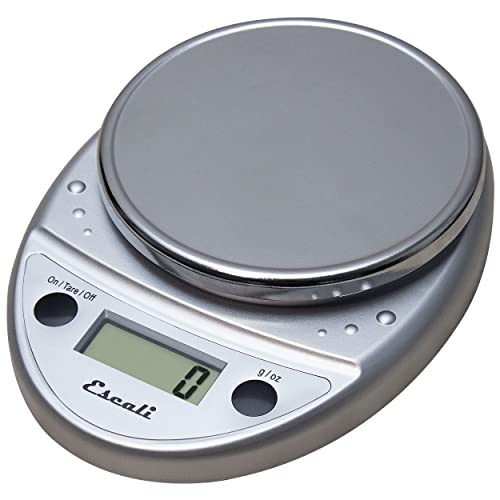
The Escali Primo has earned a cult following in the crafting community for a reason: it is affordable, accurate, and virtually indestructible. It offers a simple, no-nonsense approach to weighing that fits perfectly into any budget.
Its sealed buttons are a clever feature for those of us who tend to keep drinks or snacks near our knitting projects. Even if you accidentally spill a bit of tea, the scale remains protected, ensuring your investment lasts for years of stash management.
If you are looking for a high-quality tool that doesn’t break the bank, this is the clear winner. It delivers professional-grade accuracy without the premium price tag, leaving you more money for that extra skein of hand-dyed merino.
Why Precision Matters When Weighing Yarn Scraps
In knitting, weight is the most reliable proxy we have for yardage, especially when dealing with leftovers. A difference of just a few grams can mean the difference between finishing a project or having to rip back your work to add a contrasting color.
Precision allows you to make informed decisions about color-blocking or adding stripes to a garment. When you know exactly how many grams of a specific dye lot you have left, you can plan your project to avoid the dreaded "yarn chicken" scenario entirely.
Furthermore, accurate weighing helps you understand the density of different fibers. A 50-gram ball of heavy-worsted wool will have significantly less yardage than a 50-gram ball of lace-weight mohair, and a scale helps you bridge that gap.
Key Features to Look for in a Portable Scale
When selecting a scale, prioritize these specific features to ensure it meets your knitting needs:
- Gram and Ounce Conversion: Most patterns use grams, but it’s helpful to have both units available.
- Tare Function: This allows you to subtract the weight of a bowl or bag, so you only measure the yarn itself.
- Auto-Off Delay: Choose a scale that stays on long enough for you to move yarn around without it shutting off mid-weigh.
- Platform Size: Ensure it is large enough to hold your yarn cakes without tipping.
- Backlit Display: Essential for reading weights accurately in low-light environments.
How to Calculate Remaining Yardage From Weight
To estimate your remaining yardage, you first need to know the total weight and total yardage of a full skein. You can find these numbers on the ball band or the manufacturer’s website.
Use this simple formula: (Remaining Weight / Total Weight) x Total Yardage = Estimated Remaining Yardage.
Keep in mind that this is an estimate, as moisture content and the tightness of the twist can slightly affect weight. Always aim to have a small buffer of 5-10% extra yarn just in case your gauge varies throughout the project.
Essential Tips for Managing Your Yarn Stash
Start by grouping your leftovers by weight or yarn category, such as fingering, sport, or worsted. This makes it much easier to pull options when you are looking for a project for your scraps.
Always label your leftover balls with the fiber content and the remaining weight immediately after weighing them. A simple masking tape tag or a small notebook will save you from having to re-weigh everything the next time you need to check your inventory.
Finally, don’t be afraid to combine different fibers of the same weight to create unique, scrappy projects. Using a scale to ensure the weights are balanced ensures your final garment will have a consistent drape and structure.
Investing in a good scale is one of the most practical steps you can take to elevate your knitting practice. By removing the guesswork from your stash, you gain the freedom to design, modify, and create with confidence. Whether you choose a pocket-sized device or a durable kitchen model, your future self will thank you when you reach the end of a project with yarn to spare. Happy knitting, and may your stash always be perfectly measured.