7 Best Pattern Binders For Chart Organization Reviewed
Organize your craft projects with ease. We review the 7 best pattern binders, focusing on durability, storage capacity, and accessibility for your charts.
Keeping your knitting patterns organized is just as important as choosing the right yarn for your project. Whether you are juggling multiple lace charts or keeping track of complex cable repeats, a reliable binder is your best defense against lost instructions. These seven organizational tools offer different ways to manage your library and keep your focus on the needles. Investing in the right system now saves you from the frustration of hunting down a misplaced row-by-row guide mid-row.
Binder Essentials: Avery Heavy-Duty View Binder


The Avery Heavy-Duty View Binder is the workhorse of the knitting studio. Its One Touch rings are a significant upgrade over standard binders, especially when you are frequently swapping out pages while working on a multi-part sweater pattern.
The durability of the cover is its greatest asset for those who tend to toss their project bags into the car. The reinforced edges prevent the corners from fraying after months of being pulled in and out of tight spaces.
However, the weight of a heavy-duty binder can be a drawback if you prefer to travel light. If you are knitting a simple scarf on the go, this might be overkill, but for a complex garment project, it provides the structural integrity needed to protect your notes.
Kokuyo Campus Binder: The Slim Chart Organizer

If you find standard office binders too bulky for your knitting bag, the Kokuyo Campus Binder is a revelation. Its slim, flexible profile mimics a notebook, making it perfect for tucking into a project bag alongside your yarn and needles.
The ring mechanism is surprisingly smooth, allowing for quick page turns without snagging your delicate chart paper. It is an ideal choice for knitters who prefer to keep their patterns in a compact format that doesn’t take up the entire coffee table.
Because it is slim, it won’t hold hundreds of pages, so it is best suited for single-project organization. If you are the type of knitter who keeps one or two active projects at a time, this is the most ergonomic choice you can make.
Case-it Open-Tab Binder: Best for Large Projects

The Case-it Open-Tab Binder is designed for those massive, long-term projects like heirloom blankets or intricate colorwork tapestries. The standout feature is the internal pocket system, which allows you to store your circular needles, stitch markers, and cable needles right alongside your charts.
Having your tools and charts in one place eliminates the "where did I put my size 4 needles?" panic. The zipper closure is a major bonus, ensuring that nothing falls out when you are traveling to a knitting retreat or group meet-up.
While it is bulkier than other options, the tradeoff is total self-containment. If you are working on a project that requires a dozen different needle sizes and pages of charts, this binder acts as a mobile command center.
Wilson Jones Durable Binder: Reliable Protection

The Wilson Jones Durable Binder is built to withstand the realities of a busy knitting life. Its hinge design is specifically engineered to resist splitting, which is a common failure point when you are constantly opening and closing the binder to check your progress.
This binder is a fantastic mid-range option that balances weight with strength. It isn’t as heavy as the industrial-grade options, but it is far more resilient than the flimsy binders found in most school supply aisles.
If you have a collection of patterns that you refer to repeatedly, the reinforced spine will keep your pages from curling over time. It is a solid, no-nonsense choice for the knitter who wants their pattern collection to last for decades.
Mead Five Star Binder: Best for Pattern Notes

The Mead Five Star Binder is a favorite for knitters who like to annotate their patterns heavily. The cover is made of a rugged plastic that wipes clean, which is essential if you happen to spill a little tea or get a bit of wool fuzz on your desk.
The interior pockets are designed to hold loose sheets, making it easy to store your hand-written gauge swatches or modifications. You can easily tuck a pen or a highlighter into the front flap to mark off rows as you complete them.
This binder is perfect for the knitter who treats their patterns like a journal. If you are constantly scribbling notes about yarn substitutions or needle adjustments, the structural support of this binder keeps those loose-leaf additions secure.
Samsill Earth Choice Binder: Eco-Friendly Pick

The Samsill Earth Choice Binder is crafted from recycled materials, appealing to the eco-conscious knitter who cares about the footprint of their tools. It performs just as well as traditional binders, offering a sturdy frame that won’t warp under the weight of heavy cardstock charts.
The material has a distinct, slightly textured feel that is pleasant to handle. It is a great reminder that our craft can be sustainable in every aspect, from the sheep’s back to the final pattern storage.
While it lacks some of the bells and whistles of high-end organizers, its simplicity is its strength. It provides a clean, neutral space to organize your patterns without unnecessary plastic components that eventually break.
Cardinal ClearVue Binder: Best for Customizing
The Cardinal ClearVue Binder is the ultimate choice for the knitter who wants a visual reference on the cover. You can slide a photo of your finished garment or the yarn label into the front sleeve to identify your project at a glance.
This is particularly helpful if you have a shelf full of binders and want to find your "lace shawl" or "sock collection" without pulling every single one off the shelf. The rings are easy to open, which is critical when you are mid-row and need to flip a page with one hand.
The clear overlay is durable enough to withstand daily use without yellowing or cracking. It is an excellent organizational tool for those who keep a large, categorized library of patterns and need immediate visual identification.
Key Features to Look for in Pattern Binders
When selecting a binder, consider how you actually work. If you prefer to keep your binder flat on a table, a binder with lay-flat rings is essential to prevent page curling.
- Ring Size: A 1-inch ring is usually sufficient for most projects, but a 1.5-inch ring is better if you keep your patterns in heavy-duty sheet protectors.
- Closure Type: Zippers are superior for travel, while open-tab binders are faster for quick access at home.
- Material: Look for tear-resistant spines, as the constant opening and closing will eventually stress the hinge.
Always prioritize ease of access over aesthetics. A beautiful binder is useless if the rings snag your paper or if it’s too cumbersome to open while you’re in the middle of a complex stitch repeat.
Sheet Protectors vs. Sleeves: Which Is Better?
Sheet protectors are the gold standard for knitting patterns because they protect your charts from yarn oils, coffee spills, and accidental snags. They allow you to use dry-erase markers directly on the plastic to tick off rows, saving your original paper from permanent ink marks.
Sleeves, on the other hand, are often thinner and better for storing multiple sheets of paper in a single slot. However, they lack the rigidity of a dedicated sheet protector, which can make it harder to read your chart if the paper starts to curl.
If you are working with delicate lace charts, I always recommend the non-glare sheet protectors. They make it much easier to read the fine details of a chart under bright lighting, reducing eye strain during long knitting sessions.
How to Organize Your Knitting Charts Effectively
Start by categorizing your projects by type—socks, sweaters, shawls, and home goods. Use tabbed dividers to keep these sections distinct, and always place your most active project at the very front of the binder.
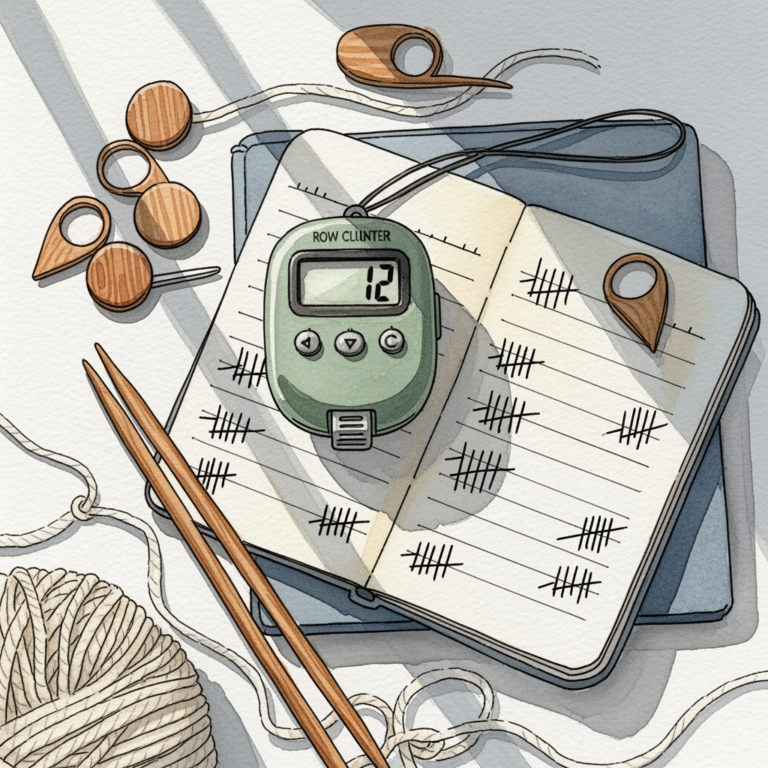
Consider using a row counter or a magnetic chart keeper in conjunction with your binder. If you have a long, complex chart, use a highlighter tape that can be repositioned on the outside of your sheet protector to keep your place without marking the pattern itself.
Finally, keep a "project sheet" at the back of each pattern section. This sheet should list the yarn used, the needle size, your achieved gauge, and any modifications you made, ensuring you can replicate your success or learn from your mistakes later.
Organizing your patterns is an investment in your future knitting success and peace of mind. Whether you choose a rugged, heavy-duty binder or a slim, portable organizer, the goal is to keep your focus on the rhythm of the needles. By setting up a system that suits your personal workflow, you turn your collection of charts into a functional, inspiring library. Happy knitting, and may your row counts always be accurate.