6 Best Weighted Blocking Mats For Shaping Fiber
Discover the 6 best weighted blocking mats for fiber crafts. Learn how these essential tools provide stability and precision for perfectly shaped projects.
Achieving a professional finish on your hand-knits depends entirely on the surface you use to shape your fabric. Blocking is the final, transformative step that evens out stitches and sets the dimensions of your hard work. Choosing the right mat prevents frustration, ensures accuracy, and protects your delicate fibers from unnecessary distortion. Here are the top six blocking solutions to elevate your knitting practice.
Knitter’s Pride Knit Blockers: Best Overall Pick


These are not just mats, but a holistic system that changes how you approach the pinning process. They combine the traditional grid-based mat with specialized plastic "blockers" that hold multiple pins in a single, sturdy unit.
If you have ever spent an hour individually pinning a complex lace shawl, you know the fatigue that sets in. These blockers allow you to secure long, straight edges in seconds, keeping your tension perfectly uniform across the entire span.
The trade-off here is the initial learning curve. You must ensure your fabric is aligned correctly before pressing the blockers down, as they are less forgiving than individual T-pins if you need to make a micro-adjustment mid-way.
Boye Interlocking Foam Mats: Best Budget Choice

Sometimes you need a reliable surface without the premium price tag, and these classic foam tiles deliver exactly that. They are the workhorse of the knitting world, providing a soft, resilient base that accepts pins with minimal resistance.
These mats are perfect for the knitter who is just starting to build their toolkit. They offer enough surface area to block a standard sweater or a medium-sized scarf without requiring a massive investment of space or money.
Be aware that these are typically thinner than high-end alternatives. If you are blocking heavy, wet wool that requires significant tension, you may find the pins poking through the bottom, so consider doubling them up or using a towel underneath.
Cocoknits Blocking Mats: Best Eco-Friendly Option

For the knitter who cares deeply about sustainability, these mats offer a refined, minimalist aesthetic. Made from high-quality EVA foam, they are designed to be durable and free from the harsh chemicals often found in cheaper, mass-produced alternatives.
What sets these apart is the thoughtful grid pattern printed directly onto the surface. This is a game-changer for symmetrical projects like triangular shawls, where getting the two sides to match perfectly is the difference between a amateur look and a professional one.
The surface is slightly more textured than standard foam, which provides excellent grip for slippery fibers like silk or bamboo blends. They are an investment piece, but the longevity and the peace of mind regarding material safety make them worth the cost.
Exquiss Extra Thick Tiles: Best for Heavy Projects
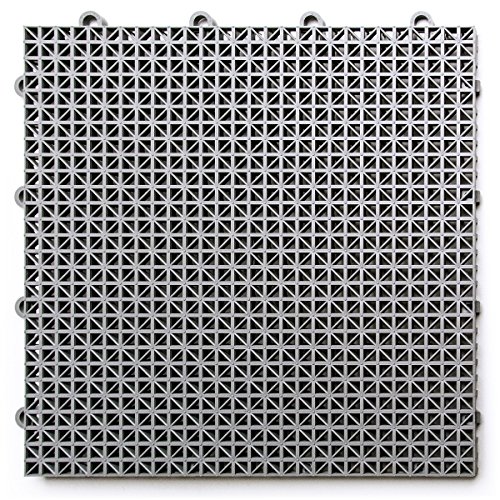
When you are working with chunky, super-bulky yarns or heavy cotton sweaters, standard thin mats often fail to hold the weight. These extra-thick tiles are designed specifically to provide the deep, secure anchorage required for dense, water-logged projects.
The increased thickness means your T-pins stay securely in place without wiggling or pulling out under the tension of a heavy garment. This stability is essential when you are trying to force a stubborn wool to hold a specific shape while it dries.
These are not the most portable option, but they are the most reliable. If you find yourself frequently blocking heavy wools or blankets, the stability provided by this extra depth will save you from the frustration of pins popping out overnight.
ArtBin Foam Blocking Boards: Best Portable Choice

If you travel to knitting retreats or frequently need to pack up your work in progress, portability is non-negotiable. These boards are lightweight and designed to be easily stowed away in a project bag or suitcase.
They provide a firm, consistent surface that is ideal for small to medium projects like socks, mittens, or cowls. Because they are compact, they encourage you to block your items as you finish them, rather than letting a pile of unblocked knits accumulate.
The downside is the limited surface area. If you are a prolific shawl knitter, you will likely find yourself needing to connect multiple sets, which can be cumbersome. They are best suited for the knitter who prioritizes mobility over massive capacity.
Mindful Collection Mats: Best for Delicate Lace

Lace knitting is a test of patience, and the blocking process should be equally gentle. These mats are designed with a smooth, non-abrasive surface that protects delicate fibers like mohair, alpaca, or lace-weight merino from snagging.
The color palette is intentionally calming, which helps when you are staring at a complex lace chart for hours. They provide a neutral backdrop that allows you to clearly see the stitch definition and the geometry of your lace patterns as they open up.
They are particularly effective when used with fine-gauge blocking wires. Because the foam is high-density, it holds the wires in place without creating large, unsightly holes in your fabric, preserving the integrity of your delicate yarn.
Why Weighted Blocking Mats Matter for Your Knits
Blocking is essentially "training" your yarn to sit in the desired configuration. Without a stable, weighted surface, your fabric will naturally want to revert to its pre-blocked state, leading to uneven edges and distorted stitch patterns.
A good mat acts as a foundation. It allows you to apply consistent, even tension across the entire piece, which is vital for garments that need to fit specific body measurements. If your mat is too soft or flimsy, the tension will be uneven, and your final garment will reflect that inconsistency.
Think of the mat as the loom for your finished piece. Just as a warp must be held under tension to create a clean cloth, your knit fabric needs to be held firmly to ensure that your gauge, drape, and shape are locked in permanently.
Essential Features to Seek in Blocking Surfaces
When shopping for a mat, look for high-density foam that doesn’t collapse under the pressure of a pin. You want a surface that provides enough "give" for the pin to penetrate easily, but enough "bite" to hold that pin firmly in place for days.
- Grid Markings: Essential for symmetry and checking dimensions.
- Heat Resistance: Important if you plan to use steam blocking.
- Thickness: At least 0.5 inches for general use; 1 inch for heavy projects.
- Interlocking Mechanism: Must be tight so the boards don’t slide apart.
Avoid surfaces that are too slick, as they won’t hold the fabric in place, and avoid those that are too porous, as they can trap moisture and dust over time. The best mats are those that feel substantial, firm, and easy to clean.
How to Properly Use T-Pins With Foam Mat Tiles
The secret to a great block is the angle of the pin. Always insert your T-pins at a 45-degree angle pointing away from the edge of the fabric, which creates a mechanical leverage that pulls the fabric taut rather than just piercing it.
If you are blocking a garment with a ribbing or a delicate edge, do not pull too hard. You want to gently encourage the fabric to expand to its intended size, not stretch it until the stitches look distorted or thin.
Always space your pins evenly. If you have a long, straight edge, start by pinning the corners, then the center, then the midpoints, and continue dividing the distance until the pins are close enough to keep the edge perfectly straight.
Maintenance Tips for Long Lasting Blocking Mats
After you finish a blocking session, always wipe your mats down with a damp cloth to remove any residual dye or debris from your yarn. Even if the yarn looks clean, fibers and dust can accumulate in the foam pores over time.
Store your mats flat or standing upright, but never fold or bend them. If you store them in a cramped space, they will eventually develop a permanent curve, which will make it impossible to get a perfectly flat block on your future projects.
If your mats start to lose their grip, it is usually a sign of fiber buildup in the pin holes. You can often refresh them by gently vacuuming the surface or using a soft brush to clear out the debris, keeping the foam dense and ready for your next masterpiece.
Investing in a quality blocking mat is one of the most impactful upgrades you can make to your knitting practice. By providing a stable, accurate, and gentle surface, these tools ensure that your hard work results in a polished, professional garment. Choose the mat that fits your specific project needs, and you will see your finished knits transform from "homemade" to "handmade" every single time.