6 Best Yarn Bowls For Preventing Rolling To Try
Stop chasing runaway yarn. We’ve curated the six best yarn bowls to keep your skeins stable, tangle-free, and organized while you knit or crochet with ease.
There is nothing more frustrating than watching your expensive hand-dyed skein roll across the floor and pick up every stray piece of lint in the room. A quality yarn bowl acts as a dedicated anchor, keeping your yarn clean, organized, and tension-consistent as you work. Whether you are tackling a complex lace shawl or a simple stockinette sweater, these tools transform your knitting environment. Here are six standout options to help you keep your yarn exactly where it belongs.
Yarn Valet Ceramic Bowl: Best Overall Design
The Yarn Valet stands out because it prioritizes the physics of the knitting process over mere aesthetics. Its deep, rounded basin is perfectly calibrated to hold a standard 100-gram cake of yarn without allowing it to jump out during vigorous knitting sessions.
The real genius here is the spiral cutout, which is designed to keep your working yarn from snagging. If you are working with delicate silk or single-ply wool, this smooth finish is essential to prevent fiber breakage or unwanted pilling.
Bottom line: This is the workhorse of the knitting world. It is heavy enough to stay put but refined enough to look beautiful on your side table.
Nagina International Sheesham Wood Bowl


Sheesham wood is prized for its density and striking natural grain, making these bowls both functional and heirloom-quality. Because wood is a natural material, each bowl has a unique weight and texture that feels warm and organic in your hands.
These bowls are often hand-carved, meaning the interior is polished to a glass-like finish. This is vital when working with "sticky" yarns like alpaca or mohair, which can snag on rough surfaces and ruin your tension.
However, keep in mind that wood can be porous. Avoid leaving these in direct sunlight or overly humid rooms, as the wood may expand or contract over time.
Keptin-Jar Wooden Yarn Bowl: Best for Travel

If you are a knitter who takes your project on the train or to a local meet-up, you know the struggle of keeping your yarn contained on the go. The Keptin-Jar is lightweight and compact, designed specifically for portability.
Its smaller footprint means it won’t dominate your lap or a cramped café table. While it might not hold a massive 500-yard cake of bulky yarn, it is perfectly sized for socks or small accessory projects.
The tradeoff for its portability is its lighter weight. If you are a fast, aggressive knitter, you might find it slides around more than a heavy ceramic option, so keep it on a non-slip mat.
Furls Crochet Alpha Series Rosewood Bowl

While marketed toward the crochet community, this bowl is a dream for knitters as well. The rosewood used in the Alpha series is incredibly dense, providing a satisfying, grounded feel that prevents the bowl from dancing across the table.
The dark, rich tones of the rosewood provide a high-contrast background for lighter-colored yarns. This makes it much easier to spot dropped stitches or inconsistencies in your yarn as it feeds through the bowl.
This is a luxury item, but the investment is reflected in the exquisite craftsmanship. If you want a tool that functions as a piece of art, this is the one.
Yarn Tree Heavyweight Ceramic Yarn Bowl
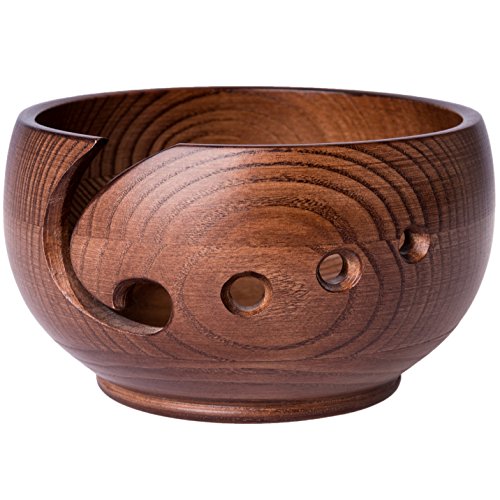
When you are working on a large-scale project like a cabled blanket, your yarn bowl needs to be a fortress. The Yarn Tree bowl is intentionally bottom-heavy, ensuring it remains stationary even when you are pulling large amounts of yarn from the center of a cake.
Ceramic is a fantastic choice because it is inherently smooth and easy to clean. If you happen to spill a bit of tea or get some hand cream on the bowl, a quick wipe restores it to perfect condition.
The sheer mass of this bowl is its greatest asset. It is not designed for travel, but it is the ultimate companion for long, stationary knitting marathons at home.
Fiber Artist Supply Co. Maple Yarn Bowl

Maple is an incredibly durable hardwood that resists the dings and scratches that often plague softer woods. The Fiber Artist Supply Co. creates bowls with a wide, stable base that feels rock-solid on any surface.
What I appreciate most is the attention to the "swirl" design. The channel is deep and well-rounded, ensuring that even if you have to stop your work abruptly to answer the phone, the yarn stays securely locked in the groove.
This is a reliable, high-performance tool. It balances durability with a clean, modern aesthetic that fits well in any home studio.
How to Choose the Right Material for Your Needs
Choosing between ceramic and wood is often a matter of your personal knitting environment. Ceramic bowls are generally heavier, making them better for "stationary" knitters who work at a desk or a dedicated armchair.
Wood, conversely, offers a tactile warmth that many knitters find soothing. It is also less likely to shatter if you accidentally knock it off your side table, which is a major consideration if you have pets or children.
- Ceramic: Best for stability, easy cleaning, and heavy-duty use.
- Wood: Best for portability, aesthetic appeal, and durability against drops.
Ultimately, consider your own habits. If you tend to be a bit clumsy, the resilience of wood might save you heartache in the long run.
Why Weight and Stability Matter for Yarn Bowls

The primary reason we use a yarn bowl is to prevent "yarn walk." If your bowl is too light, every tug on the yarn will cause the bowl to slide toward you, creating a frustrating loop of slack that ruins your tension.
A heavy bowl creates a stable anchor point. This allows you to maintain consistent tension, which is the secret to getting even, professional-looking stitches in your fabric.
If your favorite bowl is a bit too light, don’t worry. You can easily fix this by placing a small, non-slip silicone mat underneath it to provide extra grip on slippery surfaces.
Understanding Slot Designs: Swirl vs. Cutout
The slot is the "gatekeeper" of your yarn bowl. A traditional swirl design is excellent for keeping yarn contained, as it requires you to thread the yarn through a curve, making it nearly impossible for the yarn to pop out accidentally.
A simple cutout, or "J-slot," allows for quick loading and unloading. This is ideal if you are a multi-project knitter who frequently switches between different yarns and needs to swap them out in seconds.
- Swirl: Better for security and preventing accidental exits.
- Cutout/J-slot: Better for speed and frequent yarn changes.
Choose the swirl if you are working on a long-term project that stays in the bowl for weeks. Choose the cutout if you are a "project hopper" who likes to switch colors often.
Maintenance Tips to Protect Your Yarn Bowl
To keep your yarn bowl in top shape, treat it like the fine tool it is. For wooden bowls, a light application of food-grade mineral oil once or twice a year will prevent the wood from drying out and cracking.
For ceramic bowls, be mindful of the edges. Ceramic can chip if struck against a hard surface, and a chipped edge can snag your yarn, causing it to fray as you knit.
Never submerge wooden bowls in water for extended periods, as this can warp the wood and raise the grain. A quick wipe-down with a damp cloth is all that is usually required to keep them clean and smooth.
Investing in a high-quality yarn bowl is one of the most practical upgrades you can make for your knitting practice. By choosing a material and design that matches your specific knitting style, you ensure that your yarn remains clean, untangled, and perfectly tensioned. Take your time to select the one that feels right in your hands, and your future projects will thank you for the extra care. Happy knitting!