6 Best Blocking Mats For Textured Cable Swatches
Find the best blocking mats for textured cable swatches. Our guide reviews six top-rated options to ensure your intricate patterns lay flat and look perfect.
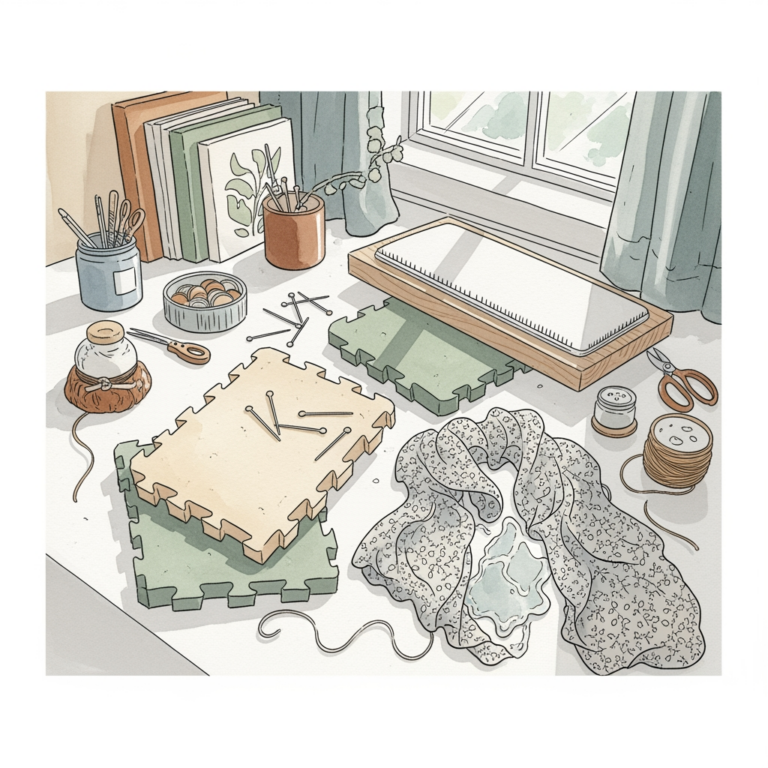
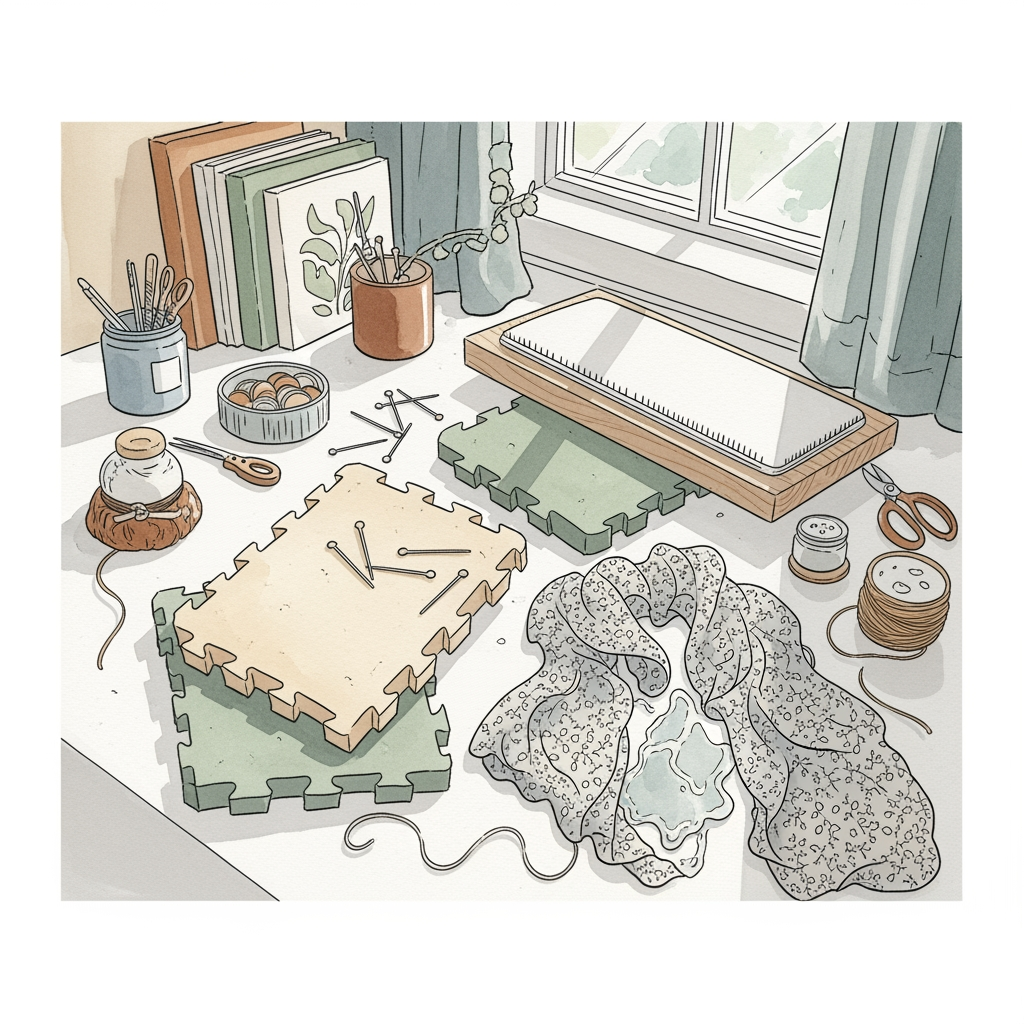
Cable knitting transforms flat fabric into architectural art, but those beautiful twists require specific care to truly pop. Without the right surface, your hard work can end up looking flattened or uneven after a wash. Choosing a blocking mat isn’t just about floor space; it’s about providing the structural support your cables need to bloom. This guide evaluates the best surfaces to ensure your swatches look as professional as the patterns you follow.
Knitter’s Pride KnitIQ Blocking Mats: Best Overall
These mats have become a staple in my studio because they prioritize density and grid accuracy. When you are working with complex cables, you need a surface that holds pins firmly without shifting under tension.
The standout feature here is the printed grid, which is essential for ensuring your cable repeats are perfectly symmetrical. If your swatch is lopsided, your final garment will inevitably hang incorrectly.
The material is thick enough to handle long T-pins without hitting the table underneath. It strikes the perfect balance between being soft enough to pin into and firm enough to provide a stable foundation.
Susan Bates Knit Chek Foam Blocking Board Review


The Susan Bates board is a classic, no-nonsense tool that leans into simplicity. It is particularly effective for knitters who prefer a dedicated, portable surface rather than an expansive floor setup.
Because it is a single-piece board, it lacks the seams found in interlocking tiles. This is a significant advantage if you are worried about your cables accidentally catching on a gap during the drying process.
However, it is smaller than most modular sets. It is best suited for swatching or smaller accessories like cowls rather than full-sized sweaters.
Clover Locking Blocking Mats: Best for Precision

Clover mats are engineered for the knitter who treats gauge swatching like a scientific experiment. The pieces interlock with a satisfying, secure snap that prevents the "creeping" often seen with cheaper foam tiles.
The surface texture is slightly more refined, which helps prevent the snagging of delicate fibers like alpaca or mohair. When you are blocking a cable swatch, you need the mat to stay rigid while you pull the fabric taut.
These mats are a premium investment, but the durability is unmatched. If you plan on blocking heavy wool cables, you will appreciate the way these mats maintain their shape under significant tension.
Darice Foam Blocking Mats: Best Budget Option
If you are just starting your journey into cabling and don’t want to break the bank, these mats are a functional entry point. They offer the basic surface area needed to pin out a swatch to dry.
The trade-off for the lower price point is that the foam is less dense than professional-grade alternatives. You may find that the pins wiggle slightly more, requiring you to be extra careful when checking your measurements.
They are perfectly adequate for standard wool swatches. For high-tension blocking of heavy cotton or linen cables, however, you might find yourself wishing for a firmer surface.
Exquiss Interlocking Foam Tiles for Large Projects

When you move from swatching to blocking a full-sized cabled sweater, you need significant square footage. These tiles are excellent because they allow you to customize the shape of your blocking surface to fit your garment.
The sheer volume of tiles means you can block a large back panel or a pair of sleeves simultaneously. This consistency is vital for ensuring that all pieces of a cable-heavy cardigan have the same tension and stretch.
Be aware that with more tiles comes more seams. Always double-check that your cables aren’t resting directly on a seam line, as this can create an unintended ridge in your finished fabric.
Boye Blocking Board: Best for Small Swatch Work
The Boye board is a compact, reliable option for the knitter who focuses on small-scale projects. It is essentially a specialized surface that fits easily on a desk or coffee table.
This is the perfect tool for checking your cabled gauge before committing to a large project. Since cables pull the fabric inward, knowing exactly how much your swatch "blooms" after blocking is the only way to avoid a sweater that doesn’t fit.
It is not designed for large garments, but its portability makes it a winner for travel. If you take your knitting to retreats, this is a very practical addition to your kit.
Why Texture Requires Firm Blocking Mat Surfaces
Cables are essentially dense, twisted sections of fabric that want to pull inward. A soft, squishy mat will allow the edges of your cable to sink into the foam, effectively "muffling" the texture you worked so hard to create.
A firm surface ensures that the cable stands proud against the background stitches. When you pin a cable, you are essentially asking the yarn to hold a new, expanded shape; a weak mat will buckle under that pressure.
Think of it like foundation work for a house. If the ground isn’t level and firm, the structure above it will eventually shift and become distorted.
How to Properly Pin Cables Without Distorting
The secret to blocking cables is to pin the "valleys" between the cables rather than the cables themselves. You want to gently encourage the cable to open up without pulling the stitches so thin that they lose their definition.
Use a generous number of pins to distribute the tension evenly along the edge of your swatch. If you only pin the corners, you will create unsightly pulling at the edges of the cable.
Always work from the center of the swatch outward. This ensures that the tension is balanced across the entire piece of fabric, preventing the dreaded "diamond" shape that occurs when you pull too hard on one side.
Essential Blocking Tools for Intricate Cables

Beyond the mat, your choice of pins is just as critical as the surface. I always recommend stainless steel T-pins because they are rust-proof and strong enough to pierce dense cable fabric without bending.
- Rust-proof T-pins: Essential for wet blocking to prevent permanent staining.
- Blocking wires: These are a game-changer for long, straight cable borders or scarves.
- Measuring tape: A flexible, accurate tape is non-negotiable for checking your blocked gauge.
Avoid using pins with plastic heads if you are using a steam iron, as they can melt. Stick to all-metal pins for the safest, most professional results.
Troubleshooting Common Blocking Mat Problems
The most common issue is the "gap" between tiles, which can leave a line on your wet fabric. If you find this happening, lay a thin, lint-free towel over your mats before placing your swatch on top.
Another problem is the "smell" of new foam, which can transfer to delicate fibers. I suggest letting new mats air out in a well-ventilated room for 24 hours before using them for the first time.
Finally, if your mat is warping over time, it is usually a sign that it is being stored in a damp environment or under heavy, uneven weight. Store your mats flat in a cool, dry place to ensure they last for years.
Blocking is the final, essential step that elevates a handmade item into a professional-looking garment. By investing in a firm, reliable surface, you give your cables the structure they need to shine. Remember that your choice of mat should match the scale of your projects and the density of your fibers. With the right tools and a bit of patience, your cable work will look crisp, clear, and perfectly shaped every time.