7 Best Swift Clamps For Table Mounting To Try
Secure your workspace with our top 7 swift clamps for table mounting. Discover efficient, durable options that ensure stability for every woodworking project.
Every knitter knows the frustration of a yarn swift that wobbles or tips over right as you reach the center of a precious, hand-dyed skein. A secure connection to your table isn’t just a luxury; it is the difference between a smooth winding session and a tangled, heartbreaking mess. Choosing the right clamp ensures your yarn flows freely without adding unnecessary tension to the fibers. This guide will help you navigate the hardware options that keep your fiber arts workspace steady and stress-free.
Stanwood Needlecraft Table Clamp: The Gold Standard
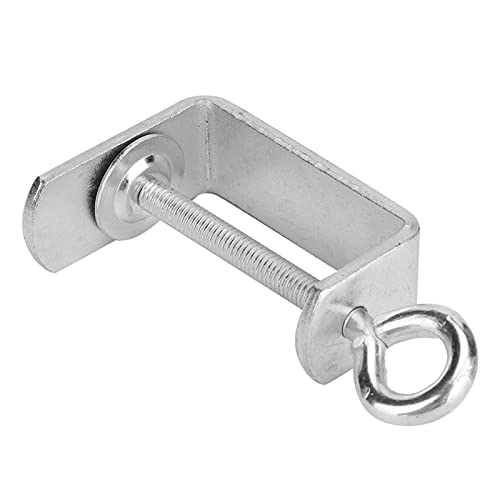

When you invest in a Stanwood swift, you are buying into a system designed for longevity and consistent performance. This clamp is widely considered the gold standard because it is machined with precision, ensuring that the metal components don’t strip or slip after repeated use.

The clamping mechanism is exceptionally robust, providing a wide surface area that bites into the table edge without marring the wood. It is particularly effective if you frequently wind heavy, bulky weight wool that creates significant drag on the swift arms.
If you are a serious hobbyist who winds dozens of skeins a year, the reliability here is worth the price. It eliminates the "wobble factor" that causes uneven tension, which is vital if you are prepping yarn for complex colorwork where consistent yardage is key.
Lacis Wooden Swift Clamp: Best for Vintage Models
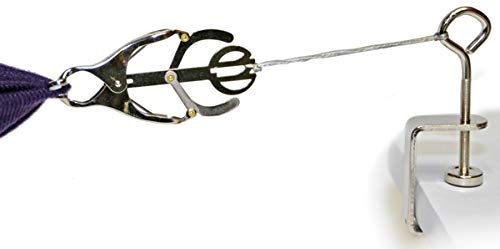
Many of us inherit beautiful, antique wooden swifts that have seen decades of knitting history but lack modern mounting hardware. The Lacis wooden clamp is designed to bridge the gap between classic craftsmanship and modern table surfaces.
These clamps often feature a more traditional screw-tightening mechanism that feels right at home with vintage gear. Because they are constructed from wood, they offer a gentle touch that won’t scratch delicate antique finishes on your dining room table.
However, keep in mind that wood-on-wood tension requires a bit more maintenance than metal alternatives. You may need to periodically check the tightness, especially if you are working with slippery silk or bamboo-blend yarns that require high-speed winding.
Knit Picks Heavy Duty Replacement Swift Clamp Base
Sometimes, the original clamp that comes with an entry-level swift simply isn’t up to the task of daily winding. The Knit Picks heavy-duty base is a fantastic upgrade for those who have experienced the "plastic fatigue" that often leads to snapped screws or stripped threads.
This base is designed with a wider footprint, which distributes the pressure more evenly across your table edge. It is an ideal solution for knitters who work in small spaces where the table is also used for blocking or sewing.
If you find that your current setup vibrates during high-speed winding, this base provides the weight and structural integrity needed to dampen that movement. It is a practical, no-nonsense fix for a common mechanical failure.
Amish Style Swift Mounting Clamp: Best for Stability
Amish-style swifts—those beautiful, stationary umbrella-style tools—rely entirely on the integrity of their base. A high-quality mounting clamp for this style is essential because the vertical orientation puts a unique torque on the table edge.
These clamps usually feature a longer throat, allowing them to clear decorative table aprons or thicker edges that standard metal clamps cannot reach. This makes them the best choice for knitters using unconventional surfaces like heavy oak coffee tables or kitchen islands.
The stability provided by these clamps is unmatched when you are dealing with large, heavy skeins of superwash wool. Because the base is stationary, a secure clamp ensures that the swift doesn’t "walk" across your workspace as you wind.
Strauch Fiber Equipment Swift Clamp: Best for Pros

If your fiber arts practice involves processing raw fleece or winding massive quantities of yarn, the Strauch clamp is built for industrial-grade endurance. These are engineered to withstand the rigors of high-volume use, making them a favorite among professional indie dyers and serious stash-builders.
The construction is heavy-duty steel, designed to remain rigid even when the swift is under significant load. This is essential when you are winding yarn that might have slight tangles or knots, as the clamp won’t buckle or shift during those necessary pauses.
While this may be overkill for the casual knitter, it is a "buy-it-once" tool. The precision engineering ensures that your yarn flows off the swift with zero resistance, keeping your gauge consistent from the first yard to the last.
U-Shaped Metal Clamp for Portable Yarn Swifts

For the knitter on the go who needs to wind yarn at workshops or knitting retreats, a U-shaped metal clamp offers the best balance of portability and strength. These are compact enough to fit into a project bag but strong enough to hold firm on a folding table.
The U-shape allows for a quick, secure attachment that doesn’t require complex threading or fine-tuning. It is an excellent choice if you are frequently setting up and tearing down your winding station in shared spaces.
Be aware that because these are smaller, they may not offer the same grip as a full-sized base on very thick tables. Always ensure the screw head is tightened firmly against the table surface to prevent sliding during operation.
Universal Adjustable Swift Clamp for Thick Tables
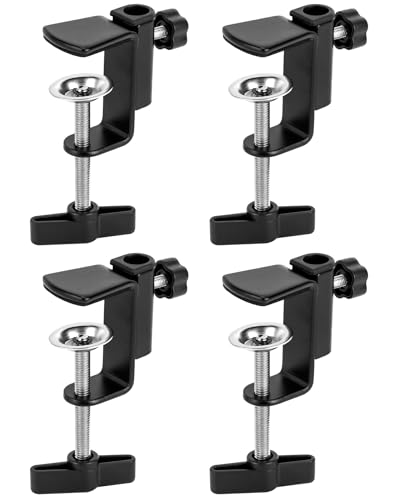
Not every table is a standard one-inch thick surface; many of us wind yarn on thick dining tables or desks with thick edges. A universal adjustable clamp is your best friend in these scenarios, as it features an extended reach that standard hardware lacks.
These clamps are versatile, often featuring a swivel pad that adjusts to the angle of the table edge. This prevents the clamp from popping off, which is a common issue when using standard hardware on beveled or rounded edges.
Before purchasing, measure the maximum thickness of your table edge to ensure the clamp’s throat is deep enough. A secure, flat contact point is the secret to keeping your swift perfectly vertical and wobble-free.
How to Properly Secure Your Swift to Any Surface
The secret to a wobble-free swift isn’t just the clamp—it is the placement. Always mount your swift on a clean, dry, and flat surface to ensure maximum friction between the clamp pads and the table.
- Clean the surface: Wipe away any dust or wax, as these can act as lubricants that cause the clamp to slip.
- Use a grip pad: If your table surface is particularly slick (like glass or polished lacquer), place a small piece of shelf liner or silicone mat between the clamp and the table.
- Tighten incrementally: Don’t crank the screw down all at once; tighten it until it holds, then give it one final half-turn to set it firmly.
If you are winding a very large, heavy skein, position the swift so that the yarn pull is directed toward the center of the table rather than away from it. This simple change in orientation uses the table’s own weight to help stabilize the hardware.
Essential Features to Look for in Swift Hardware
When evaluating any clamp, prioritize materials that offer structural rigidity. You want to avoid lightweight plastics that flex under pressure, as this flex is the primary cause of uneven winding tension.
- Padded contact points: Ensure the clamp has rubber or felt pads to protect your furniture.
- Thread quality: Look for smooth, deep threads on the screw mechanism, which prevent the clamp from loosening over time.
- Throat depth: Confirm that the opening is wide enough to accommodate your specific table edge.
Always consider the weight of the yarn you typically use. If you work primarily with delicate lace-weight silk, you need a different level of stability than someone winding heavy, multi-ply wool.
Troubleshooting Common Swift and Clamp Wobble Issues
If your swift is still wobbling despite a tight clamp, the issue is often a loose connection between the swift itself and the mounting post. Check the junction where the swift rotates; if there is too much play, no amount of clamping will stop the shaking.
Another common culprit is an uneven table surface. If your table has a beveled edge, the clamp may only be touching at one point, which creates a pivot point for the swift to tip.
- Shim the gap: Use a small piece of wood or a folded piece of cardboard to fill the gap created by a beveled edge.
- Check the center of gravity: Ensure the swift arms are balanced; if one side is significantly heavier, it will naturally cause a wobble.
- Tighten the pivot: If the swift is loose at its own hinge, look for a set screw or bolt that can be tightened to reduce the "slop" in the rotation.
Investing time in a stable swift setup will pay dividends in the quality of your yarn cakes and the enjoyment of your winding process. By choosing the right clamp for your specific table and fiber needs, you eliminate the mechanical frustrations that distract from your craft. Remember that a steady foundation allows the yarn to flow naturally, ensuring your projects start with perfectly tensioned fiber. Happy winding, and may your skeins always be tangle-free.