6 Best Comb Beaters For Even Weft Packing Reviewed
Achieve perfect tension with our guide to the 6 best comb beaters. We review top tools for even weft packing to help elevate your weaving precision today.
Achieving a consistent, professional-looking fabric on a loom requires more than just rhythm; it demands the right tool to ensure every pick of weft is perfectly aligned. For fiber artists transitioning from knitting to weaving, understanding how to control beat density is the secret to moving from "handmade" to "heirloom." In this guide, we explore six top-tier beaters that provide the precision needed for even weft packing. Finding the balance between tension and density is the mark of a true master.
Schacht Spindle Company 6-Dent Weaving Comb


When you are working with finer yarns, you need a tool that doesn’t fight your natural hand movement. The Schacht 6-dent comb is a favorite because it feels like an extension of your own fingers, providing just enough weight to nudge the weft into place without causing warp distortion.
This comb excels in projects where you are managing delicate fibers like silk or fine wool lace-weight yarns. Because it is lightweight, you won’t experience the wrist fatigue that often comes with heavier, industrial-style beaters during long sessions at the loom.
The primary tradeoff here is its size; it is best suited for narrower projects. If you are working on a wide wall hanging, you might find yourself needing to move across the warp multiple times to achieve an even beat.
Ashford Traditional Hand Weaving Beater

Ashford has built a reputation on durability, and their traditional hand beater is a workhorse that feels solid in your palm. It is designed for the weaver who wants a tactile, rhythmic experience, offering enough heft to pack wools and cottons firmly.
This tool is particularly helpful for beginners who struggle with "beating too hard" or "beating too soft." The weight distribution allows gravity to do some of the work for you, which helps maintain a consistent gauge across the entire width of your cloth.
Keep in mind that this beater is crafted from wood, which means it can be sensitive to humidity changes in your studio. If you live in a climate with extreme seasonal shifts, keep it stored away from direct heat sources to prevent warping.
Kromski Rigid Heddle Loom Weaving Comb

Kromski tools are known for their beautiful finish and ergonomic design, and their weaving comb is no exception. It is specifically shaped to fit comfortably in the hand, reducing the strain that can occur when you are packing hundreds of inches of weft.
This comb is an excellent companion for those who weave with variegated or hand-spun yarns. The teeth are spaced to glide through the warp without snagging, which is vital when working with delicate, textured, or novelty fibers that might otherwise fray.
The main consideration with this model is the finish; it is quite smooth, which can be slippery if your hands are prone to sweating. A light sanding or a simple grip tape modification can make a world of difference if you find it sliding during a marathon weaving session.
Leclerc Looms Stainless Steel Weaving Beater
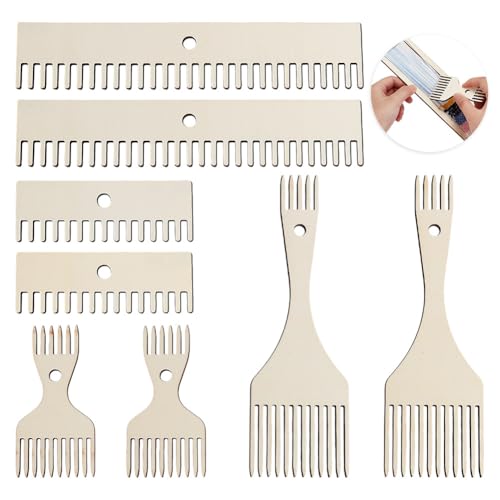
If you are moving into high-tension projects or working with very dense, sturdy materials like linen, a stainless steel beater is a game-changer. Leclerc’s offering provides a rigid, uncompromising strike that ensures your weft stays exactly where you put it.
Unlike wooden beaters, this tool will not warp, splinter, or wear down over time. It is the "forever" tool in your weaving kit, ideal for weavers who plan to produce heavy-duty rugs or structured upholstery fabric.
The tradeoff is the weight and the lack of "give." You must be careful with your force, as the metal won’t absorb any of the impact. It is a precision instrument that rewards a controlled, steady hand.
Glimakra Standard Loom Weaving Comb

Glimakra is synonymous with high-end Scandinavian weaving, and their standard comb reflects a deep understanding of loom mechanics. It is designed to provide a very precise, even beat that respects the integrity of the warp threads.
This beater is best for the intermediate-to-advanced weaver who is focused on fine-tuning their "beat." If you find that your fabric is coming off the loom with uneven density, the Glimakra’s balanced design can help you recalibrate your physical technique.
Because it is a professional-grade tool, the price point is higher than entry-level options. However, for those who spend more time at the loom than at the knitting needles, the investment in ergonomics and longevity is well worth the cost.
Harrisville Designs Hardwood Weaving Beater

Harrisville Designs produces tools that feel like they belong in a traditional studio. Their hardwood beater is sturdy, reliable, and possesses a classic aesthetic that many fiber artists find comforting and familiar.
This beater is particularly effective for thick, rustic yarns that require a firm hand to pack. The density of the hardwood provides a satisfying "thwack" that helps you gauge the progress of your project by sound as much as by sight.
As with all wooden tools, maintenance is key. A light rub with a food-safe oil once or twice a year will keep the wood from drying out and ensure the teeth stay smooth and snag-free for years to come.
Why Proper Weft Packing Matters for Textiles
Weft packing is the process of pushing the horizontal yarn into the vertical warp to create a cohesive cloth. If your packing is uneven, you will notice "gaps" or "lumps" in your finished piece, which can compromise the drape of a scarf or the durability of a rug.
Think of it like maintaining gauge in knitting; just as a tight stitch followed by a loose one creates an uneven fabric, uneven beating creates an inconsistent weave. Consistent packing ensures that your fabric will block evenly and wear gracefully over time.
Don’t be discouraged if your early projects look a bit wavy. Like mastering tension in knitting, learning to pack your weft is a muscle memory skill that develops with every inch you weave.
How to Select the Right Dent Size for Your Warp
The "dent" refers to the space between the teeth of your beater. Selecting the right size is entirely dependent on the weight of your yarn and the look you want to achieve.
- Fine Yarns (Lace/Fingering): Require a higher dent count to keep the threads properly spaced.
- Medium Yarns (DK/Worsted): A mid-range dent count offers the best balance for everyday projects.
- Heavy Yarns (Bulky/Art Yarn): Use a low dent count to allow the yarn to sit comfortably without crowding.
Always perform a small sample weave before committing to a large project. If the warp threads are being pushed out of alignment, your dent count is likely too low for the yarn you have chosen.
Maintaining Your Weaving Tools for Longevity
Your weaving tools are an investment, and they deserve the same care you would give your favorite set of circular needles. After every session, gently wipe down your beater to remove any dust or fiber debris that might have accumulated.
If you are using a wooden beater, keep it away from extreme temperature fluctuations. A simple periodic application of mineral oil will prevent the wood from splintering, which is critical to ensure you don’t snag your warp threads during the beating process.
For stainless steel tools, inspect them occasionally for any nicks or burrs. If you find a rough spot, a very fine-grit emery cloth can smooth it out, ensuring your tool remains as gentle on your yarn as the day you bought it.
Troubleshooting Common Weft Tension Problems
If you notice your fabric is pulling in at the edges—a problem known as "draw-in"—you are likely beating too hard or using too much tension. Try to relax your grip on the beater and focus on a consistent, gentle rhythm rather than a forceful strike.
If your weft is "bubbling" or not sitting flat, you may be using too much yarn per pick. Try angling your weft yarn in the shed before you beat it; this creates a small arc that provides enough slack for the yarn to settle into place without pulling the warp threads inward.
Finally, remember that your body position matters. Ensure your loom is at a comfortable height so that your arm motion is natural and fluid. If you are hunched over or reaching too far, your beating rhythm will inevitably suffer.
Finding the perfect rhythm in your weaving is a journey that mirrors the patience required for complex knitting projects. By selecting a beater that fits your hand and your specific project needs, you gain the control necessary to produce professional-quality textiles. Remember that your tools are there to support your technique, not replace it, so take the time to practice and find what feels right for you. Happy weaving, and may your selvedges always stay straight and true.