7 Best Yarn Tension Disks for Consistent Fabric
Achieve professional results with our top 7 yarn tension disks. Discover how these essential tools ensure uniform stitch consistency for every fabric project.
Achieving uniform gauge is the single most important factor in transforming a handmade item from "homemade" to professional-quality knitwear. While years of practice eventually build muscle memory, external tensioning tools can bridge the gap for knitters struggling with uneven stitches. These devices offer a mechanical solution to the natural variations in hand pressure that occur during long sessions. Choosing the right tool depends entirely on your grip style, the fiber you are using, and the specific complexity of your pattern.
Prym Ergonomics Yarn Tension Ring: Best Overall


The Prym Ergonomics ring stands out because it prioritizes the natural anatomy of the hand rather than forcing your finger into an awkward position. Its lightweight, plastic construction is gentle on the skin, which is a major advantage during marathon knitting sessions.
This design excels because it keeps the yarn elevated and away from the skin, preventing the friction burns that often occur when working with sticky wools or mohair. Because it is adjustable, it fits a wide range of finger sizes without feeling restrictive or cutting off circulation.
If you find yourself constantly adjusting your yarn hold to keep your gauge consistent, this is the most reliable starting point. It provides just enough resistance to keep the yarn taut without causing the "stranglehold" effect that often leads to hand fatigue.
Clover Yarn Guide Ring for Fair Isle Knitting
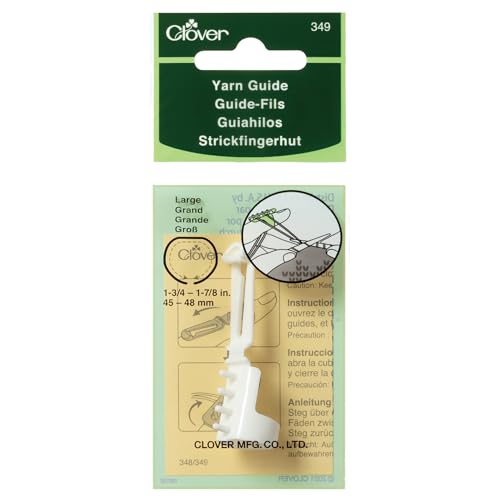
When you are juggling two colors of yarn for stranded colorwork, the Clover Yarn Guide is an absolute lifesaver. It features two distinct loops that keep your yarns separated, preventing them from tangling as you work across the row.
This tool is particularly effective for knitters who struggle to maintain an even tension between their dominant and non-dominant colors. By keeping the yarns physically apart, you ensure that one strand isn’t accidentally pulled tighter than the other, which is the primary cause of "puckered" Fair Isle fabric.
However, keep in mind that this ring is best suited for thinner, fingering-weight yarns. If you try to force a bulky, plied wool through the guides, the yarn may snag or lose its twist.
Tulip Yarn Guide Ring for Consistent Tension
The Tulip ring is a masterclass in minimalist design, focusing on a smooth, snag-free surface that allows yarn to glide effortlessly. Its elegant metal finish is not just for aesthetics; it provides a slick surface that is ideal for fibers that tend to "grab," such as raw alpaca or high-twist cotton.
This ring is perfect for the knitter who wants to maintain a consistent flow without the yarn feeling "stuck" in a complex mechanism. It works by creating a gentle, controlled path for the yarn, which helps smooth out the natural tension fluctuations that happen as you move your hands.
Be aware that because it is metal, it can feel slightly heavier than plastic alternatives. If you have sensitive joints or arthritis, you might find that the extra weight contributes to fatigue over several hours of work.
CoLibrì Knitting Thimble for Dual Yarn Control

The CoLibrì thimble is an innovative tool that acts as a bridge between a traditional tension ring and a full thimble. It is designed for knitters who prefer to hold their yarn in a way that mimics Continental knitting, providing a stable anchor point for the working yarn.
This is an excellent choice for those working on complex patterns that involve cables or lace, where tension management is critical to the final stitch definition. The dual-control aspect allows you to feed yarn at a very steady rate, which helps keep your stitches uniform even when you are distracted.
One potential trade-off is the learning curve required to get the yarn threaded properly. It may take a few practice swatches to find the perfect tension setting that works for your specific knitting style.
Yarnstar Adjustable Tension Ring for Beginners

For those just starting their knitting journey, the Yarnstar ring is a low-pressure introduction to tensioning tools. It is highly adjustable, meaning you can loosen or tighten the grip as you gain confidence in your needle control.
Beginners often struggle with "death grip"—holding the yarn so tightly that the resulting fabric is stiff and board-like. This ring acts as a physical reminder to relax your hand, as the tool does the heavy lifting of maintaining the tension for you.
If you are a beginner, look for a model that allows you to adjust the tension dial easily. This will allow you to experiment with different yarn weights, from delicate lace to sturdy worsted, without needing to buy a new tool for every project.
KnitPal Metal Yarn Guide for Precision Work
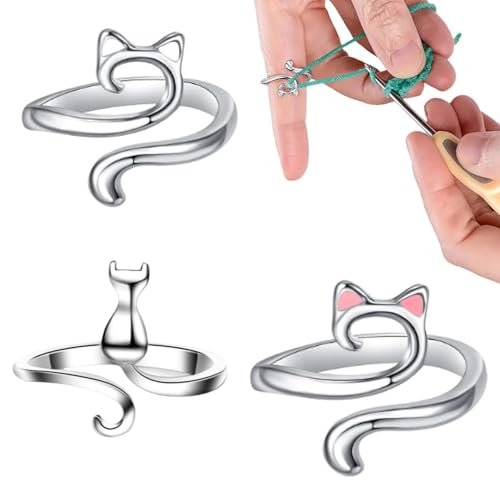
The KnitPal Metal Yarn Guide is built for the precision-focused knitter who is tired of plastic tools snapping or wearing down. Its sturdy construction provides a consistent, unyielding tension that is vital for projects like socks or intricate lace shawls where every stitch must be identical.
Because this tool is made of durable metal, it is less likely to develop the small nicks and burrs that can snag delicate silk or mohair fibers. It is a workhorse tool that will likely last you a lifetime if properly cared for.
The tradeoff here is that it offers less "give" than plastic or silicone models. If your natural tension is already quite tight, you might find this tool makes your fabric feel slightly too dense, so you may need to go up a needle size.
Addi Express Tension Arm for Machine Knitters

While technically designed for circular knitting machines, many hand knitters have adapted the principles of the Addi Express tension arm to help manage yarn flow. It serves as a mechanical "third hand" that ensures the yarn is fed into the needles at a constant, even rate.
This is a game-changer if you are working on a large-scale project, such as a sweater or a blanket, where maintaining consistency across hundreds of rows is a challenge. It removes the human element of "tired hands" that inevitably leads to looser stitches toward the end of a project.
It is important to note that this is a specialized tool and may not be necessary for simple, small-scale projects. Use this when you need absolute, machine-like consistency in your hand-knitted pieces.
Why Consistent Yarn Tension Matters for Fabric
Consistent tension is the secret ingredient behind fabric that drapes beautifully and holds its shape over time. When your tension varies, your stitches vary in size, which creates "laddering" or uneven textures that become painfully obvious once the garment is blocked.
Beyond aesthetics, tension affects the structural integrity of your knitwear. A garment knitted with inconsistent tension will wear unevenly, leading to stretched-out areas in high-stress zones like the elbows or the hem.
Ultimately, tension is about control. Whether you are using a tool or relying on your own hands, the goal is to create a fabric that is stable, elastic, and durable enough to withstand years of wear and washing.
How to Properly Use a Tension Ring for Comfort
The most common mistake knitters make is wearing the tension ring too tightly, which can lead to nerve compression or hand cramps. The ring should sit comfortably on your finger, acting as a guide rather than a clamp.
Position the ring on the finger that provides the most natural path for the yarn to flow toward your needle. For most, this is the index finger, but don’t be afraid to experiment with your middle finger if it feels more ergonomically sound for your specific grip.
Remember to take frequent breaks, even when using a tension ring. No tool can replace the need for your hands to rest and stretch after repetitive, fine-motor work.
Troubleshooting Common Yarn Tensioning Mistakes
If your fabric still looks uneven after using a tension ring, the issue might be your needle choice rather than your tensioning technique. Slick metal needles can cause stitches to slide around, while wooden needles provide more friction, which can help "grab" the yarn and keep it in place.
Another common mistake is failing to adjust your tension when switching between different fiber types. A slippery silk yarn will behave very differently than a fuzzy, high-friction wool; you must adjust the tension ring’s settings accordingly.
Finally, don’t ignore the importance of the swatch. Always knit a test square with your chosen yarn and tensioning tool to see how they interact before committing to a large project.
Finding the perfect tension tool is a journey of trial and error, much like finding your favorite set of needles. By understanding how these devices interact with your unique knitting style and the specific properties of your yarn, you can achieve the professional finish you desire. Remember that the tool is there to assist your technique, not replace it, so listen to your hands and prioritize comfort above all else. Happy knitting, and may your stitches always be perfectly even.