6 Best Blocking Foams For Interlocking Tiles
Discover the top 6 blocking foams for interlocking tiles. Our guide evaluates durability and fit to help you achieve a seamless, professional-grade finish.
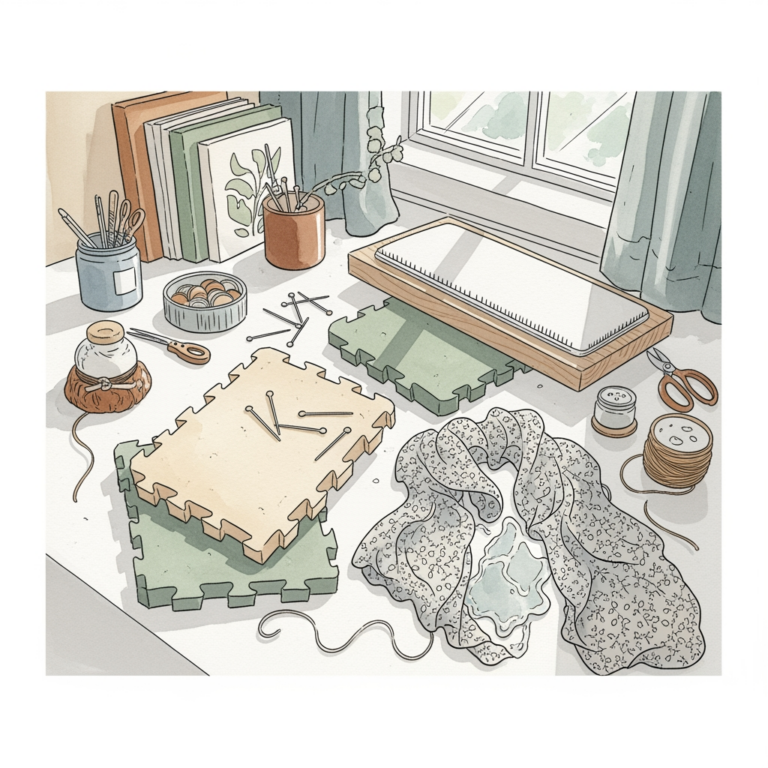
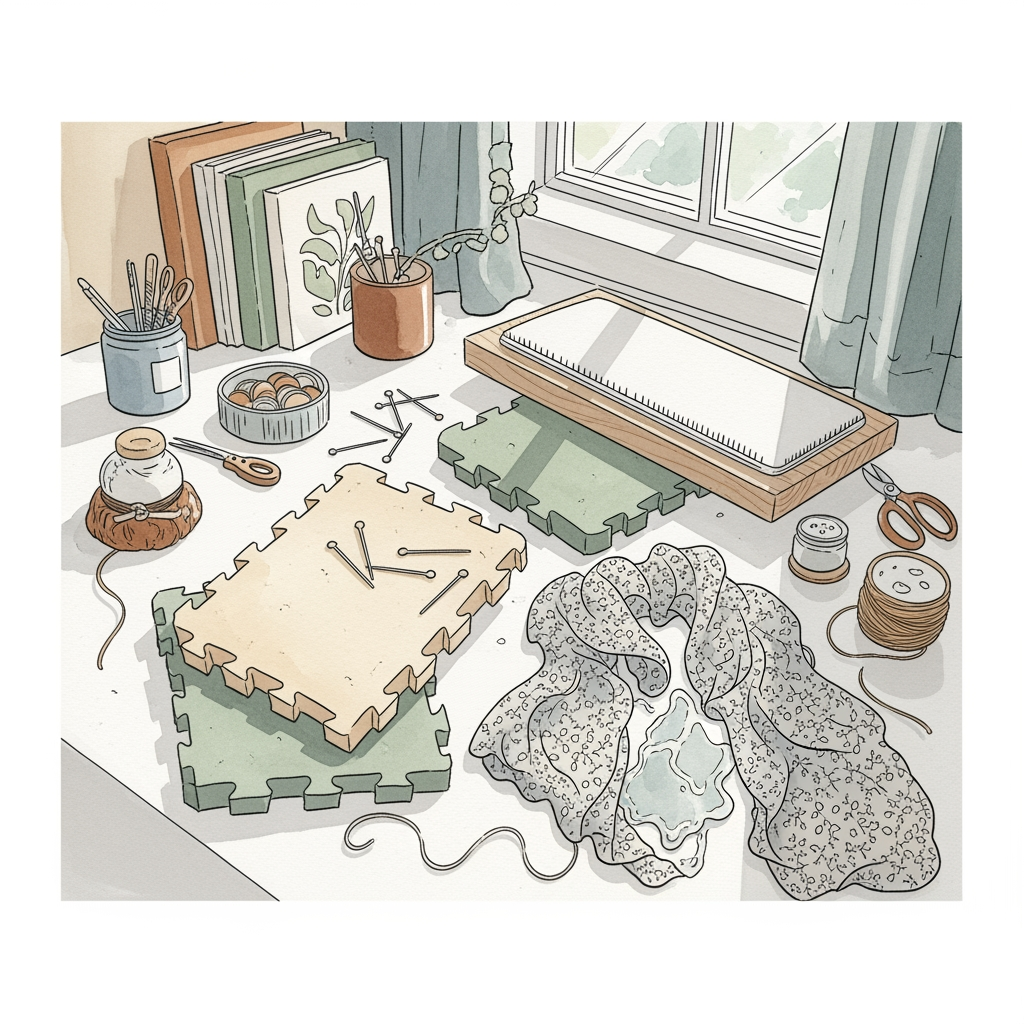
Blocking is the transformative final step that turns a puckered, uneven piece of knitting into a professional-looking garment with perfect drape and stitch definition. Choosing the right foam tiles is essential, as these mats must provide enough density to hold pins securely while remaining flexible enough to accommodate various shapes. Whether you are working on a delicate lace shawl or a structured wool sweater, your surface choice dictates the ease of your workflow. Here are six top-tier options to help you achieve the perfect finish every time.
Knitter’s Pride Knit Blockers: The Top Choice


These aren’t just mats; they are a system designed to save your fingers from the strain of hundreds of individual pins. The accompanying blockers—long plastic strips with multiple stainless steel pins—allow you to secure long straight edges in seconds.
For those working on large rectangular shawls or scarves, this system is a game-changer. You simply press the blocker into the mat, and the entire edge is secured at once, ensuring perfectly straight lines without the "scalloping" effect that can happen when pins are spaced unevenly.
The mats themselves are firm and durable, providing excellent resistance. If you frequently knit with high-twist wool or heavy alpaca blends, you will appreciate how well these mats hold the tension required to open up those stitches.
Exquisite Knits Blocking Mats: Best for Large Lace

When you are blocking a massive, intricate lace project, surface area is your most precious commodity. These mats are designed specifically for the expansive footprint required by complex circular or triangular shawls.
The thickness of these mats is a standout feature, as it allows for deeper pin penetration. This is vital when you are working with heavy, wet-blocked fibers that need to be pinned under significant tension to reveal the beauty of the lace pattern.
Because they are thicker, they are also less likely to warp over time. If you often block mohair or fine silk lace, you need a surface that won’t give way under the pull of your pins.
Grassland Interlocking Tiles: Great Value Option

If you are just starting your knitting journey and don’t want to invest heavily in specialized gear, these tiles offer a fantastic entry point. They provide the necessary square footage without the premium price tag of brand-name crafting sets.
They function perfectly well for standard wool projects where extreme precision isn’t the primary concern. They are lightweight, easy to store, and provide enough grip to keep your knitting in place during the drying process.
Just be aware that they may be slightly softer than professional-grade mats. If you are blocking a heavy, water-logged cotton garment, you might find that the tiles flex more than you would prefer.
Cocoknits Blocking Mats: Best Eco-Friendly Pick
Made from EVA foam, these mats are a favorite for those who prioritize sustainability in their craft room. They are remarkably sturdy and feature a unique, high-contrast grid that makes measuring your progress incredibly easy.
The texture of these mats is slightly different from standard foam; it feels more "grippy," which is a huge benefit when working with slippery fibers like bamboo or silk. Your stitches won’t slide around as you attempt to pin them into place.
They are an investment, but they are built to last through years of heavy use. If you are a prolific knitter who finishes multiple sweaters a season, the durability here is well worth the cost.
Darice Foam Blocking Mats: The Budget Essential
Darice mats are the reliable workhorse of the knitting community. You will find them in almost every local yarn shop because they are simple, effective, and get the job done without any fuss.
They are standard-sized and interlock easily, meaning you can expand your workspace as your projects grow from baby blankets to full-sized adult pullovers. They aren’t the thickest mats on the market, but they are perfectly sufficient for most weight categories of yarn.
If you are tight on space, these are excellent because they pack down into a very small footprint. They are the ideal choice for the knitter who needs a functional surface but prefers to spend their budget on high-quality hand-dyed yarn instead of accessories.
We R Memory Keepers Mats: Sturdy Grid Surface

While marketed for crafters of all types, these mats are surprisingly excellent for knitters due to their rigid construction. The grid markings are printed with high precision, which is a major advantage for blocking symmetrical pieces.
The surface material is dense, meaning your T-pins or blocking wires will stay exactly where you put them. This is critical for colorwork projects where you need to ensure the motifs are perfectly aligned and squared off.
They are slightly heavier than other options, which adds to their stability. If you have a dedicated space where you can leave your blocking project undisturbed for a few days, these mats offer a rock-solid foundation.
Essential Factors When Choosing Blocking Tiles
When selecting your mats, thickness is the primary factor that dictates longevity. A thicker mat allows for deeper pin insertion, which prevents your work from "popping" off the surface when the fiber dries and pulls back.
Consider the surface texture as well. A slightly textured or matte finish will hold your yarn in place better than a slick, shiny surface, which can cause your stitches to slide out of alignment.
Finally, think about your storage capacity. If you live in a small apartment, look for tiles that interlock tightly and can be stacked or tucked away in a closet without taking up the entire room.
Why Grid Markings Matter for Precision Blocking
Grid markings are not just for show; they are vital for achieving professional results. When blocking a sweater, you need to ensure the left and right sides are identical in width and length.
Without a grid, you are essentially guessing, which often leads to lopsided garments that don’t hang correctly on the body. Using the grid allows you to count the squares, ensuring that every sleeve and panel is blocked to the exact same dimensions.
This precision is particularly important for seamed garments. When your panels are perfectly blocked to the correct measurements, sewing them together becomes a much more intuitive and accurate process.
Maintaining Your Foam Mats for Long-Term Use
Treat your mats with care, and they will serve you for decades. Always ensure your knitwear is damp, not dripping wet, before placing it on the mats to prevent water from pooling in the seams of the tiles.
Avoid leaving your mats in direct, intense sunlight, as this can cause the foam to become brittle and crack over time. If they get dusty, a quick wipe with a damp cloth is all that is required to keep them clean.
If you use blocking wires, be mindful of how you store them. Don’t leave them inserted in the mats for months at a time, as this can permanently widen the pin holes and reduce the mat’s ability to hold tension in the future.
How to Properly Block Your Finished Knitwear
Start by soaking your garment in lukewarm water with a wool-safe wash, then gently squeeze out the excess moisture using a large towel. Never wring or twist your knitting, as this can damage the fiber structure and cause uneven stretching.
Lay your garment out on your mats and gently pat it into the desired shape. Use your pins or wires to secure the edges, starting from the center and working your way out to ensure symmetry.
Allow the piece to dry completely in a well-ventilated area before removing the pins. Patience is the secret ingredient; if you remove the pins while the fiber is still damp, your hard work will lose its shape almost immediately.
Blocking is the bridge between a handmade item and a professional garment, and having the right tools makes the process a joy rather than a chore. Whether you choose the precision of a grid-marked mat or the convenience of a blocker system, prioritize stability and ease of use. Take your time with the process, respect the nature of your fiber, and enjoy the satisfaction of seeing your stitches bloom. Happy knitting, and may your finished projects always look as beautiful as you imagined.