6 Best Stitching Ponies For Hands-Free Work
Discover the top 6 stitching ponies for leatherwork. This guide compares stability, comfort, and ease of use to help you achieve precise, hands-free stitching.
Just as a steady set of circular needles keeps your tension consistent during a complex brioche project, a quality stitching pony is the foundation of professional-grade leatherwork. Whether you are hand-stitching a custom bag or finishing a leather strap for your favorite project bag, hands-free support is essential. These tools act as a third hand, allowing you to focus on your needle angle and thread tension. Let’s explore the best options to elevate your craft from hobbyist to artisan.
Leathercraft Master Stitching Pony: Best Overall
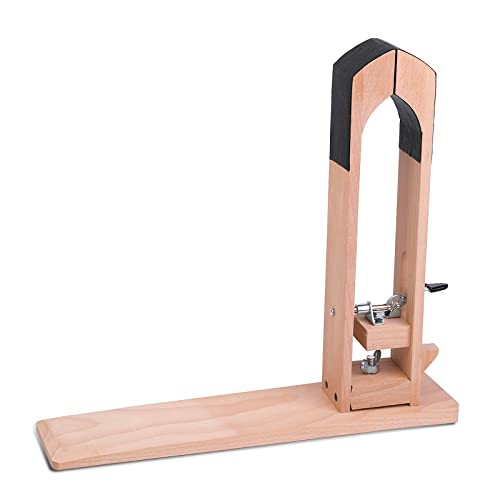

This pony strikes the perfect balance between stability and ease of use, much like a well-balanced set of interchangeable needles. It features a robust design that keeps your leather project firmly in place without marring the surface.
The tension adjustment is intuitive, allowing you to dial in the exact pressure needed for delicate veg-tan or thicker, oil-tanned hides. It functions reliably for long sessions, ensuring your saddle stitch remains uniform throughout the entire length of the seam.
It is the "go-to" choice for those who want a reliable, no-nonsense tool that simply works every time. If you value consistency above all else, this should be your first consideration.
Tandy Leather Adjustable Pony: Best for Beginners

When you are first learning to stitch leather—much like learning to master the long-tail cast-on—you need a tool that is forgiving and easy to manipulate. The Tandy Adjustable Pony is a classic entry-level option that doesn’t overwhelm the user with complex mechanisms.
Its adjustable height and angle allow you to find a comfortable ergonomic position, which is crucial for preventing hand fatigue. You won’t find unnecessary bells and whistles here, just a solid, functional frame that holds your work securely while you learn the rhythm of the stitch.
It is an excellent investment for your first few projects. You can always upgrade later, but this pony will teach you the fundamentals of tensioning without a steep learning curve.
Weaver Leather Pony: Best Heavy Duty Wood Option

If you are working with thick, heavy-duty leathers for belts or satchels, you need a pony that can withstand significant force. The Weaver option is built from sturdy, high-quality wood that won’t flex under tension, providing a rock-solid base for your needlework.
Think of this like using sturdy wooden needles for a bulky, wool-heavy project; you need a tool that won’t bend or snap under the weight of the material. The wood finish is smooth, ensuring that you don’t snag or scratch your leather during the stitching process.
It is a durable, long-term investment for the serious maker. While it may be heavier than portable plastic versions, the structural integrity it provides is unmatched for dense materials.
Horlix Desktop Stitching Pony: Best Compact Pick
Space is often at a premium in a crafting studio, whether you are storing dozens of yarn hanks or a leatherworking bench. The Horlix Desktop Pony is designed for those who need a compact solution that can be easily stowed away after a session.
Despite its small footprint, it provides surprisingly firm clamping power. It is ideal for smaller projects like wallets, card holders, or leather tags for your knitwear.
If you don’t have a dedicated workshop and work off a small kitchen table or desk, this is your best bet. It is unobtrusive, lightweight, and highly effective for small-scale leather assembly.
Mainstay Rotating Stitching Pony: Best Versatility

Versatility is the hallmark of a great tool, and the rotating head on this pony is a game-changer. Being able to pivot your work without unclamping the leather is similar to using a swivel-cord on your circular needles; it allows for a fluid, continuous workflow.
This feature is particularly helpful when stitching curves or irregular shapes where the angle of your needle needs to change constantly. It saves time and minimizes the risk of damaging the leather by repeatedly moving it.
If you find yourself working on diverse project shapes, the added flexibility of this pony is worth every penny. It allows you to maintain your "flow state" without pausing to re-adjust your grip.
Craftplus Pro Stitching Pony: Best Premium Choice
When you are ready to invest in professional-grade equipment, the Craftplus Pro stands out for its precision engineering and refined aesthetics. Every detail is designed to enhance the tactile experience of stitching, much like the difference between mass-produced needles and hand-turned wooden ones.
The clamping mechanism is exceptionally smooth, offering precise control over the tension applied to your leather. It is built to last a lifetime, making it an heirloom-quality tool for the dedicated leatherworker.
While it comes with a higher price tag, the performance and durability justify the cost for the professional maker. It is the ultimate tool for those who prioritize precision and comfort in their daily practice.
Why Every Leatherworker Needs a Stitching Pony
Hand-stitching leather requires two hands to manage the needles and the thread simultaneously. Without a pony, you are forced to hold the leather between your knees or against your body, which leads to poor posture and uneven stitch tension.
A pony acts as a dedicated third hand, securing the leather at the perfect angle. This allows you to maintain a consistent "gauge," ensuring that your stitches look as professional as those produced by a machine.
Just as proper blocking transforms a finished knit, using a pony transforms the look and longevity of your leather seams. It is the single most effective way to improve the quality of your leatherwork.
Key Features to Consider Before You Buy a Pony
When shopping for a pony, consider the material of the jaws. You want a surface that provides enough grip to hold the leather tight, but is smooth enough to prevent permanent compression marks or scratches.
Think about the clamping mechanism as well. Some use wing nuts, while others use lever-action systems. If you have any hand strength issues, a lever-action mechanism is significantly easier to operate than a traditional screw-tightening system.
Finally, consider the base. A weighted base or one that clamps to your table is essential for stability. You want a tool that stays put, just like a heavy yarn bowl keeps your ball of wool from rolling across the floor.
How to Properly Secure Leather in Your Pony
Properly securing your leather is all about protecting the grain while ensuring a firm hold. You want to place your project deep enough in the jaws to stay secure, but not so deep that it interferes with your needle path.
If you are working with particularly soft or delicate leathers, consider adding a thin layer of felt or scrap suede to the inside of the jaws. This acts as a buffer, preventing the wood from leaving an impression on your finished piece.
Always test your tension before you start stitching. A quick tug on the leather should reveal no movement; if it shifts, tighten the clamp slightly until it is immovable.
Maintenance Tips for Your Stitching Pony Tools
Just as you would care for your knitting needles by keeping them clean and stored properly, your stitching pony requires minor maintenance. Periodically wipe down the wooden jaws to remove any wax or debris that may have collected during your work.
If the wooden surfaces become rough over time, a light sanding with fine-grit sandpaper will restore the finish. This ensures that the pony won’t snag your leather or fray your stitching thread.

Keep the moving parts—like the hinges or tightening screws—lightly lubricated if they start to feel stiff. A well-maintained tool is a joy to use and will serve you faithfully for many years of leathercrafting.
Investing in a quality stitching pony is a commitment to the longevity and beauty of your leather projects. By choosing a tool that aligns with your specific needs—whether it be portability, heavy-duty strength, or professional precision—you are setting yourself up for success. Remember that, much like fiber arts, the best tool is the one that makes your process more enjoyable and your results more consistent. Happy stitching, and may your seams always be straight and your tension perfectly balanced.