7 Best Yarn Winders For Balling Cakes Worth Buying
Discover the top 7 yarn winders for creating tidy cakes. We evaluate durability and performance to help you find the best tool for your knitting projects.
Transforming a tangled, unruly hank of hand-dyed wool into a neat, center-pull cake is one of the most satisfying rituals in a knitter’s day. A high-quality yarn winder doesn’t just save you time; it protects your delicate fibers from unnecessary friction and knotting. Whether you are prepping for a complex colorwork sweater or just organizing your stash, the right tool makes all the difference. Investing in a reliable winder ensures your yarn stays pristine from the first stitch to the final bind-off.
Stanwood Needlecraft Large Metal Yarn Winder


This is the gold standard for many serious knitters who handle large, heavy skeins of worsted or bulky weight yarn. Its gears are made of metal, which provides a level of durability that plastic models simply cannot match over years of heavy use.
If you frequently work with large hanks of wool, the longevity of this winder is a major asset. The metal gears operate smoothly, reducing the "skipping" sensation that often plagues lesser tools when they hit a snag in the yarn.
While it carries a higher price tag, the stability and smooth rotation make it a worthwhile investment for a dedicated stash-builder. It is the workhorse you want on your table when you have five skeins of aran-weight yarn to prep for a winter project.
KnitPicks Yarn Ball Winder: Best Budget Pick
For the knitter who is just starting to build their collection, this winder is an incredibly accessible entry point. It is lightweight, compact, and perfectly capable of handling standard fingering and sport-weight hanks without a fuss.
Don’t let the plastic construction fool you; this tool is surprisingly resilient for its price. It is ideal for those who don’t wind yarn every single day but want the convenience of a center-pull cake when they do.
Keep in mind that it is best suited for lighter-weight yarns. If you try to force a heavy, thick roving through it, you may find the plastic gears struggle to keep up. It is a fantastic starter tool that performs exactly as promised.
Lacis Jumbo Yarn Winder for Large Skeins

When you are dealing with massive 400-gram cones or extra-large skeins, a standard winder will often tip over or stall. The Lacis Jumbo is specifically engineered to handle high-volume yardage without requiring you to stop and start constantly.
The wider base and larger bobbin capacity allow you to wind significantly more yarn in a single sitting. This is a game-changer for knitters who buy "sweater quantity" hanks and want to ensure consistent tension across the entire project.
Because of its size, it does require a bit more counter space than smaller models. However, for those who value efficiency, the time saved by not having to change bobbins midway through a skein is well worth the footprint.
Nancy’s Knit Knacks Heavy Duty Yarn Winder
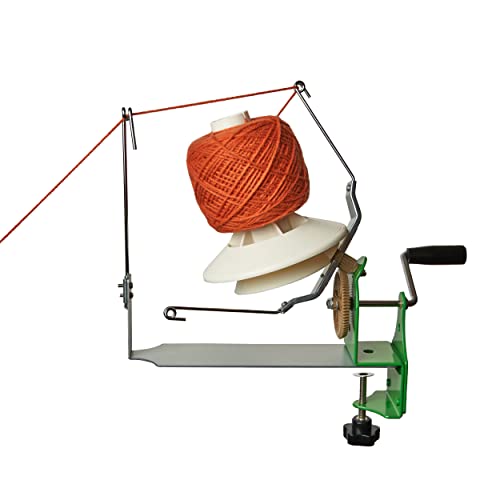
This winder is built for the knitter who demands precision and professional-grade construction. It features a unique design that minimizes the tension on the yarn, which is crucial when working with delicate, high-twist luxury fibers like silk or cashmere.
The heavy-duty nature of this tool means it stays firmly planted on your table, even when winding at high speeds. It is designed to last a lifetime, making it an excellent choice for someone who views knitting as a long-term craft rather than a passing hobby.
If you are tired of your winder shifting or wobbling while you work, the weight of this unit is a welcome relief. It is a premium tool that rewards the user with consistent, perfectly tensioned cakes every time.
U-nitt Metal Yarn Ball Winder for Stability
Stability is the most underrated feature of a good yarn winder, and the U-nitt excels in this department. Its metal construction provides a sturdy foundation that prevents the annoying "walking" effect that often happens with lighter plastic winders.
The smooth operation of the winding arm ensures that your yarn flows evenly without sudden jerks. This is vital when working with fragile, single-ply yarns that are prone to snapping if the tension becomes uneven or erratic during the winding process.
This winder is a perfect balance of industrial durability and user-friendly design. It is a reliable choice for anyone who wants a tool that feels solid and secure while they are prepping their next project.
ChiaoGoo Hand-Operated Yarn Ball Winder
ChiaoGoo is a brand synonymous with quality needles, and their yarn winder carries that same reputation for thoughtful engineering. It is a compact, reliable option that fits easily into a project bag or a small craft nook.
The hand-crank is ergonomically designed, making it comfortable to use even if you are winding several skeins in a row. It handles a wide range of yarn weights, from delicate lace to sturdy worsted, with impressive consistency.
If you appreciate a tool that is simple, functional, and well-made, this is a top contender. It doesn’t have unnecessary bells and whistles, just a smooth, reliable mechanism that gets the job done efficiently.
Amish Style Wooden Yarn Swift and Winder
While the winder creates the cake, the swift is the partner that holds the hank. An Amish-style wooden swift is a beautiful, functional piece of equipment that is far gentler on yarn than holding it over your knees or the back of a chair.
Using a wooden swift prevents the yarn from twisting, which is a common cause of tangles during the winding process. The wood is smooth and snag-free, ensuring that even your most delicate hand-dyed yarns remain in perfect condition.

Pairing a high-quality swift with your winder is the best way to protect your fiber investment. It turns a tedious chore into a smooth, rhythmic experience that allows you to focus on the beauty of the yarn itself.
How to Choose the Right Yarn Winder for You
- Volume: If you wind yarn daily, opt for metal gears. If it’s occasional, plastic is fine.
- Yarn Weight: Jumbo winders are necessary for bulky yarns; standard sizes suffice for fingering or sport.
- Space: Consider your table thickness and available surface area before buying a heavy-duty model.
- Ease of Use: Look for models with simple tension guides to prevent tangles.
Manual vs. Electric Winders: Pros and Cons

Manual winders offer total control and a tactile connection to your yarn, allowing you to sense if a snag is forming. Electric winders, while faster, can sometimes be too aggressive, potentially stretching out elastic fibers like wool or nylon blends.

If you are working with luxury fibers, I almost always recommend a manual winder. The speed of an electric winder can lead to "over-stretching" the yarn, which can negatively impact your gauge once you start knitting.
For those with limited hand mobility, electric winders can be a lifesaver, but always monitor them closely. Regardless of the power source, the goal is always to keep the yarn tension loose and consistent.
Essential Maintenance Tips for Your Winder
A little care goes a long way in ensuring your winder lasts for years. Periodically check the gears for stray bits of fiber or dust that can cause the mechanism to seize up.
If your winder feels sluggish, a tiny drop of sewing machine oil on the moving parts can work wonders. Always store your winder in a dry place to prevent any metal parts from oxidizing or wooden components from warping.
Finally, never force the crank if you feel resistance; stop and check for a knot in the yarn. Treat your tools with the same care you treat your yarn, and they will serve your knitting practice for decades.
Choosing the right yarn winder is about balancing your specific project needs with the longevity you expect from your tools. Whether you opt for a budget-friendly plastic model or a heavy-duty metal workhorse, the focus should always be on smooth, tension-free winding. Remember that a well-wound cake is the first step toward a successful and enjoyable knitting project. Happy winding, and may your yarn always flow freely from the center of your cakes.