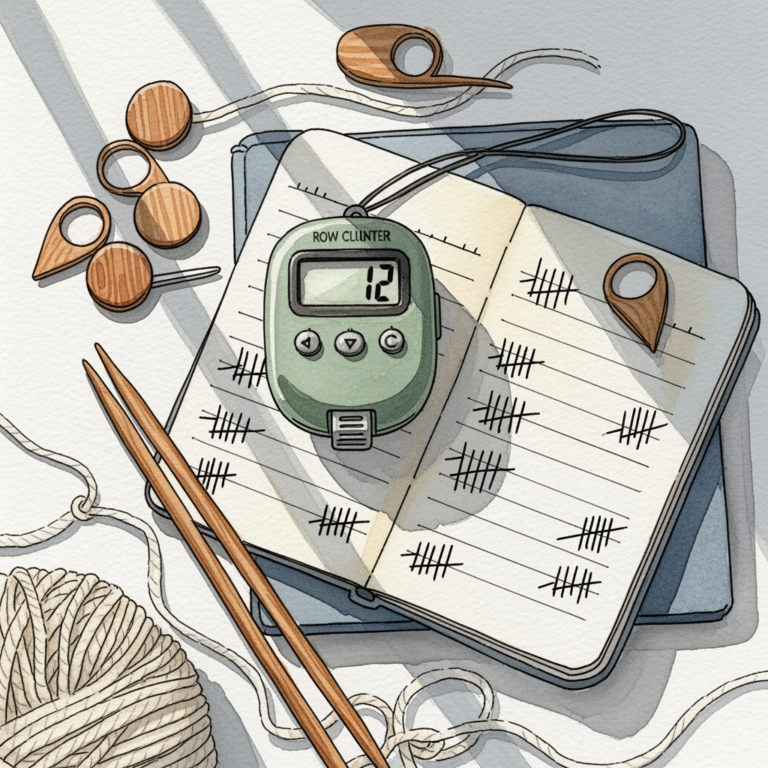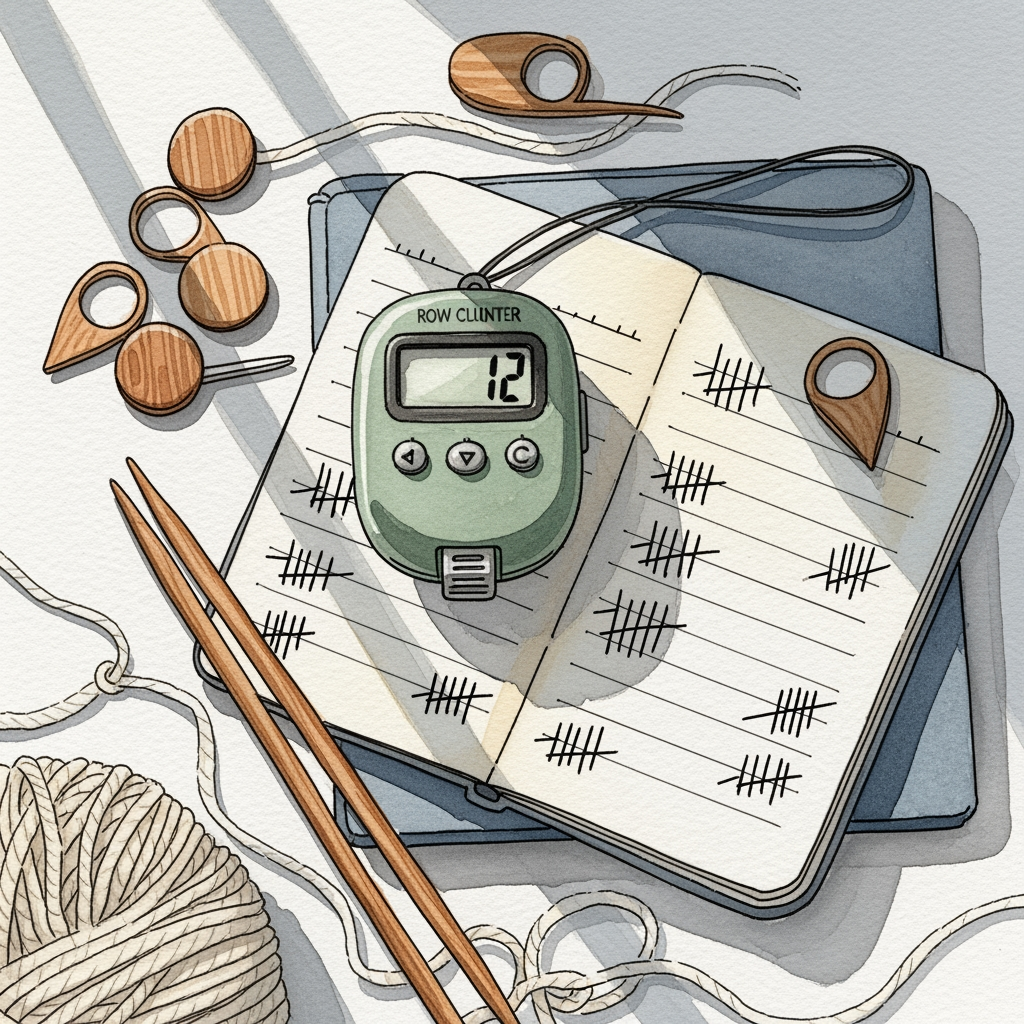
7 Best Row Counters For Wearable Garment Construction
Track your progress effortlessly with our top 7 row counters. Discover the best tools for wearable garment construction to ensure accuracy in every stitch.
Nothing ruins the rhythm of a complex garment project quite like losing your place in a lace repeat or a structural decrease. Whether you are working on a simple top-down sweater or an intricate cabled cardigan, keeping an accurate tally is the difference between a perfect fit and a frogged disaster. These seven tools and strategies offer reliable ways to maintain your row count while keeping your focus on the yarn. Finding the right tracking method is a personal journey that depends as much on your knitting style as it does on the project at hand.
Knitter’s Pride Mindful Collection Row Counter
This elegant, pendant-style counter is a favorite for those who appreciate a tactile experience without the bulk of a mechanical device. It hangs conveniently around your neck, keeping the mechanism within reach but out of the way of your working yarn.
The beauty of this tool lies in its simplicity and the high-quality finish that characterizes the Mindful collection. It is particularly useful for knitters who find that clicking a plastic button interrupts their flow or causes hand fatigue during long sessions.
Because it is a manual dial, you never have to worry about battery life or accidental resets. It is a reliable, analog solution for the purist who wants to keep their focus entirely on the stitch work.
Clover Kacha-Kacha Knitting Row Counter Tool


The "Kacha-Kacha" earns its name from the satisfying, audible click it makes every time you advance the count. This mechanical counter is designed to slide onto your needle, making it an integrated part of your knitting setup.
For knitters working on circular needles, this tool is excellent because it stays right where the action is. You simply tap the top button at the end of a row, and the internal gears advance with a precise, mechanical snap.
However, be aware that this tool can add a bit of weight to your needle tip, which might be noticeable if you are working with lightweight bamboo or thin carbon fiber needles. It is best suited for projects where you are using needles size US 2 (2.75mm) and above.

Cocoknits Magnetic Concrete Row Counter Set
Cocoknits has mastered the art of the "knitting workspace," and this magnetic set is no exception. It consists of a base and a series of magnetic rings that you can move as you progress through your pattern.
This system is brilliant for complex garments because you can use multiple rings to track different parts of a pattern simultaneously. For example, you can track your total row count with one ring and your lace repeat with another.
Because the components are magnetic, they play nicely with other Cocoknits accessories, creating a cohesive system for your project bag. It is an investment piece, but the durability of the concrete and the utility of the magnetic system make it a long-term staple.
Susan Bates Digital Knitting Row Counter Ring

If you prefer a digital readout but don’t want to carry a separate device, the ring-style counter is a clever compromise. You wear it on your index finger, allowing you to click the button with your thumb as you finish a row.
This is arguably the most ergonomic option for knitters who struggle with joint pain or repetitive strain. Because the counter is always on your hand, you don’t have to reach for a table or look away from your knitting to update your count.
The primary trade-off is the screen size, which can be difficult to read in low light. It is a fantastic tool for casual knitting, but double-check your count occasionally to ensure you haven’t accidentally clicked the button while adjusting your grip.
Boye Ergonomic Plastic Click Row Counter Set
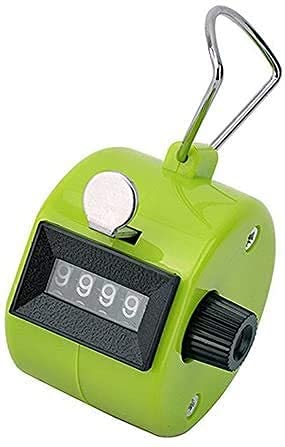
These classic clickers are the workhorses of the knitting world, often found in the kits of experienced makers for a reason. They come in two sizes to accommodate different needle diameters, ensuring a snug fit that won’t slide around while you work.
The tactile "click" is unmistakable, providing instant feedback that you’ve successfully logged your row. These are perfect for beginners who need a straightforward, no-nonsense tool that doesn’t require a learning curve or batteries.
One minor drawback is that the plastic can occasionally become loose on very slick metal needles. If you find yours sliding, a small piece of painter’s tape wrapped around the needle under the counter will provide the necessary grip.
Beadsmith Mechanical Finger Row Counter Tool
Often marketed as a tally counter for various crafts, this mechanical finger tool is incredibly robust and reliable. It features a large, easy-to-press button and a clear display that is visible even from across the room.
If you are a knitter who tends to drop or misplace small tools, the finger strap on this device is a lifesaver. It stays securely attached to your hand, meaning you don’t have to scramble to find your counter when you’re in the middle of a tricky decrease row.
The mechanism is entirely mechanical, making it virtually indestructible. It is a great choice for long-term projects like large blankets or heavy wool coats where you want a counter that can withstand months of frequent use.
Row Counter App: Digital Tracking Alternative
In the era of smartphones, many knitters have moved their tracking to the digital realm. Apps allow you to store multiple projects, attach PDF patterns, and even set up row-based reminders for increases or decreases.
The biggest advantage here is the ability to keep all your project notes in one place. You can record your gauge, the needle size you used, and any modifications you made, all linked to your current row count.
The downside is the "screen distraction" factor; if you find yourself checking notifications instead of your stitches, a physical counter might be better for your focus. Always keep a paper backup of your row count if you are working on a high-stakes garment.

Why Accurate Row Counting Matters for Garments
When you are knitting a garment, row count dictates the structural integrity of the piece. Missing a single row in a sleeve or a bodice can result in a garment that is either too short or misaligned with its matching half.
- Symmetry: Essential for matching sleeves and fronts.
- Pattern Repeats: Critical for lace and cable alignment.
- Fit: Ensures the length of the torso and armholes matches the schematic.
If you are working with high-twist wool or expensive silk, you don’t want to have to rip back hours of work because of a simple miscount. Consistent tracking allows you to "set it and forget it," letting you enjoy the meditative process of knitting without the underlying anxiety of losing your place.
Manual vs Digital: Choosing Your Tracking Style
Choosing between manual and digital often comes down to your personal workflow and how much you want to interact with technology while you knit. Manual counters offer a tactile connection to the work, while digital options provide data-rich environments for complex patterns.
If you are someone who enjoys the "analog" feel of wool, wood needles, and quiet time, a manual clicker or a simple magnetic counter will likely feel more natural. These tools disappear into your process, becoming an extension of your hands rather than a separate tech task.
Conversely, if you are a "data-driven" knitter who enjoys tracking every detail of your projects, a digital app is a powerful tool. It eliminates the risk of accidentally bumping a dial and provides a permanent record of your progress.
Best Practices for Tracking Complex Lace Rows
Lace knitting is unforgiving; one missed yarn-over or an extra row can ruin the entire motif. To stay on track, I recommend using a two-tiered counting system: one for the total row count of the garment and a separate one for the specific lace repeat.
- Use stitch markers: Place them between every repeat to visually verify your count.
- The "Check-in" habit: Count your stitches at the end of every repeat to ensure your row count matches your stitch count.
- Paper notes: Keep a small sticky note attached to your pattern for "milestone" rows, like when you transition from a chart to stockinette.
Never rely solely on your memory, even if the repeat seems simple. Even the most seasoned knitters have been humbled by a "simple" lace shawl that required frogging because of a single misplaced row.
Ultimately, the best row counter is the one that you actually remember to use consistently. Whether you prefer the satisfying click of a mechanical device or the convenience of a smartphone app, the goal remains the same: to support your creativity without adding stress. Experiment with a few different styles until you find the one that feels like a natural part of your knitting rhythm. Happy stitching, and may your rows always be counted correctly.