6 Best Tension Thimbles For Stranded Knitting
Master stranded knitting with ease. We review the six best tension thimbles to improve your yarn control, ensure even stitches, and reduce hand fatigue today.
Stranded colorwork is a beautiful craft, but managing two strands of yarn simultaneously often leads to tangled fingers and uneven tension. Tension thimbles act as a mechanical guide, keeping your yarns separated and consistent throughout your project. By offloading the work of tensioning from your fingers to a tool, you can significantly increase your knitting speed. Here is a breakdown of the best tools to help you achieve professional-looking floats and even fabric.
Clover Adjustable Yarn Guide: Best Overall Choice
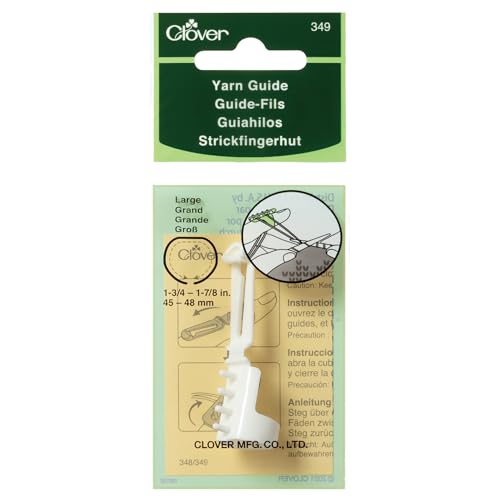

The Clover Adjustable Yarn Guide is a staple in many knitting bags for a reason. Its simple, open-ring design allows it to sit comfortably on the finger while providing two distinct loops for your yarn.
Because it is made of lightweight plastic, it doesn’t add unnecessary bulk to your hand during long sessions. The adjustability is the real winner here, as it can be bent slightly to fit different finger sizes without snapping.
If you are working on a complex sweater with two colors of worsted weight wool, this guide keeps the strands perfectly parallel. It’s a reliable, no-nonsense tool that bridges the gap between novice and expert.
Pony Metal Yarn Guide: Best for Beginners to Use

The Pony Metal Yarn Guide features a classic, sturdy design that feels substantial on the finger. It uses a simple metal coil or loop system that provides a firm grip on the yarn, which is excellent for those still developing their muscle memory.
Beginners often struggle with "losing" their tension when moving from a knit stitch to a purl stitch in colorwork. The rigid structure of this metal guide helps keep the yarn in place even if your hands are a bit shaky or your grip is inconsistent.
While it lacks the adjustability of plastic models, its durability is unmatched. It is a fantastic entry point for anyone intimidated by the idea of managing multiple strands for the first time.
Prym Ergonomic Knitting Thimble: Best for Comfort
The Prym Ergonomic thimble is designed with the anatomy of the human hand in mind. Unlike traditional metal loops that can dig into the skin, this tool features a soft, flexible material that conforms to your finger shape.

If you are knitting a large project like a colorwork blanket, comfort becomes just as important as tension control. The soft-touch surface prevents the irritation that often comes from hours of repetitive motion.
This thimble is particularly effective for those with sensitive skin or joint stiffness. It proves that you don’t have to sacrifice your physical comfort to achieve a high-quality, even gauge.
Cocoknits Leather Tension Ring: Best for Style
The Cocoknits Leather Tension Ring offers a sophisticated alternative to the industrial look of plastic or metal guides. It uses a soft leather band that wraps around the finger, securing a small metal loop for the yarn.
This tool is perfect for the knitter who values both aesthetics and functionality. Because the leather is breathable, it doesn’t cause the "sweaty finger" effect that some plastic thimbles create during long knitting sessions.
It is an investment piece, but it provides a tactile experience that feels more natural than rigid tools. If you find metal guides distracting, the softness of the leather might be exactly what you need to focus on your pattern.
Addi Knitting Thimble: Best for Two-Color Work

The Addi Knitting Thimble is engineered specifically for those who alternate colors frequently. It features multiple eyelets that keep your two strands of yarn separated by a physical barrier, preventing them from twisting around each other.
This is a game-changer when working with high-twist yarns that tend to "grab" or tangle easily. By keeping the yarns isolated, you eliminate the need to manually untwist your balls of yarn every few rows.
It is a slightly more technical tool, requiring a bit of practice to thread correctly. However, once you master the setup, your colorwork speed will increase exponentially.
Norwegian Knitting Thimble: Best for Traditional
The Norwegian thimble is a classic design that has been used for generations to maintain tension in stranded work. It typically features a metal plate with several small loops, allowing you to feed multiple colors simultaneously.
This tool is best suited for those who use the "picking" method of stranded knitting. It mimics the natural tensioning that traditional Norwegian knitters achieve through hand placement alone.
It is a fantastic choice for working with rustic, non-superwash wools that have a bit of "tooth." The metal loops provide the necessary friction to keep those slightly grippy fibers moving smoothly.
Why Tension Thimbles Improve Your Colorwork Flow
Colorwork requires two distinct tensions: one for the background color and one for the contrast color. When you hold both yarns in your fingers, your brain has to constantly adjust the pressure to keep the floats—the loose strands on the back of the work—at the correct length.
A tension thimble automates this process. By providing a consistent anchor point, it ensures that your floats are neither too tight (which puckers the fabric) nor too loose (which creates snags).
This consistency is the secret to a professional finish. When your tension is uniform, your blocking process becomes much easier, as the stitches are already aligned and even.
How to Properly Fit Your Thimble for Consistent Knit
A thimble should feel like a natural extension of your finger, not a restrictive shackle. If it’s too tight, you will experience hand fatigue; if it’s too loose, it will slide around and interfere with your needle movement.
Most adjustable thimbles should be fitted so that they sit comfortably at the base of the nail bed. Test the fit by knitting a few rows of stockinette; if you find yourself constantly pushing the thimble back into place, it is likely too large.
Remember that your fingers can swell slightly during the day. Don’t be afraid to adjust your thimble as you go to ensure you maintain a comfortable, relaxed grip on your needles.
Troubleshooting Common Tension Thimble Fit Issues
If you find that the yarn is pulling too hard through the thimble, you may be threading it through too many loops. Try reducing the path the yarn takes to see if that eases the tension.
Conversely, if the yarn feels too loose, you might need to wrap it around an additional loop on the thimble. The goal is to create just enough resistance so that the yarn doesn’t slacken, but not so much that it causes drag.
Don’t ignore the "clicking" sound that some metal thimbles make against your needles. If it’s distracting, consider switching to a plastic or leather-based model for a quieter knitting experience.
Expert Tips for Mastering Stranded Colorwork Speed
The secret to speed in colorwork isn’t just the tool; it’s the rhythm. Keep your hands as close to the needle tips as possible to minimize the distance the yarn has to travel.
Always ensure your floats are caught correctly on the back, especially if you are carrying a color for more than three stitches. A tension thimble helps here by keeping the yarn at a consistent length, making it easier to "catch" the float without pulling the fabric tight.
Finally, practice makes perfect. Start with a simple two-color cowl before jumping into a complex Fair Isle sweater to get used to the feel of your chosen thimble.
Investing in a tension thimble is one of the most effective ways to elevate your stranded knitting from a struggle to a pleasure. Whether you prefer the classic utility of a Norwegian thimble or the ergonomic comfort of a modern design, the right tool will help you find your flow. Experiment with these options, find what feels best for your hands, and enjoy the process of watching your intricate patterns come to life. Happy knitting!