6 Best Craft Glue Sticks For End Finishing Reviewed
Discover the top 6 craft glue sticks for perfect end finishing. Our review highlights performance, bond strength, and ease of use for your creative projects.
Finishing yarn ends is the final hurdle that separates a handmade garment from a professional-looking heirloom. While traditional weaving-in methods are standard, there are moments when a strategic dab of adhesive provides the security that a loose end simply cannot guarantee. These six glue sticks offer varying levels of hold and flexibility, allowing you to secure your work without compromising the drape of your fabric. Choosing the right tool depends entirely on your fiber content and the specific tension of your stitch pattern.
Elmer’s CraftBond: Best Overall for Fiber Ends
Elmer’s CraftBond is a workhorse in the fiber arts studio because it balances tackiness with a forgiving drying time. When you are working with slippery synthetic yarns or high-twist cottons that refuse to stay tucked, this adhesive provides a reliable grip without becoming brittle.
It is particularly effective for securing the "tails" of stranded colorwork where weaving might create too much bulk on the wrong side. Because it dries relatively clear, you don’t have to worry about unsightly white crusts appearing on your finished projects.
The bottom line for this product is versatility. If you need a general-purpose adhesive that handles a wide range of weights—from lace-weight mohair to worsted-weight wool—this is the stick to keep in your notions bag.
UHU Stic Permanent: Best for Precision Work


Precision is everything when you are finishing a delicate lace shawl or a complex intarsia piece. The UHU Stic is renowned for its smooth, non-clumping application, which allows you to apply tiny amounts of glue exactly where the yarn tail meets the fabric.
Unlike some thicker adhesives, UHU doesn’t "glob" onto the fibers. This is crucial when working with fine gauge knits where extra weight or stiffness would be immediately noticeable to the wearer.
If you are a perfectionist who hates the look of bulky, woven-in ends, this stick is your best friend. It offers a firm hold that feels virtually invisible once the garment is blocked and dried.
Scotch Permanent Glue Stick: Best for Durability

If you are finishing a high-traffic item like a pair of socks or a heavy winter sweater, you need an adhesive that can withstand repeated friction and washing. The Scotch Permanent formula is designed to bond tightly, ensuring that ends don’t pop out after the first trip through the laundry.
This stick is noticeably stronger than standard school glue, making it ideal for fibers that have a natural "bounce" or memory, such as tightly twisted wool. It holds the yarn end in place even when the fabric is under tension.
Just be aware that because this bond is so strong, it is less forgiving if you make a mistake. Use it sparingly, as a little goes a long way toward keeping your ends locked down for the life of the garment.
Avery Permanent Glue Stick: Best for Quick Sets

Sometimes you are on a deadline for a gift and need your finishing work to dry almost instantly. The Avery Permanent stick is favored for its fast-acting formula, which grabs onto textile fibers almost on contact.
This is a lifesaver when you are finishing a project with an unruly, springy yarn that wants to uncoil the moment you let go. The rapid set time means you can move on to the next tail without waiting for the glue to cure.
It is a great choice for the impatient maker, but keep in mind that its speed requires accuracy. Ensure your tail is positioned exactly where you want it before the adhesive makes contact with the fabric.
Tombow Mono Glue Stick: Best for Delicate Knits
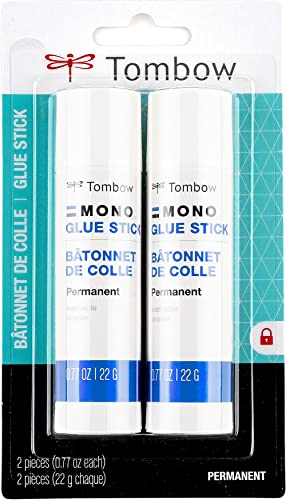
When working with fine-gauge luxury fibers like silk, alpaca, or cashmere, you need an adhesive that won’t ruin the hand of the fabric. The Tombow Mono stick is known for its high-quality, non-acidic formula that is gentle on delicate yarns.
It provides a secure hold without creating a hard, plastic-like feel. This is essential for garments that drape against the skin, where any stiffness would cause irritation or ruin the flow of the silhouette.
Think of this as the "surgical" option for your most precious projects. It secures the end without changing the character of the fiber, preserving the soft, luxurious feel you worked so hard to create.
Gorilla Glue Craft Stick: Best for Heavy Fibers
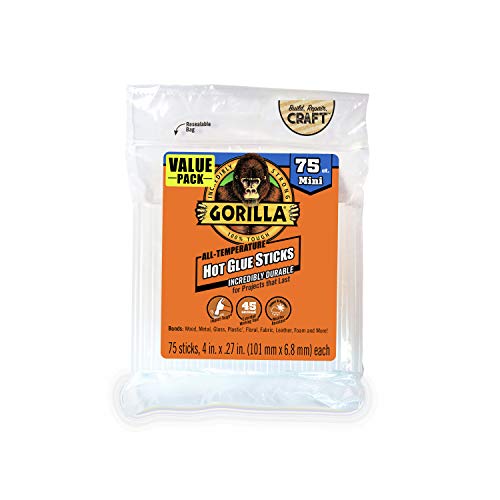
For heavy-duty projects like felted bags, home decor items, or bulky-weight wool coats, you need an adhesive with serious structural integrity. The Gorilla Glue Craft Stick is formulated to handle the weight and texture of thicker, more rugged fibers.
It excels at bonding fibers that are traditionally difficult to secure, such as thick plied wools or even synthetic blends that resist standard adhesives. If your project is going to see heavy use, this is the most robust option available.
Because it is so strong, use it strictly for the ends that are hidden on the wrong side of the work. It is an industrial-strength solution for when your yarn ends need to stay put through thick and thin.
Why Use Glue Sticks for Finishing Yarn Ends?
We are taught from day one that weaving in ends is the only "proper" way to finish a garment. However, in modern knitting, glue sticks provide a clean, low-profile alternative that prevents the "lumpy" look that comes from thick yarn tails.
Adhesive finishing is particularly useful for:
- Stranded Colorwork: Where there are too many ends to weave without creating bulk.
- Slippery Fibers: Such as bamboo or silk, which tend to slide out of woven-in spots.
- Finishing Touches: Securing the final tail of a bind-off row that won’t lay flat.
It is not a replacement for good technique, but rather a tool to enhance it. When used correctly, a tiny bit of glue can make your finishing look as polished as a machine-knit edge.
How to Safely Apply Adhesive to Textile Fibers
The secret to using glue on knits is restraint. You never want to apply the glue directly to the fabric; instead, apply it to the tail of the yarn, then press that tail against the back of your work.
Follow these steps for a clean finish:
- Trim the tail: Leave about half an inch of yarn.
- Apply sparingly: Use a light touch to coat only the yarn, not the surrounding stitches.
- Press and hold: Apply firm, even pressure for 10-15 seconds to ensure the bond sets.
Always test your glue on a small swatch first, especially if you are using a hand-dyed yarn that might react to the adhesive’s pH. This ensures your hard work remains pristine.
Avoiding Stiff Residue on Your Finished Knits
The biggest fear knitters have about glue is that it will leave a hard, crusty spot on their beautiful work. This usually happens when too much adhesive is used or when the glue isn’t fully absorbed by the fibers.
To avoid this, always choose a glue that dries clear and flexible. If you find a spot feels too stiff, a quick steam-blocking session can often soften the adhesive enough to restore the natural drape of the fabric.
Remember, the goal is to secure the end, not to saturate the fabric. If you use the smallest amount possible, you will find that the bond is invisible to both the eye and the touch.
Frequently Asked Questions About Fiber Adhesives
Will the glue come out in the wash? Most permanent glue sticks are designed to be water-resistant once fully cured, but they are not always waterproof. If you plan on washing your garment frequently, choose a high-durability option like the Scotch Permanent stick.
Can I use glue on wool? Absolutely. Glue works exceptionally well on wool because the fibers are naturally porous and absorbent, allowing the adhesive to bond deeply with the yarn.
What if I make a mistake? If you apply too much or place the glue in the wrong spot, most craft adhesives can be softened with a bit of warm water or steam. Gently work the fibers apart while they are damp to remove the excess.
Finishing your project with a touch of adhesive is a practical skill that can elevate the longevity and appearance of your hand-knits. By choosing the right stick for your fiber type and applying it with precision, you ensure that your hard work stays secure through years of wear. Remember that the best tools are the ones that work in harmony with your knitting style, so don’t be afraid to experiment on a swatch before tackling your masterpiece. With these tools in your kit, you can confidently secure every end and wear your creations with pride.