6 Best Ball Winders For Precision Tension To Try
Achieve perfect tension with our top 6 ball winder picks. This guide evaluates precision, durability, and ease of use to elevate your yarn crafting projects.
Transforming a tangled, unruly hank of yarn into a neat, center-pull cake is one of the most satisfying rituals in a knitter’s life. Precision tension is the secret ingredient that prevents your yarn from stretching out or collapsing during the winding process. Choosing the right tool ensures your fiber remains lofty and ready for your next project. Here are six top-tier winders that provide the control and consistency every serious maker needs.
Stanwood Needlecraft Large Metal Ball Winder


This winder is the gold standard for those who regularly deal with heavy-weight yarns or large yardage. Its all-metal gear construction provides a level of durability that plastic models simply cannot match, ensuring the gears won’t strip under the resistance of a dense wool skein.
Because of its heavy-duty build, it handles the weight of a 10-ounce hank without wobbling or losing its grip on the table. If you are winding high-twist merino or delicate silk blends, the smooth rotation helps maintain consistent tension, preventing the yarn from snapping or becoming over-stretched.
Ultimately, this is an investment piece for the dedicated knitter. If you find yourself winding yarn at least once a week, the metal gears will save you from the frustration of replacing cheaper, plastic-geared units every few years.
Knit Picks Yarn Ball Winder: Best for Beginners
If you are just starting your journey into the world of fiber arts, you don’t need a professional-grade machine to get professional results. This winder is incredibly intuitive, making it the perfect entry point for someone who has never turned a handle before.
The design is straightforward, featuring a simple setup that clamps easily to most kitchen tables or craft desks. While it is made of plastic, it is surprisingly robust for light to medium-weight yarns, such as standard worsted or DK weight wool.
Don’t let the price point fool you into thinking it lacks utility. It is a fantastic tool for learning the mechanics of winding, provided you don’t overload it with heavy, bulky-weight yarns that might strain the plastic spindle.
Lacis Jumbo Yarn Ball Winder for Heavy Skeins

When you are working with massive, hand-dyed skeins of bulky or super-bulky yarn, standard winders often struggle to hold the volume. The Lacis Jumbo is specifically engineered to accommodate these larger quantities, preventing the "ball-on-ball" effect where the yarn slips off the top of the cake.
The extra-large capacity allows you to wind an entire 200-gram skein without having to stop and restart halfway through. This continuity is vital for maintaining even tension, as constant stopping and starting can create variations in how the yarn "remembers" its stretch.
This winder is a lifesaver for knitters who love chunky sweaters or heavy blankets. If your stash is dominated by heavy fibers, this is the most practical choice to keep your yarn organized and accessible.
Nancy’s Knit Knacks Heavy Duty Electric Winder
For the knitter who produces large volumes of yarn—perhaps for a small business or a never-ending series of sweaters—manual winding can become a literal pain in the wrist. This electric winder removes the physical effort, allowing you to focus entirely on guiding the yarn.
The beauty of an electric model is the consistent speed. Manual winding often involves accidental surges in speed, which can cause tension spikes; an electric motor ensures that every inch of yarn is wound with the exact same amount of pull.
However, remember that with power comes the need for vigilance. You must still guide the yarn by hand to ensure it feeds smoothly from the swift, as an electric winder will not stop itself if a snag occurs.
U-nitt Hand-Operated Metal Yarn Ball Winder
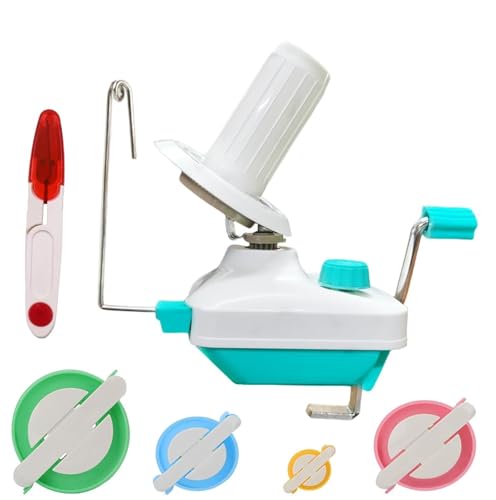
The U-nitt is a superb middle-ground option, offering the sturdiness of a metal frame without the premium price tag of high-end industrial models. Its weight provides a stable base, which is crucial for preventing the winder from "walking" across your table while you turn the handle.
One of its standout features is the quiet operation. If you enjoy winding your yarn while listening to a podcast or watching a movie, you will appreciate that this winder doesn’t emit the high-pitched grinding noise common in cheaper plastic units.
This is a workhorse for the intermediate knitter. It handles a wide range of weights, from fine lace-weight mohair to sturdy worsted wool, with equal reliability.
Cowgirl Yarn Ball Winder: Compact and Reliable
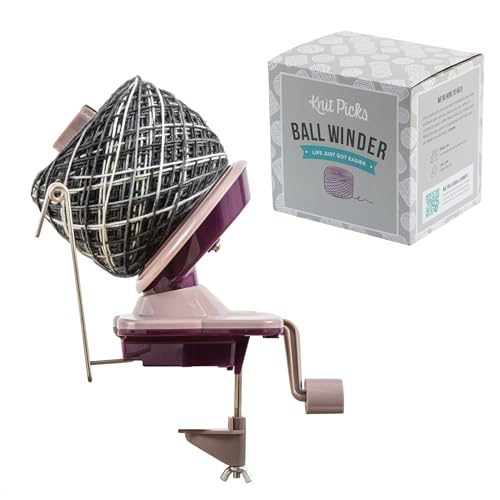
Sometimes, you need a tool that can be tucked away in a project bag or a small desk drawer. The Cowgirl winder is designed for the minimalist knitter who values portability without sacrificing the ability to create a tidy, center-pull cake.
Despite its compact footprint, it is remarkably stable and easy to operate. It is ideal for winding smaller amounts of yarn, such as leftovers from a colorwork project or a single skein of sock yarn, where a jumbo winder would be overkill.
If you travel to knitting retreats or meetups, this is an excellent companion. It provides the perfect balance of convenience and performance for the knitter on the go.
How to Achieve Perfect Tension During Winding
Perfect tension starts long before the yarn hits the winder; it begins with the swift. Always use a yarn swift to hold your hank, as trying to wind from a pile or a chair back is the fastest way to introduce uneven tension and tangles.
Hold the yarn gently between your fingers as you feed it into the winder. You are looking for a light, constant resistance—not a death grip. If you pull too tight, you will stretch the fibers, which can ruin the gauge of your finished garment.
- For delicate fibers (silk, alpaca): Use a very light touch; these fibers have little "memory" and will stay stretched if wound too tightly.
- For sturdy wools: You can apply slightly more tension, but always aim for a cake that is firm, not rock-hard.
- The "Squeeze Test": A properly wound cake should have a slight "give" when pressed; if it feels like a solid brick, back off the tension.
Essential Tips for Maintaining Your Yarn Winder
A yarn winder is a mechanical device, and like any tool, it requires basic maintenance to keep it running smoothly. The most important step is to keep the gears free of dust and stray fiber bits, which can accumulate over time and cause the gears to jam.
Periodically check the clamp mechanism to ensure the rubber pads are still grippy. If the winder starts to slip on your table, a quick wipe of the rubber with a damp cloth can often restore its friction.
If your winder has exposed gears, a tiny drop of food-grade silicone lubricant can work wonders. Never use heavy machine oils, as they can migrate onto your yarn and cause staining or damage to delicate natural fibers.
Manual vs Electric: Which Winder Fits Your Needs
The choice between manual and electric usually comes down to the volume of yarn you process. If you wind an occasional skein, a manual winder is more than sufficient and offers a tactile connection to your materials.

However, if you are a frequent knitter who often works with hanks rather than balls, the electric winder is a game-changer. It prevents the fatigue that can lead to sloppy winding, which in turn leads to uneven tension in your knitting.
- Manual: Better for budget-conscious knitters, those with limited space, and those who enjoy the "zen" of manual winding.
- Electric: Ideal for high-volume knitters, those with repetitive strain concerns, or anyone who wants to save time and energy.
Troubleshooting Common Yarn Winding Challenges
If your yarn keeps slipping off the top of the cake, you are likely winding too fast or the yarn is too thick for the spindle size. Slow your pace and ensure the yarn is feeding at a consistent angle into the guide.
If the yarn is tangling at the base, check that there isn’t a stray loop caught on the bottom of the spindle. This often happens if the yarn is fed at an angle that is too steep, causing it to fall below the cone.
Finally, if the winder makes a clicking or grinding sound, stop immediately. Check for debris in the gears or a misaligned spindle; forcing a jammed winder is the quickest way to break the internal drive mechanism beyond repair.
Investing in a quality yarn winder is one of the most practical upgrades you can make for your knitting practice. By prioritizing consistent tension and proper maintenance, you ensure that every project starts on the right foot. Choose the tool that best fits your current volume and fiber preferences, and enjoy the peace of mind that comes with a perfectly prepped stash. Happy knitting!