6 Best Glass Eyes for Realistic Animal Sculptures
Discover the top 6 glass eyes for lifelike animal sculptures. This guide evaluates quality, realism, and durability to help you achieve professional results.
Adding glass eyes to a fiber sculpture is much like choosing the perfect button for a hand-knit cardigan; it is the final detail that breathes life into your work. Just as the wrong weight of yarn can ruin the drape of a sweater, the wrong eyes can leave a sculpture feeling flat or uncanny. Precision and material quality matter as much in needle felting or soft sculpting as they do in choosing the right wool blend for a complex lace pattern. This guide explores the best glass eye options to help you achieve that professional, soulful finish.
Adabele Glass Cabochon Eyes: Best Overall Choice


Adabele glass cabochons are the "workhorse" of the sculpting world, much like a reliable, worsted-weight Peruvian Highland wool. They offer a consistent, high-dome finish that reflects light beautifully without the overwhelming cost of bespoke artisan pieces.
Because they are flat-backed, they are incredibly versatile for different mounting methods. You can easily glue them into a needle-felted socket or wire-wrap them for a more secure, structural hold.
Think of these as your "go-to" stock for most projects. If you are making a standard woodland creature, these provide the clarity and depth needed to make the animal look alert rather than vacant.
GlassEyesOnline Realistic Iris: Top Premium Pick

When you are working on a high-end project—perhaps a commission piece or a show-stopper for an exhibit—the GlassEyesOnline range is the equivalent of reaching for a luxury hand-dyed silk-mohair blend. The iris detail is printed or painted with such microscopic precision that the eye looks like it could blink at any moment.
These eyes often feature a deeper "depth of field" effect, meaning the pupil seems to sit further back in the glass. This creates a mesmerizing, follow-me effect that is difficult to achieve with cheaper, flat-printed alternatives.
The trade-off, of course, is the price and the fragility. Treat these like you would a delicate, hand-knitted lace shawl; they require careful handling and precise placement to ensure you don’t ruin the finish during the setting process.
Hand-Painted 12mm Glass Eyes: Best for Detail
Hand-painted eyes provide that unique, slightly imperfect charm that mass-produced items simply cannot replicate. Much like the subtle variations in a hand-spun yarn, these eyes have a character that makes each sculpture feel like a one-of-a-kind art piece.
These are particularly useful for fantasy creatures or stylized animals where you want a specific, non-natural color palette. You can often find artists who will paint custom iris patterns that match your sculpture’s color scheme perfectly.
Be aware that because they are hand-painted, they may lack the uniform light-refracting quality of mass-produced glass. Always check the finish for any streaks or unevenness before committing them to your final sculpture.
Suncatcher Craft Eyes: Best for Fantasy Creatures

Suncatcher-style eyes are designed to catch and refract light, making them perfect for dragons, mystical beasts, or anything that requires a "magical" gaze. They function similarly to adding a metallic thread or a strand of Angelina fiber to your knitting; they add an element of sparkle that draws the eye immediately.
They are usually built with a faceted backing that bounces light through the colored glass. This adds a level of dimensionality that makes the eyes glow even in low-light conditions.
Don’t use these for realistic animals, as the refraction can look unnatural on a squirrel or a rabbit. Save them for projects where a bit of "otherworldly" flair is exactly what the pattern calls for.
Glazart Realistic Animal Eyes: Best for Taxidermy

Glazart eyes are engineered for the rigors of taxidermy, which makes them incredibly durable and anatomically accurate. They are the "superwash" of the glass eye world—tough, reliable, and designed to withstand environmental changes without clouding or yellowing.
These eyes often come with a wire loop or a stem, which is a game-changer if you are building an armature-based sculpture. It allows you to anchor the eye deep into the internal structure of the piece, preventing it from shifting over time.
While they might be overkill for a small, simple needle-felted project, they are essential for larger, heirloom-quality sculptures that will be handled frequently.
Darice Glass Doll Eyes: Best for Beginners
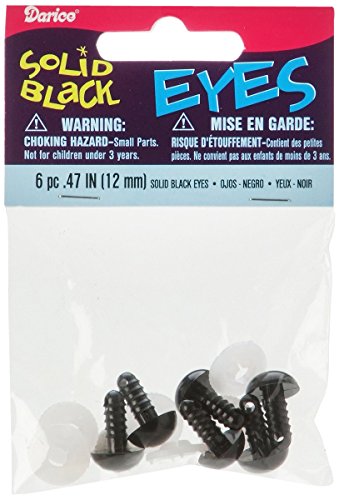
If you are just starting your journey into sculpting, Darice eyes are the perfect place to begin. They are the "acrylic yarn" of this craft—accessible, affordable, and forgiving if you happen to make a mistake during the assembly process.
They are widely available and come in a variety of standard sizes, making them easy to replace if you lose one. You won’t feel the same "creative anxiety" using these as you would with a $20 pair of premium glass eyes.
Once you have mastered your technique and feel confident in your mounting skills, you can graduate to the more expensive, higher-detail options. Think of this as your "practice gauge swatch" phase before you start the real sweater.
How to Select the Correct Eye Size for Sculptures
Selecting the right eye size is entirely about scale and proportion. If the eyes are too large, your creature will look like a caricature; too small, and it will look like a taxidermy disaster from a Victorian museum.
- Measure the socket: Always measure the distance between your sculpture’s nose and the brow line.
- Consider the species: Predators typically have forward-facing, smaller eyes, while prey animals have larger, side-set eyes.
- The "Rule of Thumb": Start by holding a few different sizes against your sculpture before you finalize the socket.
Just as you would check your gauge before starting a sleeve, check your eye size against the face before you glue anything down. A few millimeters can make the difference between a cute fox and a terrifying one.
Glass vs. Plastic Eyes: Which Material to Choose
Glass eyes are almost always superior for professional-looking sculptures because they offer a depth and clarity that plastic simply cannot mimic. Plastic eyes tend to be flat and dull, much like the difference between a synthetic acrylic fiber and a high-quality wool.
However, plastic eyes are significantly lighter. If you are making a delicate, lightweight needle-felted ornament that needs to hang from a tree branch, the weight of glass might actually cause the sculpture to sag.
- Glass: Use for display pieces, realistic animals, and high-end art.
- Plastic: Use for toys, children’s items, or heavy-duty outdoor decorations.
Choose your material based on the final destination of the piece. If it’s going to be handled by a child, plastic is the safer, more practical choice.
Proper Techniques for Setting Eyes in Clay Bases
Setting eyes into a clay base requires a bit of patience and the right adhesive. You want a bond that is strong but doesn’t "cloud" the glass or leave a messy residue, much like choosing the right invisible thread for a delicate seam.
Use a clear-drying, industrial-strength glue like E6000. Apply a tiny amount to the back of the eye, then press it firmly into your pre-shaped socket, holding it in place until it sets.
If you are working with air-dry clay, remember that the clay will shrink as it dries. This can sometimes cause the eye to pop out or leave a gap; always re-check the fit once the clay has fully cured.
Common Mistakes When Positioning Animal Sculptures
The most common mistake is placing the eyes too high or too far apart. In nature, eyes are rarely perfectly symmetrical, but if they are off-kilter, the animal will look "wrong" to the human eye.
Another mistake is failing to account for the "eyelids." If you simply glue an eye onto a flat surface, it will look like a sticker. You must build up a small ridge of clay or wool around the eye to give it a realistic, recessed appearance.
Finally, avoid the "staring" problem. Even a slight tilt of the eye can change the emotion of the animal from curious to aggressive. Always take a step back and look at your sculpture from a distance—just as you would check the silhouette of a garment on a dress form—to ensure the gaze feels natural.
Choosing the right glass eyes is a vital step in the process of turning raw materials into a living, breathing character. Whether you choose the high-end clarity of GlassEyesOnline or the beginner-friendly accessibility of Darice, your choice should always serve the personality of the piece. Take your time with the placement, respect the weight of the materials, and remember that, just like in knitting, the most beautiful details are those that look effortless. Happy sculpting!