7 Best Yarn Storage Bins For Small Batches To Organize
Struggling with yarn clutter? Discover the 7 best storage bins for small batches. Organize your stash efficiently while keeping your favorite fibers accessible.
Every knitter eventually reaches a point where their yarn stash outgrows the bottom of a project bag and starts to clutter the living room. Managing small batches of hand-dyed wool or leftover sock yarn requires storage that balances protection with easy accessibility. Finding the right bins isn’t just about tidiness; it’s about ensuring your precious fiber stays in pristine condition for the next cast-on. These seven storage solutions offer the best ways to organize your stash while keeping your creative space functional.
Container Store Weathertight Totes: Best Overall
If you live in a climate with high humidity or are worried about basement storage, these totes are the gold standard. The silicone seal creates a gasket-like barrier that keeps moisture out, which is vital if you are storing expensive hand-dyed merino that is prone to felting if exposed to dampness.
The clear plastic allows you to see your color palettes without unstacking every bin. Because they are rigid and stackable, they protect your yarn from getting crushed, which helps maintain the loft and "bounce" of your wool.
The trade-off is the price point and the space they occupy. They are bulkier than soft bags, so they are best for long-term storage of your "stash yarn" rather than the project you are currently working on.
Sterilite 6-Quart Clear Latching Box: Best Value


These small, ubiquitous boxes are perfect for organizing yarn by weight or color family without breaking the bank. I often use these to separate my fingering-weight sock yarns from my worsted-weight sweater quantities.
The latching mechanism is secure enough to keep yarn clean, though it lacks the airtight seal of more expensive options. For most home environments, this is perfectly adequate for protecting your stash from dust and incidental pet hair.
They fit perfectly on standard bookshelves, turning an open shelf into an organized library of fiber. If you are on a budget, these allow you to buy in volume and keep your stash neatly labeled and sorted.
Iris USA Modular Stacking Bins: Best for Shelving

These bins are designed to be modular, meaning you can build a custom storage wall that fits your specific closet dimensions. The front-access design is a game-changer for knitters who want to grab a specific skein without moving a stack of other bins.
They are particularly useful for those "small batch" acquisitions where you want to keep your project yarn distinct from your overflow. The clear construction ensures you don’t lose track of a skein of mohair hidden at the bottom of a pile.
Be mindful that the hinges on modular bins can be a point of failure over many years of use. Treat them gently, and they will serve your stash well for a long time.
Creative Options Pro-Latch Box: Best for Notions
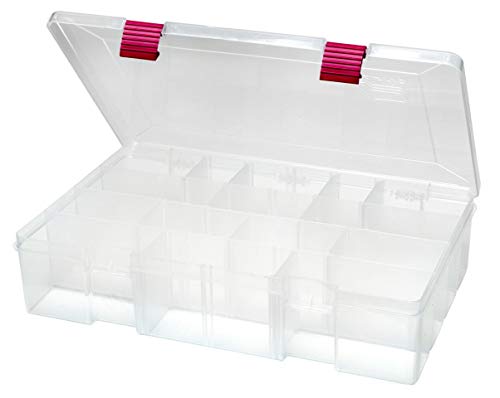
While these are technically craft organizers, they are indispensable for the "small bits" that accompany your yarn stash. I use these for stitch markers, tapestry needles, cable needles, and those tiny scraps of waste yarn used for holding stitches.
The adjustable dividers allow you to customize the space for different needle sizes or tool lengths. It prevents the frustration of searching through a bottomless project bag for a specific size of double-pointed needle.
Don’t try to cram full skeins of yarn into these, as the compartments are too small and will crush the fiber. Reserve these for your tool kit to keep your knitting process smooth and efficient.
Muji Polypropylene Storage Case: Best Minimalist

Muji cases offer a clean, uniform aesthetic that makes a stash look curated rather than chaotic. They are made from a semi-translucent, durable plastic that hides the visual noise of multicolored yarn labels while still allowing you to identify the contents.
Their depth is ideal for standard 100-gram skeins, allowing them to sit flat without being compressed. This is important for fibers like alpaca, which can lose its structure if packed too tightly for too long.
They are on the higher end of the price spectrum for plastic storage. However, if your stash is visible in your living space, the aesthetic appeal is often worth the investment.
Whitmor Clear Zippered Bags: Best for Visibility

When you need to keep yarn dust-free but don’t have the shelf space for rigid bins, these zippered bags are an excellent soft-storage solution. They are flexible, allowing you to squeeze them into odd corners or under a bed.
The clear vinyl makes it incredibly easy to see exactly what is inside at a glance. They are also lightweight, which is helpful if you frequently rotate your stash between rooms.
The main drawback is that they offer zero protection against crushing. If you stack heavy items on top of these, you risk losing the integrity of your yarn’s twist.
Honey-Can-Do Stackable Basket: Best Breathability

Natural fibers like wool and alpaca need to "breathe" to prevent odors and moisture buildup. These wire-mesh baskets allow for constant airflow, which is the best way to keep your yarn smelling fresh.
They stack securely, providing a modular way to organize your stash while keeping everything visible. They are perfect for a dedicated "knitting corner" where you want your yarn to be part of the room’s decor.
Because they are open, they do not protect against dust or moths. Use these for yarns you plan to use in the near future rather than for long-term archival storage.
Why Breathability Matters for Natural Yarn Fibers
Natural fibers are organic materials that respond to their environment. If you seal raw wool in an airtight bag while it is slightly damp, you invite mold and mildew, which can permanently damage the fiber’s protein structure.
Breathability allows the yarn to acclimate to the humidity levels of your home. However, this also means you must be diligent about keeping your storage area clean and free of dust.
If you choose breathable storage, ensure the room itself is climate-controlled. Avoid storing these baskets in damp basements or hot, stuffy attics where fluctuations can degrade the yarn.
How to Prevent Pest Damage in Your Yarn Stash
Moths and carpet beetles are the silent enemies of every knitter. These pests are attracted to animal fibers, particularly those that have been handled and might contain traces of skin oils or food residue.
Always store your yarn clean; never put a project back into storage if it has been handled during a meal or while wearing perfume. Consider using cedar blocks or lavender sachets within your bins to act as a natural deterrent.
If you suspect an infestation, isolate the affected bin immediately. Place the yarn in a sealed bag and put it in the freezer for at least 48 hours to kill any eggs or larvae.
Organizing Your Yarn by Weight and Color Schemes
The most efficient way to organize a stash is by weight—fingering, sport, DK, worsted, and bulky. This ensures that when you find a pattern, you know exactly which section of your stash to browse first.
Within those weight categories, sorting by color creates a visual inventory that helps you plan colorwork projects. Seeing your shades of blue next to each other might inspire a stranded colorwork yoke or a striped shawl.
Avoid over-organizing to the point where it becomes a chore to put yarn away. If it takes too much effort to store a skein, you will likely end up with a "to-be-filed" pile on your desk, defeating the purpose of your organization system.
Organizing your yarn stash is a deeply personal process that evolves as your collection and tastes change over the years. Whether you prioritize airtight protection, modular shelf space, or aesthetic visibility, the best system is the one that keeps your yarn safe and ready for your next project. Remember that your stash is meant to be used, so prioritize accessibility alongside safety. Happy knitting, and may your yarn always be tangle-free and ready for the needles.