7 Best Portable Lights For Knitting To Improve Focus
Enhance your knitting with our top 7 portable lights. Discover how adjustable, flicker-free illumination improves focus and reduces eye strain for every crafter.
Knitting in low light is a recipe for dropped stitches, uneven tension, and unnecessary eye strain. Whether you are working with dark mohair or intricate lace, having a dedicated light source is as essential as your favorite set of needles. This guide breaks down the best portable lighting options to keep your focus sharp and your stitches perfect. Investing in the right illumination will transform your knitting sessions from a squinting struggle into a relaxing, productive experience.
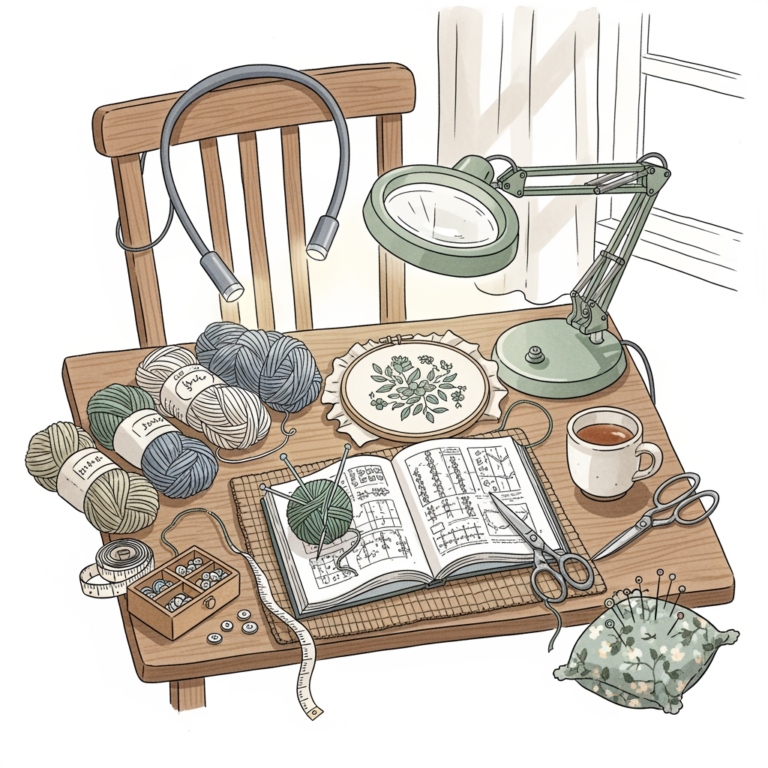
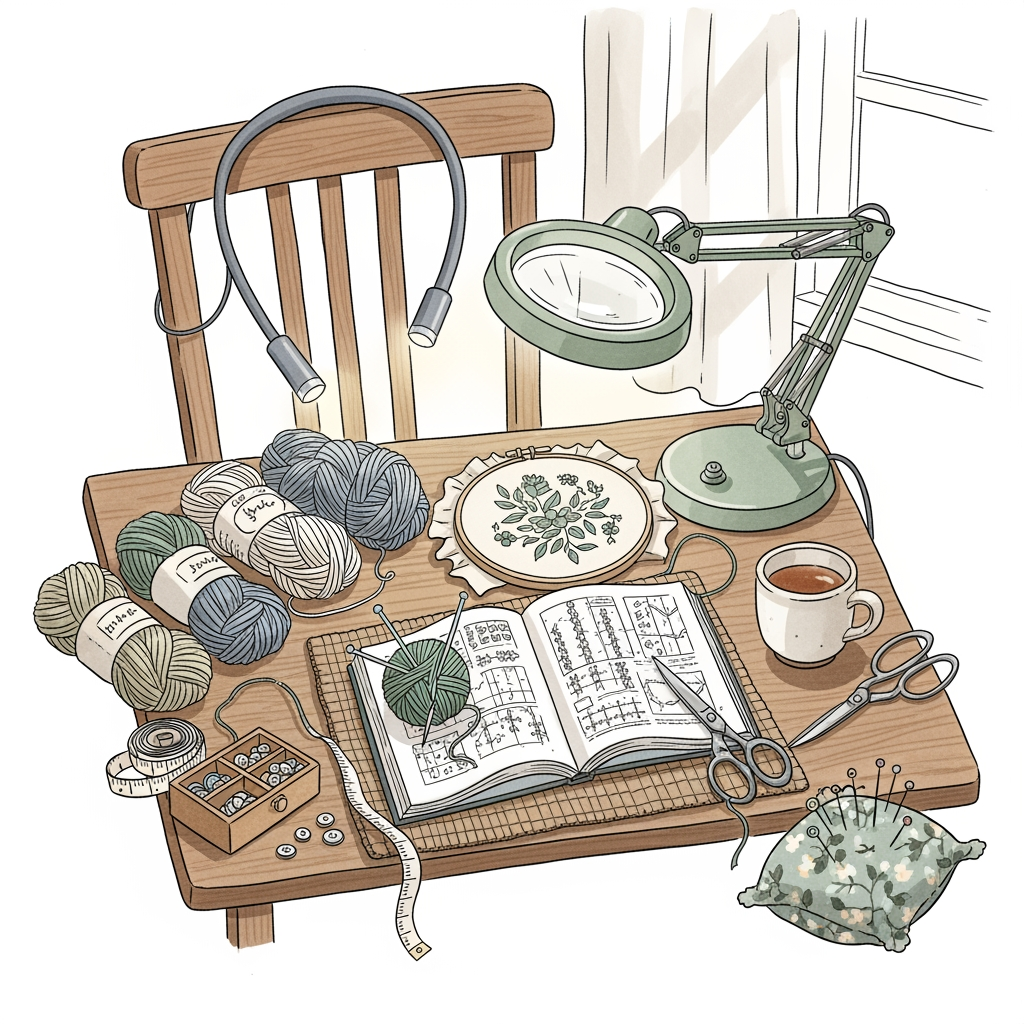
Glocusent LED Neck Reading Light: Best Overall


This light sits comfortably around your neck, casting a direct beam exactly where your hands are working. It is a game-changer for knitters who move around the house or enjoy knitting in bed without disturbing a partner.
The beauty of this design lies in its hands-free nature. Unlike lamps that require constant adjustment as you move, this light follows your gaze, ensuring your needles are always illuminated. It is particularly helpful for those working with dark, high-twist yarns where identifying the stitch definition is a constant battle.
The flexible arms allow you to narrow or widen the light spread, which is vital when transitioning from a large blanket to a small, fiddly sock heel. However, the weight can become noticeable after several hours of knitting, so take breaks to stretch your neck. It remains the most versatile choice for the majority of projects.
Vekkia Rechargeable Book Light: Best for Travel
If you are a commuter knitter or someone who packs a project bag for every trip, the Vekkia is your best friend. It is incredibly compact and clips securely onto the edge of your project bag or a nearby surface.
The rechargeable battery is a massive plus, saving you from the frustration of dead batteries mid-row. Its small size means it won’t weigh down your knitting bag, yet it provides enough brightness to handle complex cable patterns. It is perfect for those moments when you are stuck in a dimly lit waiting room or a plane seat.
Be mindful that its small footprint means a smaller light radius. You will need to clip it close to your work, which might feel slightly obstructive if you are a "big-arm" knitter who likes a lot of space to maneuver. For travel, the trade-off for portability is well worth it.
Mighty Bright NuFlex Task Light: Best Clip-On

The NuFlex is designed for durability and precision, making it a reliable workhorse for your primary knitting chair. The sturdy clip attaches firmly to tables or chair arms, providing a stable, flicker-free light source.
What sets this apart is the gooseneck design, which holds its position perfectly without drooping over time. When you are working on a multi-month sweater project, you want a light that stays put. It provides a focused beam that highlights the texture of your stitches without creating harsh glare.
The main drawback is that it requires a fixed surface to clip onto. If your favorite knitting spot is a soft sofa without a nearby side table, this might not be the right fit. It is best suited for knitters who have a dedicated "knitting corner."
Daylight Company Aura Go: Best Desk Lamp

This lamp is a professional-grade tool that brings daylight-quality illumination to your crafting space. It is perfect for knitters who spend hours working on intricate lace or stranded colorwork where stitch count accuracy is non-negotiable.
The Aura Go is portable but sturdy, folding down into a slim profile for storage. The light quality is its standout feature; it mimics natural sunlight, which is essential for accurate color matching. If you are working with variegated yarns, this lamp will show you the true colors of your fiber before you commit to a project.
It is a more expensive investment, but it pays for itself by reducing the fatigue that comes from working under standard yellow-tinted household bulbs. If you are serious about your craft, this is the gold standard for lighting.
OttLite 2-in-1 LED Magnifier: Best for Detail
Sometimes, even with the best light, your eyes need a little extra help, especially when working with fine-gauge lace or tiny mohair fibers. The OttLite combines high-quality LED light with a built-in magnifier to make every stitch crystal clear.
This is indispensable for picking up dropped stitches or fixing mistakes in complex patterns. The magnification helps you see the structure of the yarn, allowing you to identify if you’ve accidentally split a ply. It is a lifesaver for those working with dark, fuzzy yarns where the stitch anatomy can be difficult to discern.
Because it includes a lens, it does require a bit of practice to get used to the depth perception. Start with shorter sessions to let your eyes adjust to the magnified view. It is a specialized tool that you will reach for whenever the project gets technical.
LuminoLite Rechargeable Light: Best Budget Pick

You don’t need to spend a fortune to get decent light for your knitting. The LuminoLite offers a reliable, rechargeable solution that gets the job done without unnecessary bells and whistles.
It features multiple brightness settings, which is useful when you want a softer glow for evening knitting versus a brighter light for dark-colored wool. The battery life is impressive for the price point, lasting through several long knitting sessions on a single charge. It is a great entry-level option for a beginner who is still building their toolkit.
Keep in mind that the build quality is lighter than the premium models. It might not handle being tossed in a heavy project bag every single day for years, but for home use, it is a fantastic value. It proves that you can improve your focus without a large financial commitment.
Energizer Clip-On Light: Best Minimalist Choice

Sometimes, you just need a simple, no-nonsense light that clips onto your glasses or a project bag. The Energizer Clip-On is the ultimate minimalist tool for the knitter who values simplicity above all else.
It is lightweight and unobtrusive, making it perfect for knitters who dislike bulky gear. While it lacks the adjustable arms of more complex lamps, its simplicity is its greatest strength. It provides a direct, localized beam that is perfect for finishing a few rows before bed.
The trade-off is the lack of light diffusion; it is a very focused point of light. You will need to adjust your position slightly to ensure the light covers your entire needle span. It is the perfect backup light to keep in your knitting kit for emergencies.
How to Choose the Right Light for Dark Yarns
Knitting with black, navy, or deep charcoal yarn is notoriously difficult, as the lack of contrast makes it hard to see your needle tips. When dealing with these colors, a high-lumen, cool-toned light is your best defense.
- Look for high-contrast lighting: Avoid warm, yellow bulbs, as they muddy the color of the yarn.
- Use a white background: Placing a white towel or a light-colored pillow on your lap can help reflect light upward, illuminating the stitches from beneath.
- Prioritize adjustable angles: You need to be able to shift the light to catch the "crown" of the stitch, which is where the yarn is most visible.
Don’t be afraid to combine a primary lamp with a secondary light source. Using a desk lamp for general brightness and a neck light for focused, shadow-free illumination is a professional trick for dark-yarn projects.
Why Color Rendering Index Matters for Knitting
The Color Rendering Index (CRI) measures how accurately a light source reveals colors compared to natural daylight. For knitters, a high CRI is essential, especially when doing colorwork or selecting yarns for a project.
- CRI 90+: This is the gold standard for crafters. It ensures that the deep red of a wool yarn doesn’t look brownish or dull under your lamp.
- Avoid low-CRI lights: Cheap LEDs often have a low CRI, which can lead to "color shifting." You might think you are matching two shades of blue, only to realize in daylight that they are completely different.
- Check the packaging: Look for the CRI rating on the box before you buy, as it is a key indicator of quality.
Investing in a light with a high CRI will prevent the frustration of finishing a project only to realize the colors don’t sit well together. It is a detail that separates a casual hobbyist from a dedicated maker.
Tips for Reducing Eye Strain During Long Projects
Even with the best light, your eyes need regular breaks to stay fresh and focused. If you are working on a long-term project like a sweater, follow the 20-20-20 rule: every 20 minutes, look at something 20 feet away for 20 seconds.
- Adjust your posture: Ensure your knitting is at a comfortable distance from your eyes, rather than hunched over your lap.
- Use contrast: If you are using dark yarn, use a contrasting needle color, such as light-colored wood or bamboo, to help your eyes track the stitches.
- Hydrate and blink: It sounds simple, but we often forget to blink while focusing intensely on a complex stitch pattern, leading to dry, tired eyes.
Listen to your body. If you find yourself squinting or experiencing a headache, put the knitting down, dim the lights, and rest for a while. Your project will still be there when you return, and your eyes will thank you for the break.
Choosing the right light is a personal decision that depends on your specific knitting habits and your favorite fibers. Whether you opt for a versatile neck light or a professional-grade desk lamp, the goal is to create an environment where your stitches can shine. Take the time to assess your workspace and your most common projects before making your choice. With the right illumination, you will find that your focus improves, your mistakes decrease, and your love for the craft only grows stronger.