7 Best Digital Scales For Weighing Bulky Yarn
Find the perfect tool for your stash. We review seven digital scales ideal for weighing bulky yarn, focusing on precision, capacity, and user-friendly design.
Every knitter eventually reaches the point where they need to know exactly how much yarn remains on a cake or skein. Whether you are playing "yarn chicken" on a sweater sleeve or trying to calculate yardage for a stash-busting project, a reliable scale is non-negotiable. Precision weighing transforms guesswork into a science, ensuring you never run out of yarn mid-row. Here are seven digital scales that stand up to the unique demands of a busy knitting studio.
Etekcity Digital Kitchen Scale: The Best Overall Pick


This scale is the workhorse of the knitting world. It strikes the perfect balance between a generous weighing platform and a footprint that doesn’t dominate your limited craft table space.
The interface is incredibly intuitive, which matters when you are juggling a heavy wool sweater and a notebook. Because it handles a wide range of weights, you can use it for everything from weighing a single lace-weight silk bobbin to a massive 500-gram cone of worsted wool.
The tare function is snappy and responsive, allowing you to zero out the weight of your project bag or a yarn bowl instantly. It is the most reliable "set it and forget it" tool for daily stash management.
My Weigh KD-8000: Best for Large Yarn Projects
When you are working with bulky, sweater-quantity lots, you need a scale that doesn’t blink at heavy loads. The KD-8000 is built for durability, featuring a stainless steel platform that is easy to wipe clean if you happen to get a bit of wool fiber or lint on it.
The standout feature here is the removable protective cover that keeps the buttons free of dust and stray yarn bits. For those of us who keep our scales right next to our yarn winders, this protection is a lifesaver.
It is slightly larger than a standard kitchen scale, but the trade-off is superior accuracy even when your yarn is hanging off the edges. If you are a prolific sweater knitter, this is the tool that will last through years of heavy use.
Ozeri Pronto Digital Scale: Best Budget Option

You don’t need to break the bank to get accurate measurements for your stash. The Ozeri Pronto is a slim, lightweight option that is perfect if you are just starting to track your yardage or need a secondary scale for your travel knitting kit.
It is surprisingly precise for its price point, handling small increments well enough to weigh individual mini-skeins for colorwork projects. While it doesn’t have the heavy-duty construction of more expensive models, it is more than sufficient for standard knitting needs.
If you are just beginning to experiment with calculating yardage, this is the low-risk entry point you need. It gets the job done without any unnecessary bells and whistles.
GreaterGoods Digital Scale: Best for Precision

If you are a lace knitter or someone who works with extremely fine, expensive fibers like cashmere or mohair, precision is your best friend. This scale offers a higher degree of sensitivity, which is vital when every gram represents a significant amount of yardage.
The design is minimalist and clean, meaning there are no crevices for fiber dust to hide in. This matters because even a tiny accumulation of debris can throw off a measurement when you are working with high-end, lightweight fibers.
It is a fantastic tool for those who keep meticulous records of their stash. If you enjoy the analytical side of knitting, this scale provides the consistent data you need to feel confident in your planning.
Escali Primo Digital Scale: Best for Simplicity
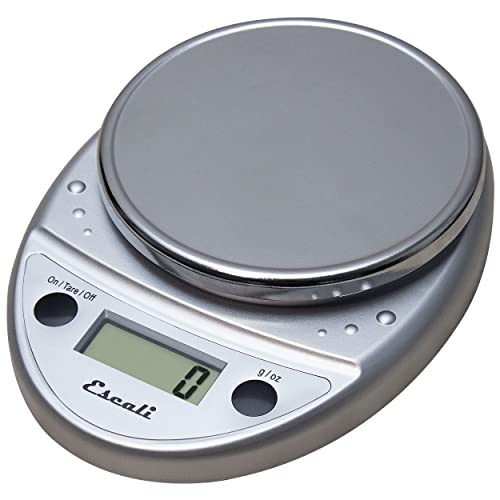
Sometimes, you just want to weigh your yarn without navigating complex menus or confusing settings. The Escali Primo is legendary for its simplicity, featuring a two-button design that is foolproof.
It is robust enough to handle a heavy skein of bulky roving, yet precise enough to weigh a few grams of scrap yarn. The display is positioned so that even when you have a large project sitting on the scale, you can still easily read the numbers.
This is the scale for the knitter who wants to focus on the craft, not the technology. Its consistent, reliable performance is why it remains a staple in so many home studios.
Weighmax W-2809 Scale: Best for Heavy Skeins
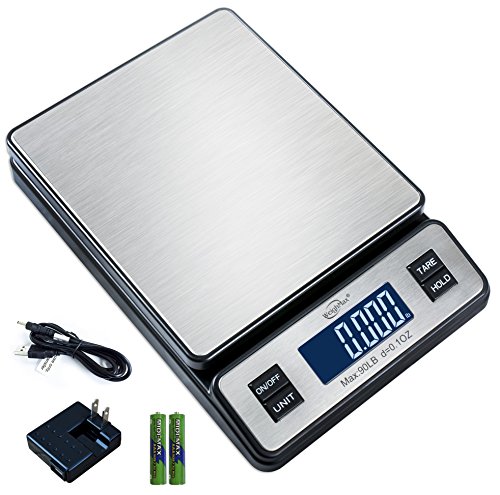
For those who love knitting with super-bulky, unspun wool or massive artisan hanks, the Weighmax W-2809 is a powerhouse. It is designed to handle significant weight without sacrificing the ability to measure smaller amounts accurately.
The platform is wide and stable, which prevents your bulky yarn from tipping over or sliding off mid-weigh. This stability is crucial when you are trying to get an accurate reading on a large, potentially unstable ball of yarn.
It is a rugged, utilitarian choice. If your knitting style involves heavy-duty materials and large-scale projects, this scale will handle the load with ease.
American Weigh Scales AMW-2000: Best Compact Scale
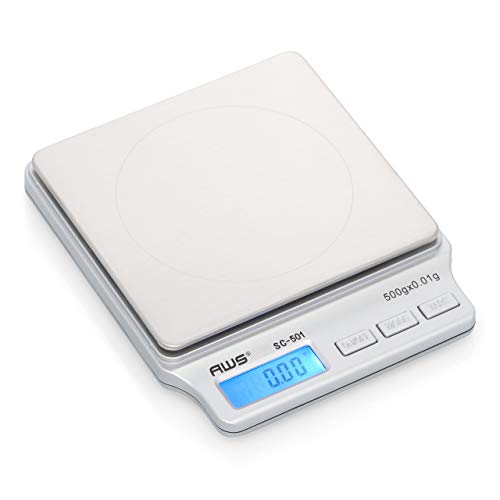
If your knitting space is shared with a dining table or a home office, you need a scale that disappears when not in use. The AMW-2000 is compact, portable, and surprisingly capable for its size.
It is an excellent choice for taking to fiber festivals or guild meetings. When you are buying yarn from a local dyer and need to check if you have enough for your pattern, this scale fits right into your project bag.
Despite its small size, it does not compromise on accuracy. It is a reliable, travel-ready companion for any knitter on the go.
Why Weighing Bulky Yarn Is Essential for Knitters
Weight is the most reliable way to track yarn usage because yardage can be deceptive. A skein labeled as 200 yards might actually contain slightly more or less, and bulky yarn is particularly prone to variations in ply and twist that affect its weight-to-length ratio.
When you weigh your yarn before and after a knitting session, you get an exact record of how much fiber went into your fabric. This is the only way to truly master "yarn chicken," especially when you are working with precious hand-dyed yarns that you cannot easily replace.
Ultimately, weighing your yarn removes the anxiety from the process. Instead of worrying if you have enough for that final bind-off, you have a hard number that tells you exactly where you stand.
Understanding Scale Capacity for Large Yarn Lots
Capacity refers to the maximum weight a scale can measure, and for knitters, this is critical. If you are weighing a sweater’s worth of yarn, you need a scale that can handle at least 2 to 3 kilograms (roughly 4 to 6 pounds) to ensure you aren’t overloading the sensor.
Exceeding a scale’s capacity doesn’t just lead to an "error" message; it can permanently damage the internal load cells. Always check the maximum capacity against the heaviest project you anticipate weighing.
Remember that the weight of your yarn bowl or project bag must also be factored in. If your scale has a low capacity, a heavy ceramic bowl might push it over the limit before you even add the yarn.
Tips for Measuring Yarn Remnants and Yardage
To calculate the yardage of a remnant, use the weight-to-yardage ratio of the full skein. If 100 grams equals 200 yards, then 1 gram equals 2 yards; simply multiply your remnant’s weight by that factor.
Always weigh your yarn in the same state—either all wound into cakes or all in loose hanks—to keep your data consistent. Moisture content in natural fibers like wool can also cause slight fluctuations in weight, so try to weigh your stash in a climate-controlled room.
Keep a small logbook or a digital spreadsheet to track these weights. Over time, this data becomes an invaluable resource for planning future projects and ensuring you never buy more yarn than you actually need.
Investing in a quality digital scale is one of the smartest upgrades you can make for your knitting practice. By moving beyond visual estimation, you gain total control over your stash and your project planning. Choose a scale that matches the scale of your projects, and you will find that your knitting becomes much more predictable and enjoyable. Happy knitting, and may you never run out of yarn mid-row again.