6 Best Awls For Punching Holes In Felt For Crafters
Discover the top 6 awls for punching holes in felt. This guide compares precision, grip, and durability to help crafters choose the best tool for every project.
Working with felt requires a different set of tools than standard knitting or crochet, especially when you need to join pieces or add embellishments. An awl is the unsung hero of the fiber artist’s toolkit, providing the precision needed to pierce thick, dense fibers without distorting the fabric. Choosing the right one can be the difference between a clean, professional finish and a frayed, messy hole. Here are the best options to help you master your felt projects with ease.
Clover Awl: Best Overall Tool for Precision Work


The Clover Awl is a staple in many sewing rooms for a good reason: its ergonomic handle fits perfectly in the palm, much like a well-balanced knitting needle. When you are working on intricate felt appliqués, the last thing you want is hand fatigue.
This tool features a sharp, tapered point that slides through dense wool felt with minimal resistance. It is particularly useful when you need to create perfectly spaced holes for decorative stitching or attaching buttons to a finished accessory.
Because the shaft is smooth and polished, it doesn’t snag or pull at the fibers, which is crucial when working with high-quality merino felt. It’s a reliable workhorse that rarely disappoints.
Fiskars Craft Awl: The Durable Choice for Felt
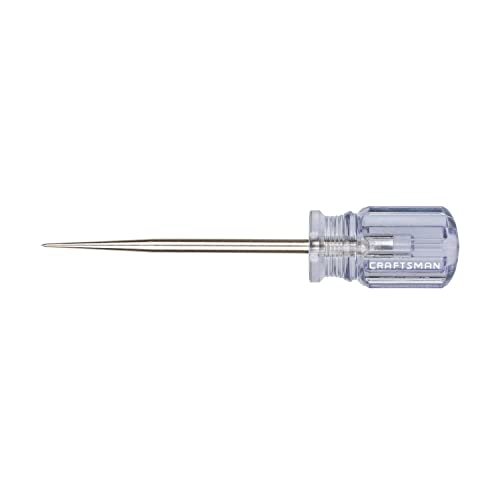
Fiskars is known for tools that can take a beating, and their craft awl is no exception. If you are working with thick, industrial-strength felt, you need a tool that won’t bend under pressure.
The handle is designed with a comfortable grip that prevents slipping, even if your hands are tired after a long session of blocking or seaming. It offers excellent leverage, which is essential when you are punching through multiple layers of material.
While it might be slightly less delicate than a fine-point tool, it is incredibly sturdy. Think of this as the "size 8 bamboo needle" of your tool kit—versatile, dependable, and ready for heavy-duty tasks.
Darice Wood Handle Awl: Best Budget-Friendly Pick
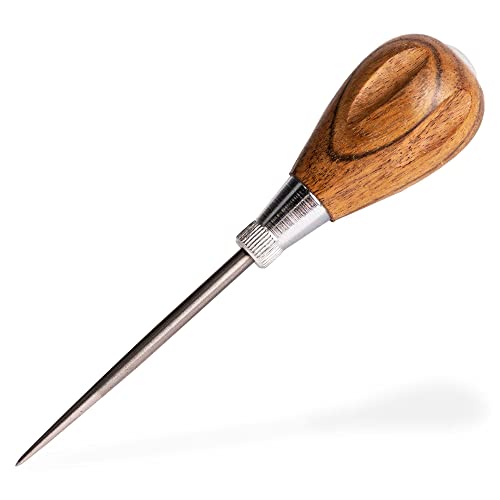
Sometimes you don’t need a high-tech tool; you just need something that gets the job done. The Darice Wood Handle Awl is a classic, no-frills option that feels familiar and comfortable in the hand.
The wooden handle provides a natural, tactile grip that many fiber artists prefer over plastic. It is lightweight, making it an excellent choice for crafters who have sensitive wrists or prefer a more traditional tool aesthetic.
While it lacks some of the ergonomic bells and whistles of premium brands, it is perfectly adequate for occasional use. If you only punch holes in felt once or twice a year, this is the most economical choice.
We R Memory Keepers Crop-A-Dile: Versatile Option

If you find yourself needing to set eyelets or snap fasteners alongside your hole-punching, the Crop-A-Dile is a game-changer. It is essentially a heavy-duty punch and setter in one, much like having an interchangeable needle set for your hardware needs.
This tool allows you to punch holes through thick felt effortlessly, and it keeps the hole perfectly circular every time. It is a bit bulkier than a handheld awl, so it’s best suited for stationary work at a desk.
For projects like felt bags or structural ornaments, this tool provides a level of uniformity that a manual awl simply cannot match. It’s an investment, but it saves immense amounts of time during assembly.
Beadsmith Scratch Awl: Best for Fine Detail Work
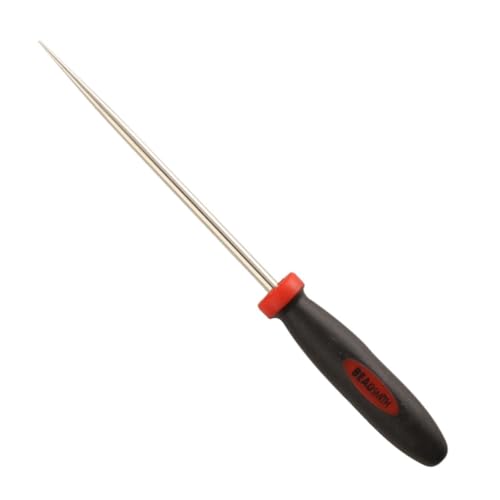
When you need to make a tiny hole for delicate embroidery thread or fine silk ribbon, the Beadsmith Scratch Awl is your best bet. Its thin, needle-like point is designed for precision, not force.
This tool is ideal for intricate felt work where you want to minimize the visible footprint of your needle entry. It feels very similar to using a fine-gauge double-pointed needle, offering great control over where exactly the point enters the fabric.
Be careful with this one, as the tip is quite fine and can be damaged if you try to force it through thick, compressed felt. Use it for the finishing touches rather than the heavy construction.
Gingher Awl: The Professional Choice for Crafters
Gingher is the gold standard for many sewing tools, and their awl is no exception. It is precision-engineered, sharp, and built to last a lifetime, much like a high-end pair of forged scissors.
The weight and balance of this tool are exceptional, allowing for precise, controlled motions. If you spend hours crafting felt items for gifts or sale, the quality of this tool will make a noticeable difference in your efficiency.
It is an investment piece, but for the serious maker, it is worth every penny. It handles dense fibers with grace and maintains its edge far longer than cheaper alternatives.
How to Select the Right Awl Size for Your Felt
Selecting the right awl size depends largely on the thickness of your felt and the gauge of the thread you intend to pass through the hole. If you use an awl that is too large, you risk creating an unsightly gap that will show through your stitches.
- Thin/Soft Felt: Use a fine-point awl to prevent tearing.
- Medium/Stiff Felt: A standard tapered awl works well for most seams.
- Thick/Industrial Felt: Opt for a robust, heavy-duty awl to ensure the hole is large enough for your needle to pass through without fighting the fabric.
Always test your hole size on a scrap piece of felt before tackling your main project. It’s much easier to adjust your technique on a remnant than it is to fix a hole that is too large on a finished piece.
Safety Tips for Punching Holes in Thick Felt
Punching holes in felt requires force, and it is easy for an awl to slip if you aren’t careful. Always work on a self-healing cutting mat or a thick piece of scrap cardboard to protect your work surface.
Keep your fingers well away from the path of the awl. It is tempting to hold the felt close to where you are punching, but a slip can lead to a nasty puncture wound.
If the felt is particularly thick, use a rocking motion to ease the awl through rather than trying to force it in one straight push. This controls the entry point and prevents the tool from "jumping" once it clears the fabric.
Essential Maintenance to Keep Your Awl Sharp
Just like your knitting needles can become dull or scratched over time, your awl needs care. If you notice it’s dragging or tearing the felt fibers rather than piercing them cleanly, it’s time for maintenance.
You can gently hone the tip with a fine-grit sharpening stone if it has become blunt. Avoid using high-heat methods, as this can ruin the temper of the metal.
Keep your awl in a protective sheath when not in use to prevent the tip from dulling against other tools in your bin. A sharp tool is a safe tool—it requires less force to use, which means you have more control.
Frequently Asked Questions About Using Awls
Can I use a sewing needle instead of an awl? While you can, it’s not ideal. Sewing needles are designed to be flexible; an awl is designed to be rigid, making it much better for creating a clean path through dense material.
Does the hole left by an awl stay open? In dense felt, the hole will stay open long enough for you to pass your thread through. Because felt is a non-woven fabric, it doesn’t "run" like a knitted sweater, so you don’t need to worry about the hole expanding.
What if I make the hole too big? If you accidentally punch a hole that is too large, you can often "heal" it by gently rubbing the surrounding fibers with your fingers. The natural friction and interlocking nature of felt will help the hole shrink back toward its original size.
Mastering the use of an awl will elevate your felt projects from handmade to professional-grade creations. By choosing the right tool for your specific fabric thickness and treating it with proper care, you ensure years of reliable service. Remember that every crafter’s grip and project needs are unique, so don’t be afraid to try a few different styles to see what feels best in your hands. Happy crafting, and may your seams always be perfectly aligned.