7 Best Needle Felting Kits For Absolute Beginners
Discover the 7 best needle felting kits for beginners. Learn how to choose the right tools, wool, and patterns to start your creative fiber art journey today.
Needle felting is the sculptural equivalent of working with raw roving, offering a tactile satisfaction that knitters will find deeply familiar. Just as you learn the difference between a bouncy Merino and a rustic Highland wool, felting requires an understanding of how fibers lock together under pressure. Selecting the right starter kit is the difference between a frustrating tangle and a meditative, rewarding craft. These seven kits serve as the perfect entry point for your first foray into fiber sculpture.
Woolbuddy Needle Felting Kit: Best for Beginners


If you have ever struggled with a complex knitting chart, you will appreciate the straightforward nature of the Woolbuddy kits. They remove the guesswork by providing simple, rounded shapes that teach you how to build density without overwhelming you with structural engineering.
The focus here is on learning the mechanics of the needle. You are essentially practicing your "tension" through stabbing, learning how much force is required to firm up a shape without snapping your tool.
The wool included is manageable and forgiving, much like a reliable worsted-weight wool blend. It doesn’t felt too quickly, giving you time to correct mistakes as you go.
Dimensions Needle Felting Kit: Best for Animals

Dimensions kits are the standard for those who want to move beyond basic spheres and into representational sculpture. If you have ever enjoyed the intricate shaping of a top-down sweater sleeve, you will appreciate the way these patterns guide you through anatomical construction.
These kits often include detailed instructions for creating specific creatures, which provides a great lesson in layering. You learn how to build a core structure and then "dress" it with finer, decorative fibers.
Be aware that these kits rely heavily on specific techniques to achieve detail. Follow the diagrams closely, as the difference between a realistic ear and a shapeless blob is often just a few well-placed stabs.
Felted Sky Beginner Kit: Best Quality Materials
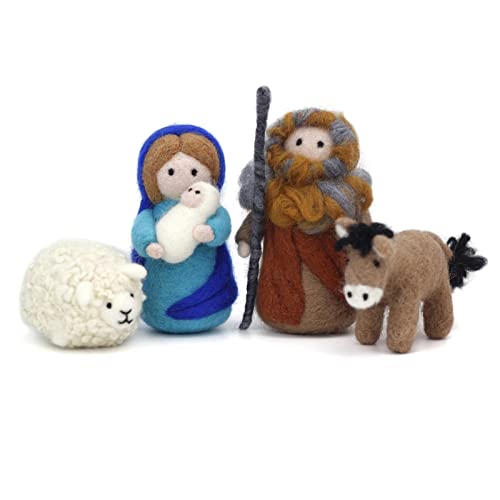
In the knitting world, we know that cheap acrylic yarn can ruin a beautiful lace pattern; the same logic applies to felting wool. Felted Sky provides high-quality, clean wool that behaves predictably, which is a luxury for a beginner.
Using high-quality wool makes the felting process significantly faster. The fibers have a natural crimp that locks together with minimal effort, saving your wrists from unnecessary strain.
The materials feel premium in your hands, which keeps you motivated. When your supplies feel good, the process feels like a craft rather than a chore.
Bear Creek Felting Starter Kit: Best Instruction

If you learn best by watching rather than reading, Bear Creek is your best bet. They prioritize the educational aspect, providing resources that explain the "why" behind the "how."
Think of this like a masterclass in fiber manipulation. They teach you how to hold the needle and how to move your hands to create smooth surfaces, much like learning proper tension control when holding your knitting needles.
The depth of instruction here is unmatched. It’s an investment in your skill set rather than just a one-off project.
Hamanaka Needle Felting Kit: Best for Precision

Hamanaka kits are imported from Japan and are designed for those who appreciate the meticulous nature of Japanese craft. These are perfect for the knitter who loves tiny needles and intricate colorwork.
The precision offered by these kits is incredible, but they require a steady hand. You are working with smaller components, which demands a high level of control over your needle placement.
If you enjoy the focus required to knit a complex cable or a delicate piece of intarsia, you will find this level of detail deeply satisfying. It is precise, clean, and highly rewarding work.
Crafting Happiness Wool Kit: Best All-in-One Set

For the knitter who wants to clear their workspace and start immediately, this kit is the complete package. It includes everything from the needles and foam pad to a wide variety of wool colors.
Having a large color palette from the start is a massive advantage. It allows you to experiment with shading and blending, which is essentially the felting version of stranded colorwork.
The convenience factor is high, but keep an eye on the tool quality. As you advance, you may eventually want to upgrade your needles to more ergonomic options, just as you might move from basic metal needles to custom wood ones.
Bucilla Needle Felting Kit: Best Budget Option
Bucilla kits are widely accessible and perfect for testing the waters without a significant financial commitment. If you are curious but not sure if you want to commit to a new hobby, this is your entry point.
These kits are simple and effective, providing a clear path from start to finish. They are the "garter stitch scarf" of the felting world—perfect for building confidence.
Don’t expect luxury materials, but do expect a functional experience. They are excellent for learning the basics of how wool interacts with the needle.
Essential Tools Every New Felter Should Possess
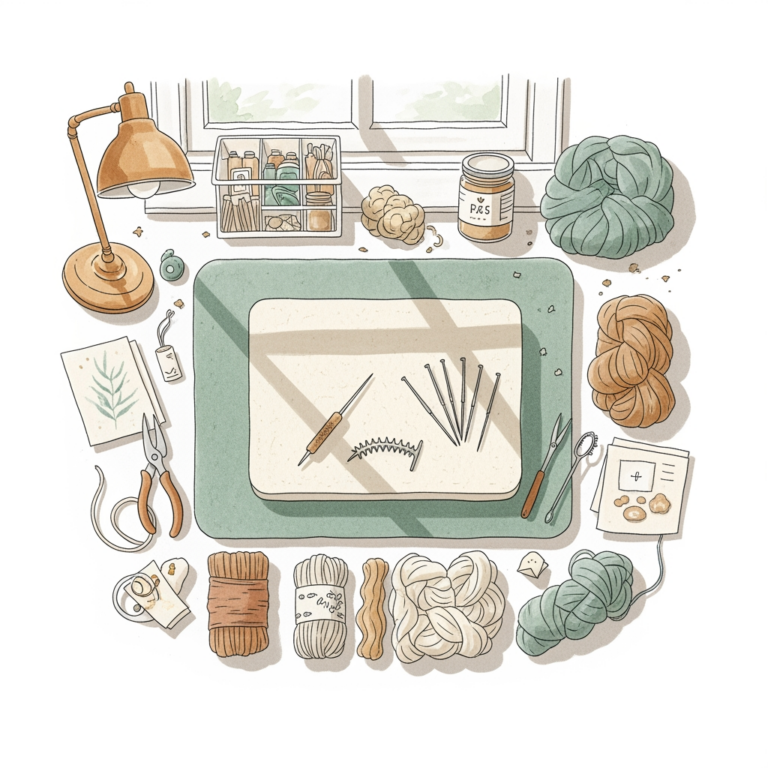
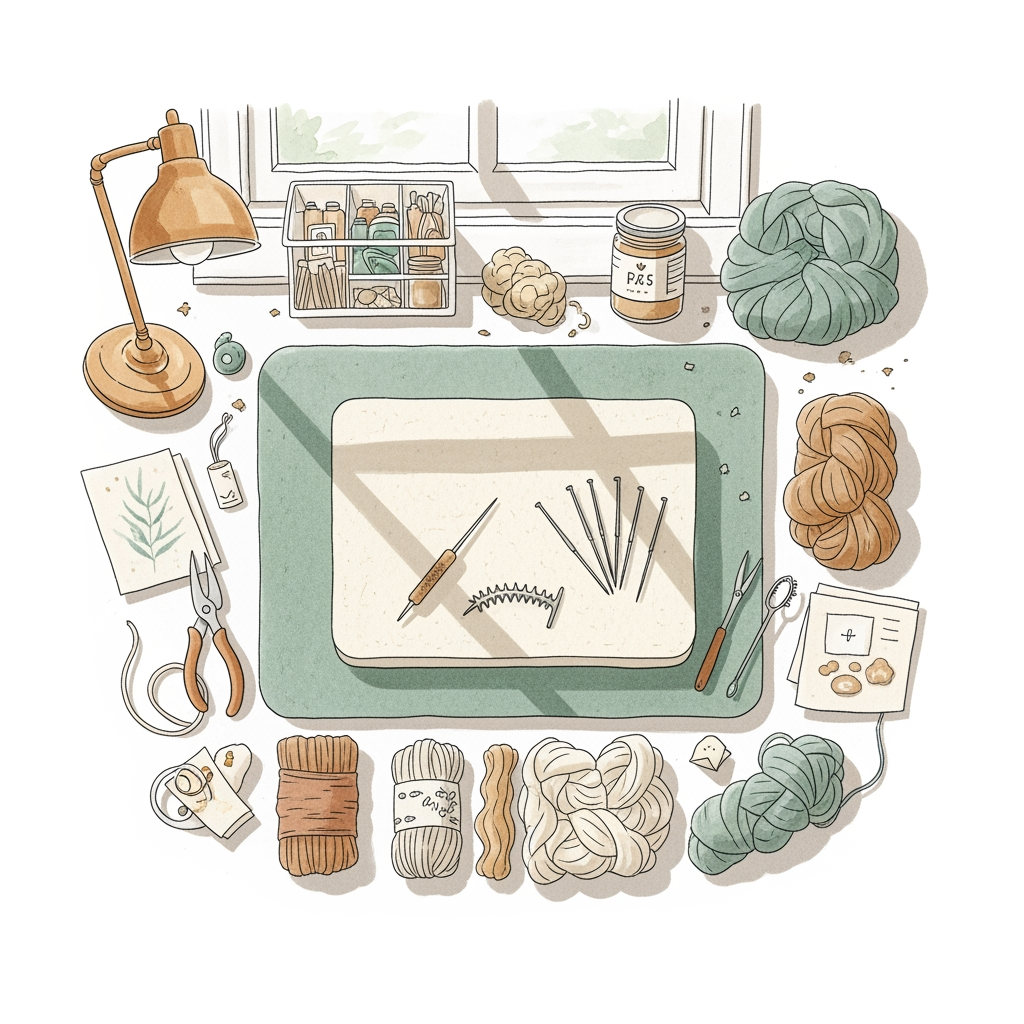
Just as you wouldn’t knit without a good pair of needles and a tape measure, you need a few core items for felting. A high-density foam pad is non-negotiable; it protects your needles from hitting a hard surface and breaking.
You will also need a variety of needle gauges. Think of these like knitting needle sizes:
- Coarse needles: For initial shaping and joining pieces.
- Medium needles: For general sculpting and firming.
- Fine needles: For surface detail and finishing work.
Always keep a few spare needles on hand. Even experienced felters snap them occasionally, especially when working on dense, tightly felted areas.
Understanding Core Wool vs. Decorative Top Coat
In knitting, we often use a base yarn for structure and a secondary yarn for color or texture. Felting is similar: you use a firm, core wool for the internal structure and a softer, finer wool for the outer layer.
Core wool is usually a coarser, cheaper breed of sheep that felts very quickly and holds its shape. You use this to build the "skeleton" of your project.
The decorative top coat is where you apply your color and texture. Because this layer is seen, you want a softer, more refined fiber like Merino or Corriedale to ensure a smooth, professional finish.
Safety Tips for Handling Barbed Felting Needles
Felting needles are incredibly sharp and have tiny barbs designed to catch fibers; they are also unforgiving if they hit your skin. Always keep your eyes on your work and your fingers well away from the needle’s path.
When working on small pieces, consider using leather finger guards. They offer protection without sacrificing the dexterity you need to manipulate the wool.
Never try to "force" the needle through a dense area. If you meet resistance, move to a different spot or switch to a finer needle gauge, just as you would avoid forcing a thick yarn through a needle that is too small.
Needle felting is a beautiful way to expand your fiber arts horizons, offering a sculptural dimension to your existing skills. By starting with the right kit and respecting the tools, you will find that the learning curve is both gentle and incredibly fun. Pick a kit that aligns with your specific interests, keep your needles sharp, and enjoy the process of watching raw wool transform into art. Happy felting!