6 Best Interchangeable Cord Sets for Sweater Circumferences
Find the perfect fit for your knits. We review the 6 best interchangeable cord sets, focusing on durability, flexibility, and seamless sweater construction.
Knitting a sweater requires a reliable needle system that can handle hundreds of stitches without snagging or coming undone. When you are working on a garment with a large circumference, the quality of your cable and joint becomes just as important as the needle tip itself. Choosing the right interchangeable set transforms a daunting project into a seamless, enjoyable experience. Here are the top six systems designed to carry the weight of your next sweater with ease.
ChiaoGoo TWIST Red Lace: The Gold Standard Set
The ChiaoGoo TWIST Red Lace set is widely considered the industry benchmark for a reason. These stainless steel needles feature a signature memory-free cable that refuses to coil or kink, which is essential when you are managing the weight of a heavy wool sweater.
The join between the needle and the cable is exceptionally smooth, allowing stitches to glide over the connection without catching. This is a game-changer for those who use the Magic Loop method to knit sweater sleeves or necklines, as the cable stays flexible regardless of the tension.
However, the tips are quite sharp, which can be a drawback if you are a "pusher" who uses your fingertips to drive the needle. If you work with delicate yarns like mohair or lace-weight silk, these needles will pierce the fiber easily. For most sweater-knitters, the durability and consistency of this set make it a foundational tool.
HiyaHiya Sharp Interchangeable: Best for Precision
If your sweater patterns involve intricate cables or complex lace panels, the HiyaHiya Sharp set is your best ally. These needles are engineered with a tapered point that makes picking up stitches for button bands or correcting dropped stitches significantly easier.
The set utilizes a swivel cable mechanism, which allows the needle tip to rotate independently from the cord. This design prevents the cable from twisting as you work, reducing hand fatigue during long sessions of stockinette. It is a brilliant solution for knitters who find themselves constantly untwisting their work.
The trade-off here is the stainless steel surface, which is quite slick. If you are knitting with a slippery fiber like bamboo or silk, you may find your stitches sliding off more quickly than you prefer. Pair these with wool or sticky alpaca to find the perfect balance of grip and glide.
Lykke Driftwood Set: Best for Warmth and Comfort
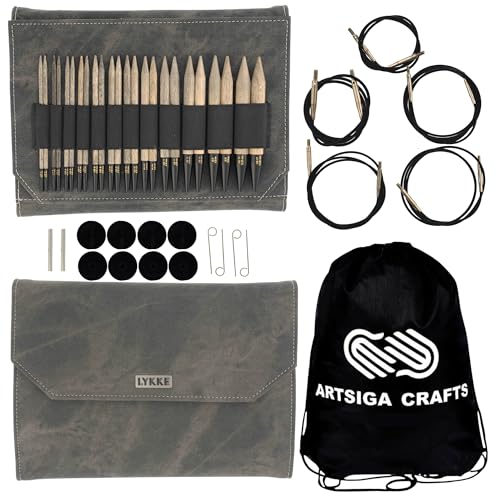

Lykke needles, crafted from smooth birch wood, offer a tactile experience that metal needles simply cannot replicate. They feel warm in your hands, which is a significant benefit if you suffer from stiff joints or are knitting a sweater in a chilly room.
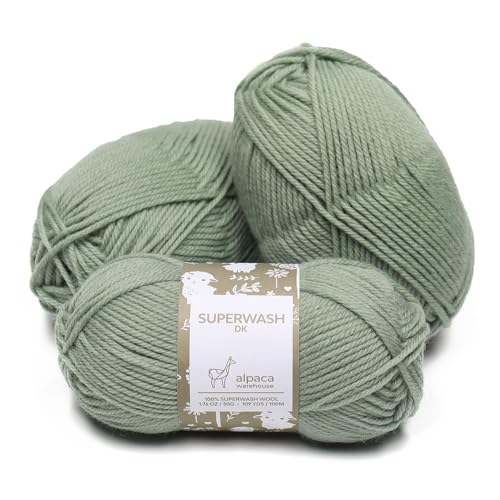
The wood provides a natural "grab" that helps keep your yarn in place, making them ideal for beginners or those working with slippery superwash wools. The set comes in a beautiful aesthetic package, but the real value lies in the consistent sizing and smooth finish of the wood.
Be mindful that wood needles can be fragile in smaller sizes. If you are knitting a sweater on 3.25mm or smaller needles, you must be careful not to apply too much pressure, as the tips can snap. They are best reserved for worsted or bulky weight projects where the needle diameter provides structural integrity.
Knitter’s Pride Mindful: Best Smooth Connections
The Knitter’s Pride Mindful collection focuses on a seamless transition between the cable and the needle. The connection is threaded with a precision that ensures no yarn fibers get snagged during the knitting process, which is vital when working with pilled or loosely plied yarns.
These needles are made from stainless steel but feature a slightly less aggressive point than the ChiaoGoo set. They strike a middle ground that accommodates both fast, rhythmic knitting and detailed stitch manipulation. The cables are also remarkably soft and pliable.
The set includes a variety of accessories, such as stitch markers and measuring tools, which are thoughtful additions for garment knitters. If you struggle with snagging at the join, this system is likely your best bet for a frustration-free knitting experience.
Addi Click Rocket Set: Best for Quick Changes

The Addi Click system uses a unique "click-in" mechanism rather than a screw-on thread. This means you can swap needle tips in seconds without needing a tightening key, which is incredibly convenient when you need to change needle sizes to accommodate a different gauge for your sweater ribbing.
The Rocket tips are plated brass, offering a fast, slick surface that encourages speed. They are particularly effective for knitters who tend to be slow or tight with their tension, as the surface helps stitches move along the needle with minimal effort.
Because there are no threads to wear out, the durability of the connection is excellent. However, because the system relies on a spring-loaded click, you must ensure the needle is fully seated. Always listen for the audible click to avoid the needle detaching mid-row.
KnitPicks Options Nickel: Best Value for Sweaters
KnitPicks Options Nickel needles are the workhorse of the knitting world, providing a high-quality experience at a very accessible price point. They feature a smooth, plated finish that is fast but not overly slippery, making them a versatile choice for a wide range of yarn types.
For a sweater project, you will likely need multiple cable lengths to manage the body and the sleeves. KnitPicks offers an extensive range of affordable cable options, allowing you to build a comprehensive library of tools without a massive upfront investment.
While the joins are generally reliable, they do require periodic tightening with the provided key. If you are on a budget but want a consistent, professional-grade toolset, this is the most logical starting point for your sweater-knitting journey.
Why Cable Length Matters for Sweater Circumference
The cable length determines how comfortably your stitches sit while you work. For a sweater body, you want a cable that is slightly shorter than the circumference of the garment, which allows the weight of the fabric to distribute evenly without stretching your stitches.
- 16-inch cables: Perfect for necklines and small-circumference sleeves.
- 24-inch cables: Ideal for children’s sweaters or small adult sizes.
- 32-40 inch cables: The standard for most adult sweater bodies.
If your cable is too long, you will be constantly fighting to keep your stitches from bunching up. If it is too short, you risk overstretching the fabric, which can lead to a distorted gauge and a sweater that doesn’t fit as intended.
How to Test Your Interchangeable Cable Integrity
Before starting a sweater, always inspect your cables for signs of wear, particularly near the metal join. Over time, the plastic can become brittle or develop small cracks that catch on your yarn.
To test, run your thumbnail along the join where the cable meets the metal. If you feel any sharp edges or rough spots, use a fine-grit emery board to smooth them down. A quick tug on the cable-to-needle connection will also ensure that the internal mechanism is still secure.
If the cable feels stiff or has permanent kinks, soak it in warm (not boiling) water for a few minutes. This will relax the plastic and return it to a flexible, manageable state for your project.
Preventing Cable Kinks in Large Garment Projects
Large sweater projects put immense strain on your cables, and gravity is not your friend. When you set your knitting down, try to keep the project supported on a flat surface rather than letting it dangle off the edge of a chair.
Storing your cables in a coiled position for long periods is the primary cause of permanent kinks. Instead, hang your cables over a hook or store them flat in a dedicated case. This simple habit preserves the longevity of the plastic and keeps your knitting experience smooth.
If you find your cable twisting while you knit, stop and rotate the needle tip in the opposite direction. This releases the tension that builds up during long, repetitive rows of stockinette.
Essential Tips for Tightening Your Needle Joints
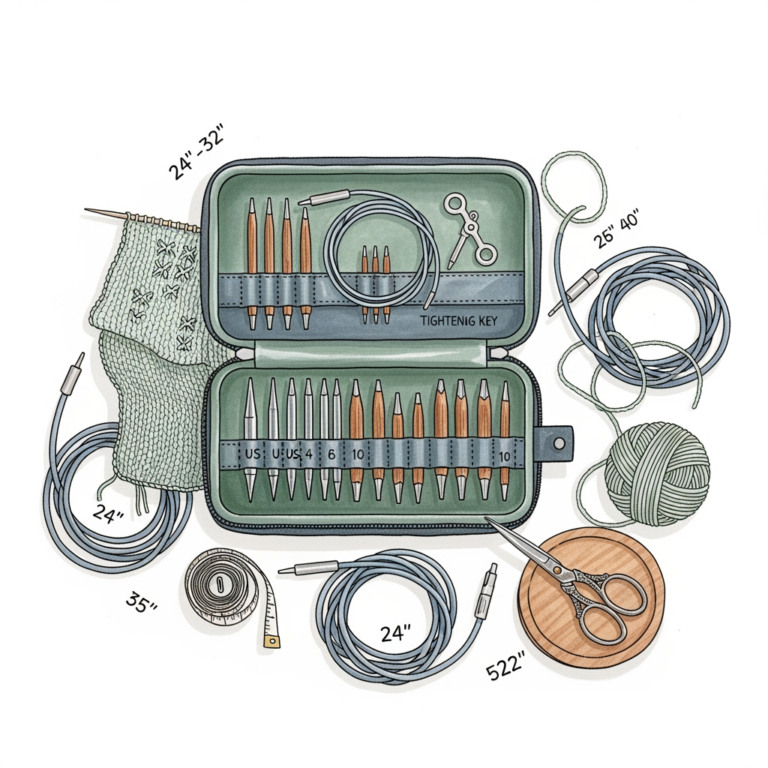
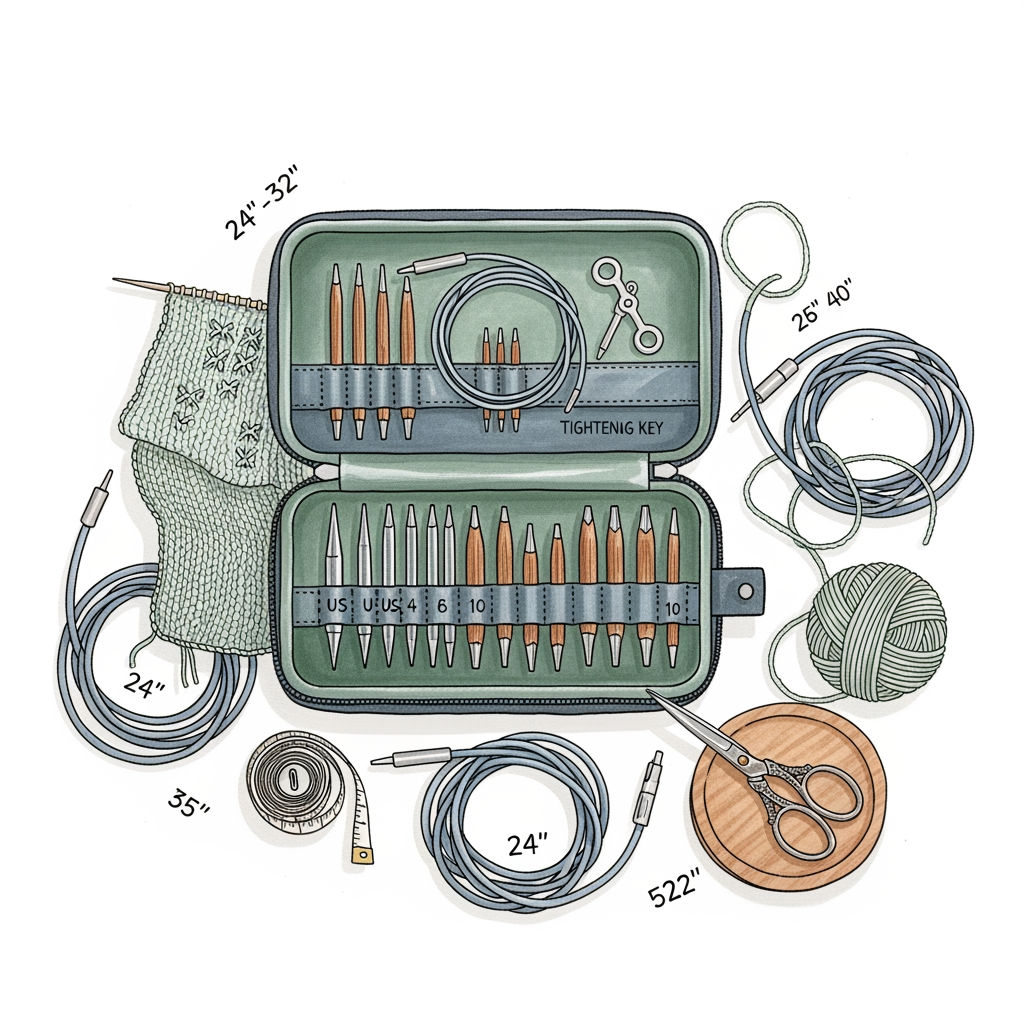
The most common complaint about interchangeable needles is that they unscrew during a project. To prevent this, always use the tightening key or grippy pad provided with your set.
Do not just hand-tighten the needles; insert the key into the hole of the cable and use it as a lever to give the needle a final, firm turn. This ensures the threads are fully seated and won’t vibrate loose as you knit.
If you are a particularly vigorous knitter, check your joints every time you finish a row or a round. A quick check of the tightness takes only a second and saves you the heartbreak of losing stitches in the middle of a complex pattern.
Investing in a quality interchangeable set is one of the most rewarding decisions a sweater-knitter can make. By understanding the nuances of cable length, join integrity, and surface texture, you can tailor your tools to match your specific knitting style. Remember that the best needle is the one that feels like an extension of your own hands. With the right system in place, your next sweater will be a joy to knit from the first cast-on to the final bind-off.